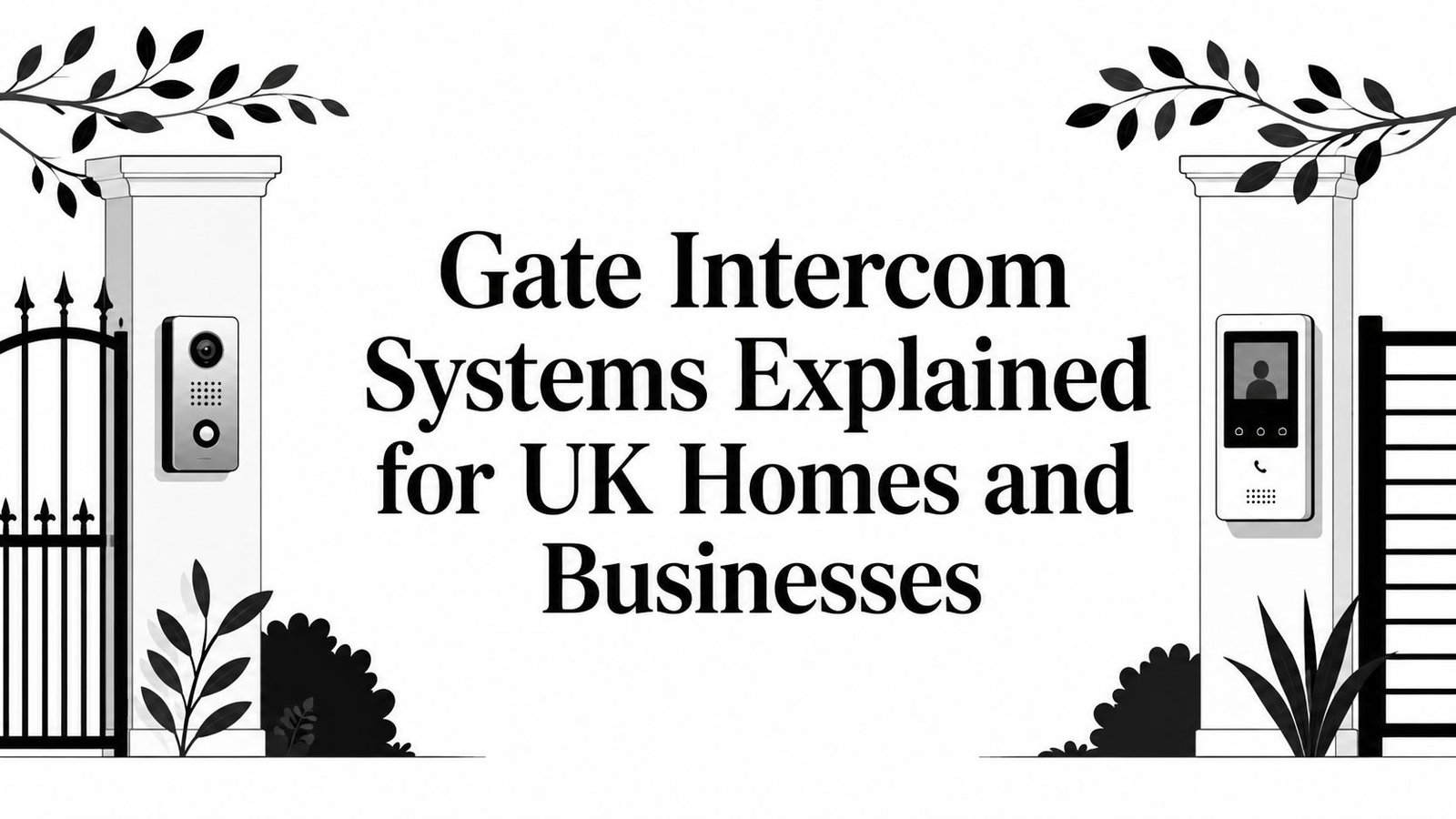
Gate Intercom Systems Explained for UK Homes and Businesses
A courier is at the gate, the house is empty, and the office phone's ringing while a driver waits outside your boundary. That's the everyday problem gate intercom systems solve, not as a gadget, but as the point where someone has to decide, quickly and without perfect visibility, whether the gate should open.
For a driveway in Cardiff, a retail yard in Bristol, or a shared car park in Swansea, the technology has the same job. It gives the person inside a way to identify the visitor, speak to them, and release the gate or door without walking to the boundary. The history behind that is older than most buyers realise, with early callboxes, then electric door intercoms becoming more common in the 1950s and 1960s, and video intercoms arriving in the 1980s as security expectations rose, while the first known callbox was introduced in Berlin in 1881 Security Today's history of intercom development.
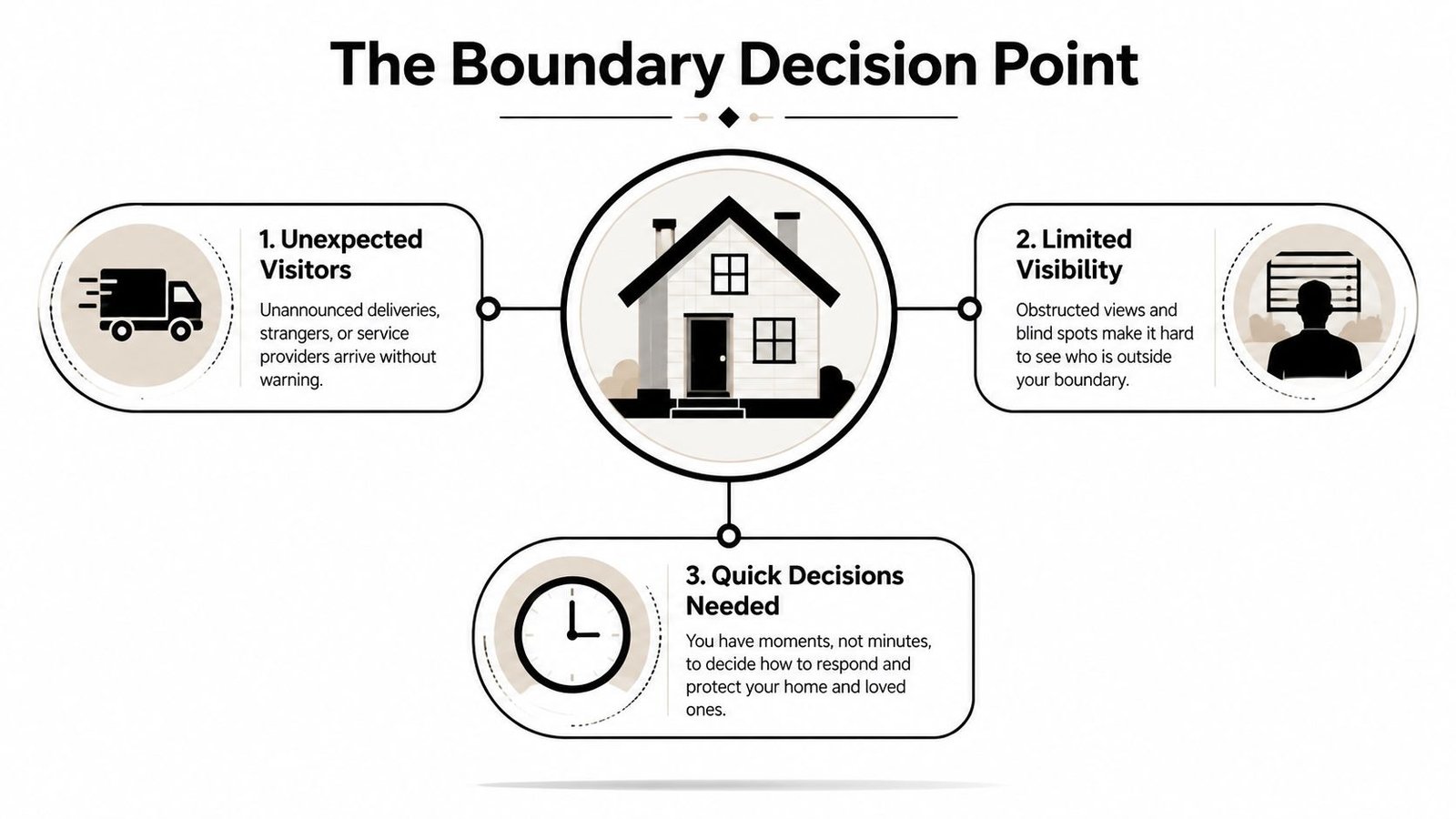
Table of Contents
- Why a Gate Intercom Matters at the Boundary
- Audio Versus Video and Wired/IP Versus Wireless
- Features That Change How a Gate Intercom Works Day to Day
- Installation, Cabling, and Long-Term Maintenance
- Why an Intercom Alone Is Not a Complete Gate Security Solution
- Costs, ROI, and Choosing the Right Installer in South Wales and the South West
Why a Gate Intercom Matters at the Boundary
A gate doesn't make a decision on its own. Someone at the house, reception desk, or control room has to hear the visitor, see enough to trust the call, and then trigger the release. That tiny interaction is where a lot of access control succeeds or fails, because the boundary is where uncertainty lives.
The gate is the decision point, not the screen
A good installation starts with the physical site, not the app. The gate station needs to sit where a driver can reach it, where a pedestrian can find it, and where the cable route makes sense. If the relay can't talk cleanly to the operator, or the visitor can't use the unit without leaving the vehicle in the middle of traffic, the “smart” system becomes a nuisance.
Practical rule: if the gate layout makes the visitor awkward, the intercom will feel awkward too.
The value is simple. The outside unit captures the call, the inside handset, monitor, or phone answers it, and the relay opens the operator's dry-contact input when permission is given. That's why gate intercom systems sit at the front line of a property's access stack, between the boundary and the rest of the security setup.
| Layer | What it does | Example |
|---|---|---|
| Boundary device | Lets the visitor initiate contact | Pedestal intercom at a driveway |
| Verification point | Lets the occupant confirm who's there | Indoor monitor or smartphone call |
| Release layer | Triggers the gate or door | Relay tied to the operator input |
| Wider security stack | Adds records and context | CCTV, access control, alarms |
The older history matters because it shows the category has always been about controlled entry, not novelty. The modern versions just do it with clearer audio, video, and networked control than the first callboxes ever could.
Why the boundary view matters more than the product name
I see the same mistake repeatedly. Buyers start by asking for the “best brand”, then discover the core issue is that the gate is 40 metres from the house, or the pedestrian gate needs separate logic, or the site has no easy route for cabling. A system can be technically excellent and still fail if the layout was ignored.
That's why the first question is never “What features does it have?”. It's “What happens at the boundary, every single day?” A courier arrives, a contractor buzzes, a resident may not be on site, and the system has to work in that moment, not just on a brochure.
Audio Versus Video and Wired/IP Versus Wireless
Audio-only and video intercoms solve the same basic problem in different ways. Audio is like a phone call at the gate, quick and familiar. Video is more like a video call, useful when identity matters and the visitor isn't well known.
Choosing between audio and video
Audio-only units work fine when the main job is to confirm a known visitor, answer the gate from inside, and keep the hardware straightforward. They're often enough for private homes or low-complexity sites where the visitor list is predictable.
Video earns its place when the boundary needs visual verification, shared access, or better accountability. A resident can check a face, a vehicle, or who's standing behind the first visitor, and that changes behaviour at the gate.
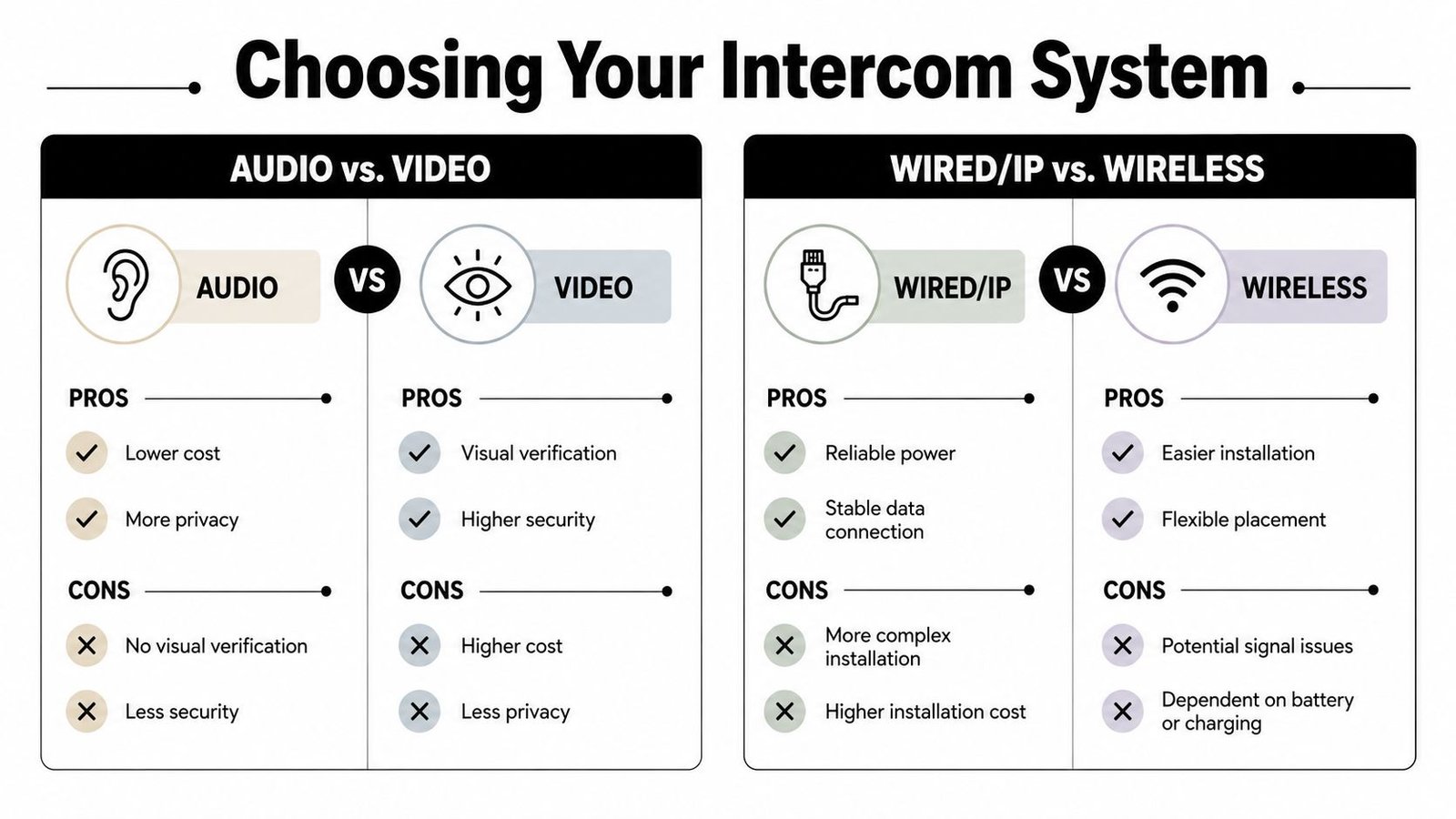
The decision isn't really about luxury. It's about how much certainty the site needs before the gate opens. If the entrance sees delivery traffic, contractor visits, or a shared resident flow, video usually earns its keep faster than owners expect.
Wired/IP and wireless behave very differently outdoors
Wired or IP systems are the dependable choice when there's a proper cable path and the site needs stable power and data at the gate. They're a better fit for multi-tenant blocks, business parks, and longer runs where structured cabling can be planned once and maintained properly.
Wireless units make sense when the cable route is awkward or the retrofit budget is tight. They're easier to place in some existing sites, but the trade-off is that the link quality depends on the radio environment or mobile coverage, and that's not something you want to be guessing about at a boundary wall.
This guide on video intercom systems is useful if you're weighing how much visual verification your site needs before choosing a format.
For South Wales and the South West, that difference matters on long drives, stone boundary walls, and shared entrances where the gate isn't close to the building. Wireless can be a useful answer, but it shouldn't be assumed to be the easy answer just because the install looks simpler.
Features That Change How a Gate Intercom Works Day to Day
The useful features are the ones that change what people do when the gate rings. A smartphone call answer lets someone approve a delivery from the office, but only if the call experience is reliable enough that they pick up. A video snapshot helps more when the visitor needs to be checked after the event, not just admitted in the moment.
Match the feature to the job
Smartphone remote access is valuable when the person who controls entry isn't always on site. A homeowner can approve a parcel courier from work, or a manager can answer a visitor call while moving between buildings, without depending on someone to be physically near the handset.
CCTV integration matters when the gate event needs context. If a site logs the call and the camera records the approach, a missed ring or a disputed visit can be reviewed against footage instead of guessed at later. That's a real operational improvement, not just a comfort feature.
- Remote answering: Useful when the decision-maker is off site or across a large premises.
- Missed-call forwarding: Helps when a call would otherwise go unanswered at the gate.
- CCTV linkage: Gives the operator a second layer of context before opening.
- Access-control integration: Lets the intercom sit alongside cards, fobs, or other credential systems.
- Gate-automation release: Turns the conversation into an actual boundary decision.
Daily use is where the real value shows up
Temporary credentials are another practical feature for sites that bring in contractors. A landlord or facilities manager can set access for a defined task, then remove it without chasing a key back later. For multi-tenant sites, directory systems also help because the visitor needs a clean route to the right unit or resident without wandering around the frontage.
A gate intercom is useful when it shortens the distance between “who's there?” and “should they come in?”
The point isn't to collect the longest feature list. It's to match the features to the property type. A single driveway, a block of flats, and a warehouse yard each ask for a different balance of convenience, verification, and control.
Installation, Cabling, and Long-Term Maintenance
A gate intercom only works as well as the path behind it. The front panel can look tidy on day one, but the core job is making the gate operator, relay, power, and cable route behave together once the site is live.
The relay, the cable path, and the gate operator
The release relay usually needs to land on a dry-contact input at the gate operator. That sounds straightforward until the site layout gets in the way. Long cable runs between the boundary and the building can shape the whole install, and they make fault-finding slower later, especially where the route has to cross walls, drives, or service zones.
Separate pedestrian gates and side entries often need separate logic as well. A vehicle gate may use one control path, while a person gate needs another, and a system that treats both the same quickly becomes awkward for daily use. Physical layout matters as much as the screen or the app.
If you want a practical primer on the protective side of the install, understanding cable gland technology is a useful reference when you are checking how outdoor cable entries are sealed and managed. For the wiring and relay side of the job, intercom installation planning and setup gives a useful benchmark for how the pieces should be put together on site.
Outdoor durability is not an optional extra
For UK conditions, gate hardware has to be chosen for the weather it will face. Current units are commonly rated around IP55 to IP66, with operating ranges such as −20°C to +50°C or −30°C to +60°C, and standby power can be as low as 2 W, with rated power around 3.5 W to 13 W depending on the model. Those figures matter because the unit has to cope with moisture, temperature swings, and daily use without the microphone, screen, or keypad becoming unreliable. Gate Openings Systems' intercom specification sheet gives a clear snapshot of those outdoor constraints.
The technical choices that last tend to be the plain ones. PoE or PoE+, open protocols, and network features such as SIP, VLAN, SNMPv3, SRTP, and QoS can make the system easier to deploy and easier to keep stable on a shared LAN. On a site where CCTV, alarms, and office traffic all share the same backbone, that network discipline is what stops call quality from becoming the weak point. ALGO's IP doorphone specification shows the kind of technical stack that supports that approach.
A year-two service visit is where hidden issues show up
Maintenance is not just firmware updates. It also means checking camera lenses, confirming microphone seals, looking for keypad wear, and making sure the gate operator still responds cleanly to the release input after months of use. Outdoor units do not usually fail in dramatic ways, they drift, get dirty, or become less dependable at the exact moment someone expects a fast answer.
Installer habit that pays off: ask how the engineer will service the weather seals and cable entries, not just how they will mount the panel.
If a system is meant to last, the installer has to think about the weatherproofing at the entry point, the access path for future maintenance, and the way the intercom talks to the gate hardware itself. That is the difference between a neat install and a durable one.
Why an Intercom Alone Is Not a Complete Gate Security Solution
A shiny screen at the gate can make a site feel secure even when the boundary is still weak. That's the wrong mental model. The intercom confirms identity or intention, but it doesn't stop tailgating, fix a bad relay path, or keep the entrance working when power or network service goes down.
Tailgating changes the whole security picture
Shared entrances are where the weakness shows up fastest. If one authorised vehicle opens the gate and another slips in behind it, the intercom did its narrow job, but the access design failed. Recent guidance on gated communities identifies tailgating as the biggest security flaw and recommends wider-angle video and stronger verification at the gate, while also stressing backup power such as a UPS so access control stays live during outages Overwatch's gated community intercom guidance.
That matters in housing blocks, logistics yards, and car parks because the gate is often used by more than one group of people. Residents, staff, contractors, and delivery drivers all behave differently, so the site needs a process that anticipates vehicle-following instead of pretending the intercom will prevent it by itself.
Power and network resilience are part of security
A gate that works only while everything else is perfect is not a secure boundary. Backup power, clean relay wiring, and sensible network design keep the site usable when there's a cut, a fault, or a temporary outage. If the intercom is the only layer, the system's reliability is tied to one device instead of the full boundary design.
This overview of gate access control systems is useful if you're looking at the wider boundary stack rather than treating the intercom as a standalone fix.
The right mindset is layered. The intercom handles verification, CCTV adds context, access control manages who can enter, and the physical gate logic has to stay strong enough to survive normal site pressure. That layered design is what keeps a boundary secure after the novelty wears off.
Costs, ROI, and Choosing the Right Installer in South Wales and the South West
Most owners don't buy an intercom because they love the hardware. They buy it because the current setup wastes time, creates missed deliveries, or leaves the boundary too easy to challenge. That means the value case should be practical, not promotional.
What actually drives the spend
Hardware is only one part of the cost. Cabling distance, the route from gate to building, the type of gate operator, and whether the site needs CCTV or access-control integration all push the install up or down. A tidy retrofit into existing infrastructure will usually feel very different from a first-time installation across a long, exposed driveway.
If you're comparing labour-heavy work, it helps to look at other door and access trades for context. The average cost for interior door trim is a reminder that the labour side of access projects often matters as much as the hardware itself, especially once site preparation and finishing are involved.
ROI is mostly operational
The return usually shows up in fewer missed deliveries, fewer unnecessary trips to the boundary, less key-handling for landlords, and cleaner visitor records for sites that need them. For businesses, the value is also in not interrupting staff every time someone arrives at the gate without warning.
A credible installer should be able to explain the practicalities, not hide behind a brand badge. In this region, look for DBS-checked engineers, SafeContractor accreditation, and experience integrating systems from manufacturers such as Hikvision, Paxton, Pyronix, and Fike. You also want a team that can tie the intercom into CCTV, intruder alarms, access control, and fire systems without creating a mess of separate platforms.
| Question | Why it matters | Good answer looks like |
|---|---|---|
| How will the relay connect to the gate operator? | Confirms the release path is understood | A clear explanation of the dry-contact input and testing method |
| What happens if the site loses power? | Shows whether resilience was planned | Backup power or a defined fallback plan |
| How long is the cable route? | Affects reliability and install complexity | A measured route, not a guess |
| Does the pedestrian entry need separate logic? | Prevents awkward day-to-day use | A separate control plan for side access |
| How will the system be maintained? | Protects long-term reliability | A scheduled service and fault-response process |
For Cardiff, Bristol, Newport, Swansea, and the surrounding areas, the smartest next step is simple. Ask the installer how they'll handle the cable path, the gate operator input, the weatherproofing, and the backup plan before you sign anything.
Wisenet Security Ltd designs, installs, and maintains integrated boundary systems that fit the way real sites work, not just the way brochures look. If you need a gate intercom tied into CCTV, access control, or gate automation in South Wales or the South West, visit Wisenet Security Ltd and ask for a practical site assessment.