What Is System Integration? Security Systems Explained
A homeowner in Cardiff calls to report that the intruder alarm sounded during the night, but the nearest camera never recorded the approach. At a small Bristol warehouse, an access event may sit in one system, CCTV footage in another, and the monitoring team in a third. The equipment exists, but the protection still feels fragmented.
That's the practical starting point for understanding what is system integration. It means connecting separate systems so they can exchange information, trigger appropriate actions, and give people a coordinated view of what's happening. In security, the difference is not only between old and new technology. It's the difference between owning several devices and operating one dependable security arrangement.
Table of Contents
- What System Integration Means for Your Security
- How Integration Connects Security Hardware and Software
- UK Standards That Govern Integrated Security Systems
- Cyber Compliance and Product-Security Duties
- Why Ongoing Integration Matters After Installation
- Standalone Versus Integrated Security Systems
- Planning Your System Integration Project
- Bringing It All Together
What System Integration Means for Your Security
Suppose an intruder alarm detects movement at a rear door. In a disconnected installation, the sounder may activate while the CCTV system carries on recording normally, the access-control platform remains unaware, and the property owner receives no useful context. Someone then has to check each system separately, often while trying to decide whether the event is genuine.
With integration, the alarm can send an event to the video management system. The relevant camera can open or mark footage, access-control records can help identify the door state, and a monitoring operator can follow a defined response process. The systems haven't become one physical device. They've become coordinated parts of one security operation.
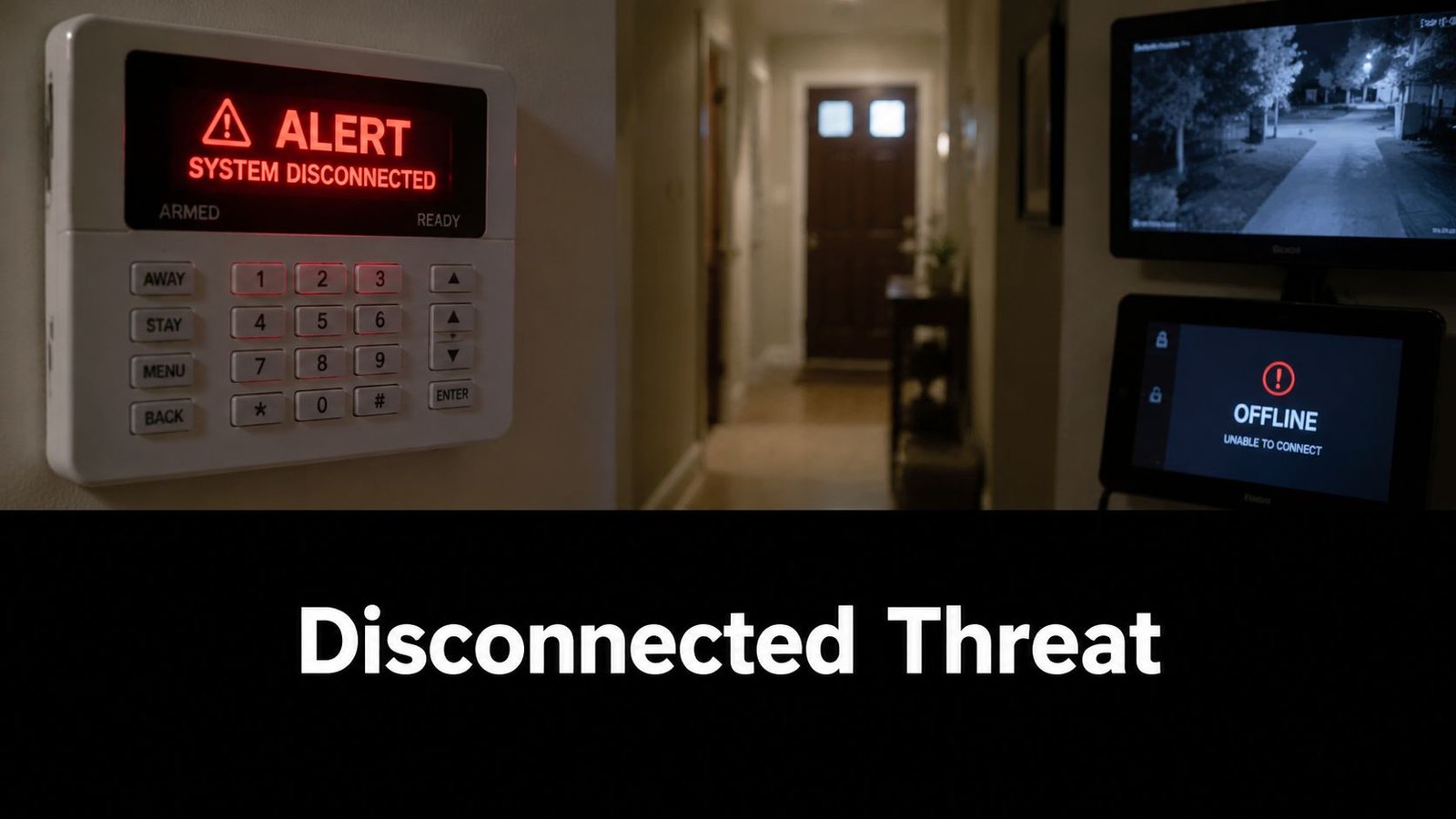
Devices alone don't create protection
An alarm that can't pass events to monitoring software leaves a decision-making gap. A camera that records without a reliable time reference or event marker can make evidence harder to find. An access reader that isn't connected to the wider security picture may show who used a door, but not what happened immediately before or afterwards.
System integration closes those handover gaps. It joins alarms, CCTV, access control, intercoms, gates, and other relevant functions through programmed rules and compatible interfaces. For homeowners, landlords, and businesses across South Wales and the South West, that can mean faster awareness and fewer manual checks.
Anyone involved in new housing developments may also find this practical overview of system integration for homebuilders useful when planning security infrastructure alongside other building services. The important question isn't whether every device comes from the same manufacturer. It's whether the complete arrangement works together, can be tested, and remains understandable after handover.
How Integration Connects Security Hardware and Software
Security integration usually works through four connected layers. Each has a different job, much like a delivery service that needs vehicles, a booking system, translators, and roads before a parcel reaches its destination.
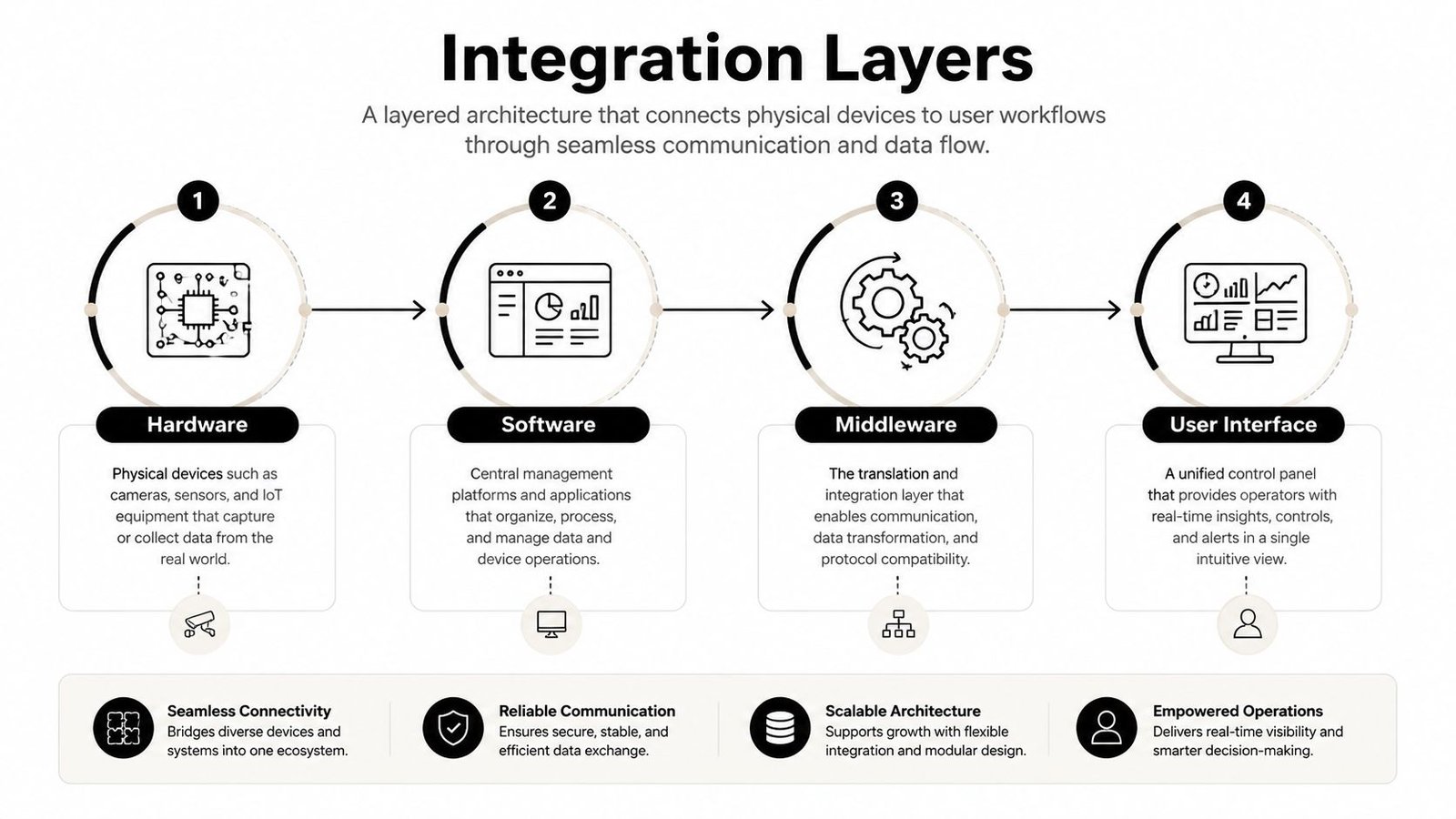
Hardware provides the signals
Cameras, door contacts, motion sensors, alarm panels, readers, locks, intercoms, and gate controllers create the physical events. A door contact changes state, a camera detects movement, or a card reader records an authorised entry. Cabling, power supplies, controllers, and wireless links carry those signals.
Hardware compatibility matters because a device must expose the information another system needs. A camera may need to provide a live stream and event notification, while an access controller needs to communicate door status and user activity.
Software interprets activity
The software layer turns individual signals into useful information. A video management platform can associate a camera event with an alarm input. An access-control application can apply permissions, produce logs, and show whether a door is secure. A central dashboard can present those events to an operator without requiring separate screens for every subsystem.
Software also holds the rules. For example, an authorised access event might produce a normal log, while a forced-door event could generate a notification and prompt the operator to review nearby video.
Middleware translates between systems
Different manufacturers and platforms don't always use the same communication method. Middleware acts as the translator, converting one device's message into a format another system understands. It may connect an alarm output to a video platform, or map an access event to a monitoring workflow.
The fewer unnecessary translation layers an engineer needs, the easier the design is to understand and maintain. Buyers comparing installations for shared accommodation may benefit from this practical vendor checklist for co-living cameras, particularly where cameras must work alongside access arrangements and property management processes.
Networks carry the conversation
The network connects devices, servers, cloud services, monitoring centres, and authorised users. Its design affects whether events arrive reliably and whether remote access remains available when people need it.
A professional survey should consider coverage, bandwidth, resilience, power, remote connections, and separation between security equipment and other business systems. Plugging every device into an existing network without reviewing those factors can create both reliability and cyber-security problems.
UK Standards That Govern Integrated Security Systems
A system that merely exchanges data isn't necessarily a properly integrated security system. The connections must behave predictably, preserve useful records, and fit the standards and operational rules that apply to the installation.
For intruder alarms, buyers often encounter BS EN 50131, which addresses the design and performance of alarm systems. A useful introduction to its role is this guide to EN 50131 requirements. CCTV installations also need careful attention to the BS EN 62676 series, including the specifications identified by UK government surveillance guidance for IP video devices to work together across a network.
Interoperability needs a recognised framework
The British Security Industry Association identifies DD CLC/TS 50398:2009 as providing recommendations for interconnected alarm systems in its guidance on integrated security management systems. That matters because a connection should be more than a convenient cable between two products. The installer needs to establish what events can pass between systems, how commands are handled, and how the result can be verified.
Standardised interfaces can reduce uncertainty during commissioning. They also help engineers trace faults when an alarm event fails to appear in monitoring software or when an access state doesn't synchronise with another security function.
Different safety domains still have different duties
Security integration shouldn't be confused with treating every building system as one compliance stack. UK occupation standards require engineers to test and confirm that integrated systems and communications operate correctly and comply with relevant standards. That includes integration and communications tests.
Fire alarms, building management, gas suppression, and social alarms have their own guidance and compliance responsibilities. A link between security and fire systems therefore needs a clearly defined design, competent installation, and testing against the requirements for each domain. This protects the reliability of the response and helps preserve an auditable evidence trail for insurers, monitoring centres, and other responsible parties.
Cyber Compliance and Product-Security Duties
Connecting security equipment to a network changes the risk profile of a property. A standalone local alarm has one set of concerns. A CCTV system with cloud viewing, remote maintenance, third-party monitoring, and mobile notifications has more pathways that need control.
That doesn't mean networked security is unsafe. It means the owner and installer must account for the additional access routes. Cameras, intercoms, alarm panels, and access controllers should have strong unique credentials, controlled user permissions, and a clear process for removing access when staff or contractors no longer need it.
Treat the security network as a protected service
Network segmentation can limit the effect of a compromised device. It separates security equipment from ordinary office devices, guest Wi-Fi, and other systems where practical. Remote access should be approved, logged, restricted to the people who need it, and reviewed rather than left permanently open.
Update planning matters too. The owner should know who monitors manufacturer security notices, who applies firmware or software updates, how compatibility is checked, and what happens if an update affects an existing integration. A device that works today but can't be maintained safely may become a long-term liability.
Product security now belongs in the buying conversation
The UK Government has introduced the Cyber Security and Resilience (Network and Information Systems) Bill, with the stated aim of improving protection for services people rely on and addressing emerging cyber threats. The government bill factsheets provide the relevant policy context.
The Product Security and Telecommunications Infrastructure (Security Requirements for Relevant Connectable Products) (Amendment) Regulations 2025 came into force on 25 February 2025, as recorded in the supplied UK market context. For a homeowner or SME, the practical response is straightforward: ask about default passwords, supported updates, end-of-life arrangements, supplier access, data handling, and recovery if a cloud service becomes unavailable. Guidance on cyber security for security systems can help turn those questions into a sensible installation brief.
Why Ongoing Integration Matters After Installation
Handover isn't the finish line. It's the point at which the integrated system enters daily use, and daily use exposes issues that a demonstration may not reveal. Staff change, users forget procedures, cameras lose alignment, firmware needs attention, and monitoring arrangements evolve.
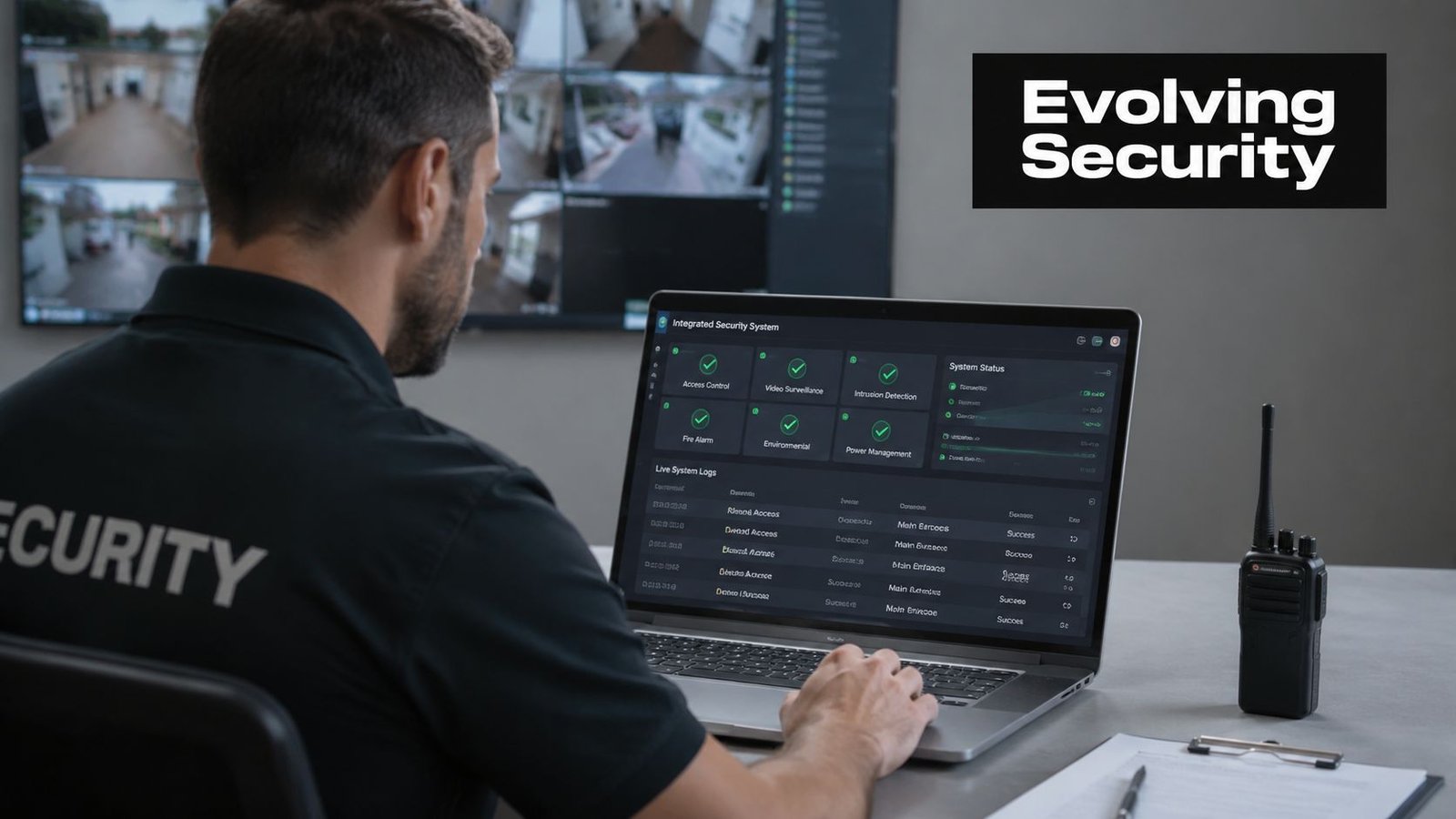
A maintenance plan should check whether alarms reach the intended destination, whether video is available when an event occurs, and whether access permissions still reflect the people who use the building. Engineers should also confirm that changes to one subsystem haven't disrupted another.
False alarms need a managed response
A poorly maintained integrated system can create unnecessary alerts or fail to classify events correctly. That creates work for the owner, the monitoring centre, and potentially the police response pathway. The National Police Chiefs' Council updated its 2025 Police Operational Advice and Security Industry Requirements for Response to Security Systems for England, Wales and Northern Ireland, with changes covering documentation, monitoring-centre terminology, false-alarm definitions, and audio challenge usage.
That guidance makes operational records important. A responsible service arrangement should document who receives alerts, what verification takes place, when escalation occurs, and how authorised contacts respond. It should also explain how remote access is controlled and how faults are reported outside normal working hours.
Practical rule: An integrated system should be tested at the boundaries, not only device by device.
The market is also moving towards continuing managed services and remote monitoring rather than treating integration as static wiring. The supplied UK market commentary projects managed services and remote monitoring growth at 4.02% CAGR through 2031, a projection that reinforces the value of lifecycle support rather than a one-off installation mindset. A maintenance contract can cover inspections, event testing, user changes, updates, and documented fault resolution, provided its scope is clear.
Standalone Versus Integrated Security Systems
Standalone systems can be suitable where a site has a simple risk profile, limited users, and no need for coordinated response. An alarm may alert a homeowner, while a separate camera records activity. That arrangement can work, but the owner carries more responsibility for checking each system and joining the information together.
Integration becomes more valuable when a property has several entrances, multiple users, remote monitoring, shared accommodation, valuable stock, or a need to connect events to evidence. The choice should reflect the site's risks and operating model, not just the number of devices.
| Decision area | Standalone systems | Integrated systems |
|---|---|---|
| Response coordination | Each device follows its own alert process | Rules can link alarms, video, access events, and notifications |
| Operational visibility | Users check separate apps, panels, or logs | Operators can work from a coordinated dashboard |
| Fault investigation | Teams compare records manually | Related events can be reviewed together |
| Maintenance | Each product may have separate settings and support | Changes need coordinated testing across connected systems |
| Compliance readiness | Evidence and test records may sit in different places | A planned design can document interfaces and response pathways |
| Future expansion | New devices may introduce another isolated platform | Compatible equipment can be added to an agreed architecture |
Where standalone may be sensible
A small home with one alarm panel and a few cameras may not need a complex control platform. A standalone device can be easier to operate, and fewer connections can mean fewer integration points to maintain.
The limitation appears when the owner expects one event to produce several actions. If a forced door should trigger a camera view, notify a monitoring centre, and create a usable incident record, the equipment needs a tested way to exchange those messages.
Where integration earns its place
For a landlord, warehouse operator, retailer, or property manager, the value lies in reducing fragmented decisions. Integration can help staff understand what happened, which door or zone was involved, and what response the procedure requires.
It also supports gradual growth when the initial design includes compatible protocols, documented network arrangements, and clear ownership of maintenance. A professional integrator should explain the trade-off plainly, including when integration would add unnecessary complexity.
Planning Your System Integration Project
A successful project starts with the site, not a product catalogue. The installer should understand the property layout, entrances, occupancy, lighting, network, existing equipment, monitoring requirements, and likely changes to the building.
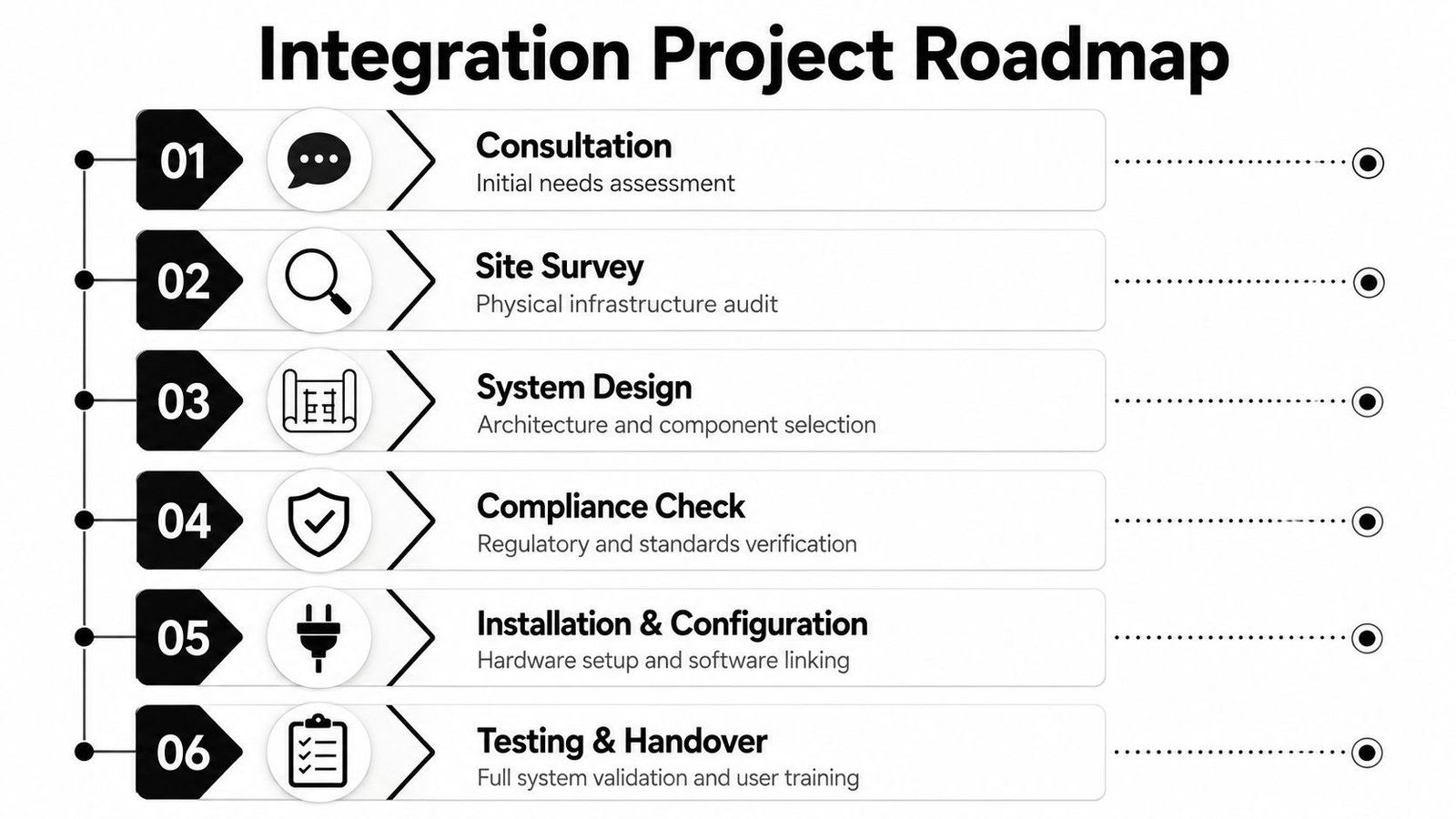
Begin with a documented survey
A useful project sequence looks like this:
- Consultation: Define the risks, users, operating hours, and desired responses.
- Site survey: Inspect doors, routes, lighting, equipment locations, cabling, power, and network conditions.
- System design: Map cameras, sensors, controllers, software, interfaces, and user permissions.
- Compliance check: Confirm the standards and separate regimes that apply to each subsystem.
- Installation and configuration: Fit equipment, configure rules, connect platforms, and secure remote access.
- Testing and handover: Test normal events, failures, communications, recording, alerts, and user procedures.
The roadmap should include more than a list of products. It should show what happens when a door is forced, an alarm is confirmed, a camera loses connection, a user is removed, or a monitoring link fails.
Ask questions that expose the hidden work
Before appointing an integrator, ask:
- Protocol compatibility: Which interfaces will connect the systems, and are any proprietary bridges required?
- Testing scope: Will engineers test every event across the full chain, including monitoring and notifications?
- Cyber controls: How are credentials, updates, segmentation, backups, and third-party access managed?
- Documentation: Will you receive network diagrams, device schedules, user procedures, and test records?
- Support model: Who handles faults, updates, remote access, and changes after handover?
- Training: Can your staff operate the dashboard and follow the response process without relying on the installer?
For readers managing larger estates, the wider discussion of integration strategies for CIOs offers useful context on governance, ownership, and long-term technology planning. For security-specific projects, review the available integrated security solutions and compare the proposed scope against the actual needs of the property.
Wisenet Security Ltd is one option for projects in South Wales and the South West, with DBS-checked engineers, recognised standards-based installations, and maintenance covering connected security functions. Whichever provider you choose, insist on a written design, a complete test record, and a clear explanation of what happens when something fails.
Bringing It All Together
System integration is the discipline of making separate security tools operate as one coordinated protection framework. It can connect CCTV, intruder alarms, access control, intercoms, gates, monitoring platforms, and other relevant systems so that an event in one place produces an appropriate, traceable response elsewhere.
The technical connection is only part of the answer. UK standards and guidance shape how alarms, IP video, interconnected systems, and communications should be designed and tested. Fire and building-management links also need their own compliance treatment, rather than being assumed to fit inside a single security rulebook.
Cyber security adds another responsibility. Once equipment is networked, remotely managed, or connected to a monitoring service, owners need sensible controls for credentials, updates, segmentation, permissions, and supplier access. The 2025 product-security regulations and the proposed cyber-resilience legislation make those questions increasingly relevant, including for smaller installations.
An integrated system also needs care after installation. Monitoring arrangements, false-alarm procedures, documentation, maintenance, and response contacts must remain current. The original Cardiff alarm scenario then has a better outcome: the alarm event reaches the right platform, nearby video is available, access information adds context, and the person responsible knows what to do.
That's what system integration means in practical terms. It turns separate equipment into a managed security process that people can understand, test, and maintain.
Wisenet Security Ltd designs, installs, and maintains integrated CCTV, intruder alarms, access control, fire alarms, intercoms, and gate automation for homes and businesses across South Wales and the South West. Visit Wisenet Security Ltd to arrange a consultation and discuss how your existing or planned systems can work together securely.