
Why Install CCTV in South Wales: Full Guide 2026
Recorded crime in England and Wales reached 6.7 million offences in the year ending March 2024, making professional CCTV installation a justified necessity rather than a luxury. That figure was 4.2 million in the year ending March 2015, a rise of about 59.5% over roughly a decade.
For property owners and business managers in Cardiff, Swansea, Newport and across South Wales, the practical question isn't whether CCTV looks impressive on a brochure. It's whether your system will deter opportunistic offenders, provide usable evidence, protect people and assets, and operate without creating avoidable privacy problems. A cheap camera pointed at the wrong area won't do that.
Table of Contents
- The Case for Modern Surveillance in South Wales
- Security Benefits That Deliver Measurable Returns
- Technical Capabilities of Contemporary Systems
- Legal Obligations Under UK Surveillance Law
- Monitoring Options for Every Budget and Need
- Installation Best Practices for Welsh Properties
The Case for Modern Surveillance in South Wales
The national crime picture gives South Wales property owners a sensible reason to review their security. The 6.7 million crimes recorded in the year ending March 2024, compared with 4.2 million in the year ending March 2015, show the scale of the environment in which homes, shops, warehouses, car parks and shared buildings now operate. These figures are cited in a Coventry City Council CCTV evaluation report, which also places surveillance within a wider requirement for a defined and regularly reviewed security purpose.
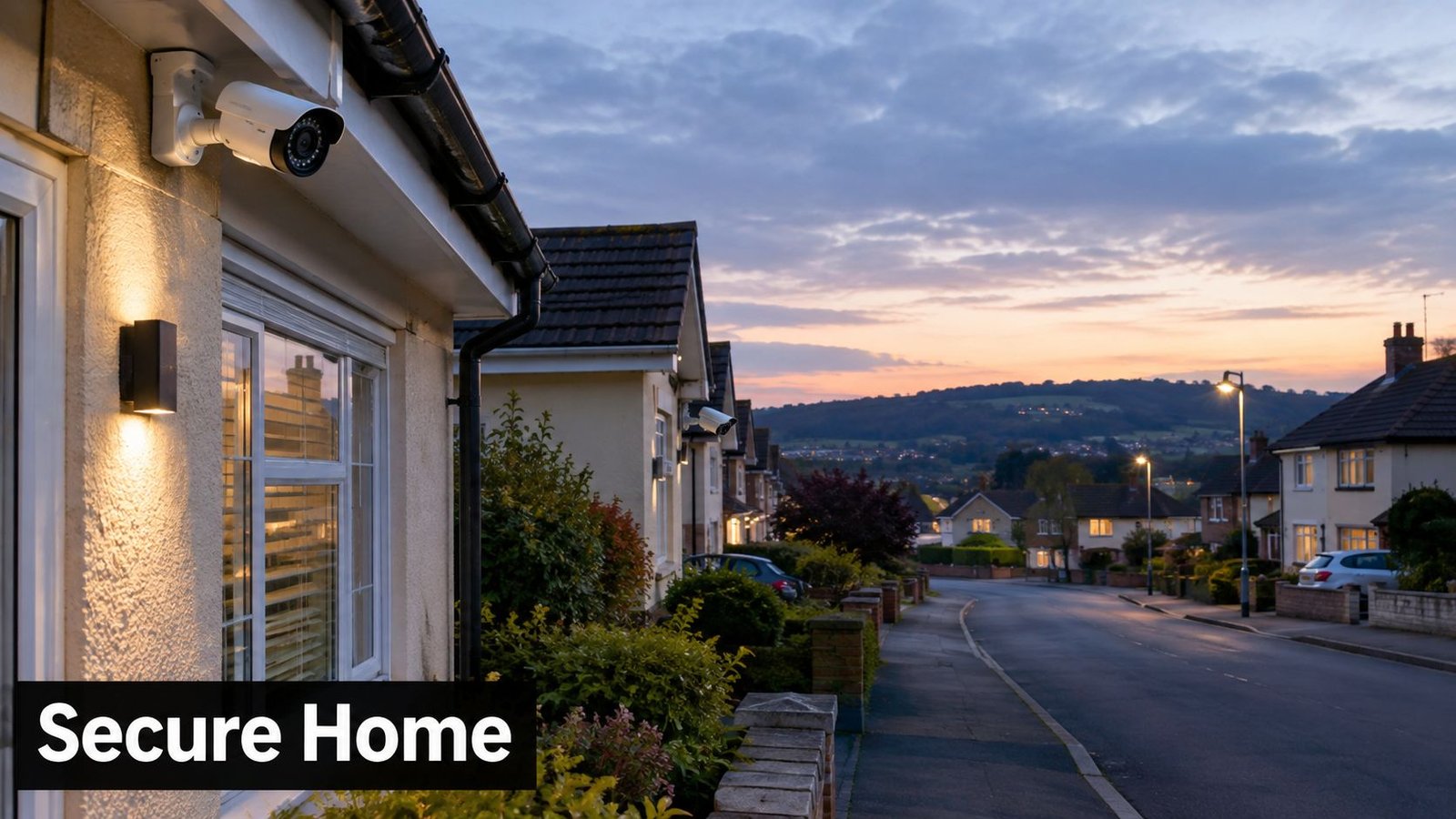
That doesn't mean every South Wales home needs a complicated network of cameras. It does mean CCTV should be considered as proportionate risk management, especially where a property has a secluded side entrance, a vulnerable car park, valuable stock, delivery access or a history of antisocial behaviour. In residential areas, the priority is usually clear coverage of approach routes, entrances and boundaries. In commercial districts, loading areas, shutters, staff entrances and vehicle access points often deserve more attention than a camera aimed at the front sign.
Security decisions should follow the property
CCTV works best when it addresses a documented weakness. A landlord managing a multi-tenant building may need evidence around communal entrances and refuse areas. A retailer may need reliable footage at tills, doors and stockrooms. A warehouse operator may prioritise perimeter coverage, delivery movements and out-of-hours alerts.
The wrong approach is to buy cameras first and decide what they should achieve later. Start with the incident risks, identify who needs to respond, then design the system around those realities. The national surveillance guidance also makes clear that systems should have a legitimate purpose, remain transparent and be reviewed, rather than operating indefinitely just because they were installed.
Practical rule: Install CCTV to answer a specific security question, such as who entered, which vehicle arrived, or when an access point was breached.
South Wales properties also face practical installation challenges. Rain, low winter light, narrow lanes, older masonry and mixed-use boundaries can undermine poorly chosen equipment. A professional survey should account for glare, camera height, lighting, privacy masking and the route of cabling before anyone drills a hole.
Security Benefits That Deliver Measurable Returns
CCTV earns its place when it changes the security outcome, not merely when it records activity. The strongest evidence comes from controlled locations. The College of Policing CCTV evidence review reports a 51% crime decrease in the most effective car park and parking facility schemes, while CCTV across the studied settings was associated with a 16% decrease overall. The review also identifies stronger results where cameras are combined with measures such as good lighting and high camera coverage.
That matters for South Wales businesses with customer parking, staff parking or vehicle yards. A camera can't replace a lock, a lighting plan or a trained response process, but it can reinforce each one. It can also help establish what happened during a dispute, support an insurance notification, and give police a clearer starting point after an incident.
Where the investment pays off
For homeowners, the value usually comes from a combination of visible deterrence, remote awareness and evidence. A phone alert can prompt the owner to check an approach or contact a neighbour. Recorded footage can clarify whether an alarm was triggered by a person, animal, delivery or weather event. It can also help resolve disagreements about damage or access.
For commercial operators, the return is more operational:
- Protecting access points: Managers can review activity at shutters, gates, staff doors and delivery entrances.
- Reducing uncertainty: Clear footage helps separate genuine incidents from false alarms and conflicting accounts.
- Supporting staff safety: Cameras provide oversight in isolated areas, subject to lawful and proportionate use.
- Strengthening layered security: CCTV can work alongside intruder alarms, access control, lighting and gate automation.
A system that records an obscured face or a distant vehicle provides limited value. The return comes from correct positioning, sufficient lighting, dependable recording and a response plan that tells someone what to do when an alert arrives. For a practical overview of the wider benefits, see this guide to CCTV surveillance benefits.
The right question isn't, “How many cameras can we afford?” It's, “Which incidents would cost us most, and what evidence or early warning would reduce that risk?”
Technical Capabilities of Contemporary Systems
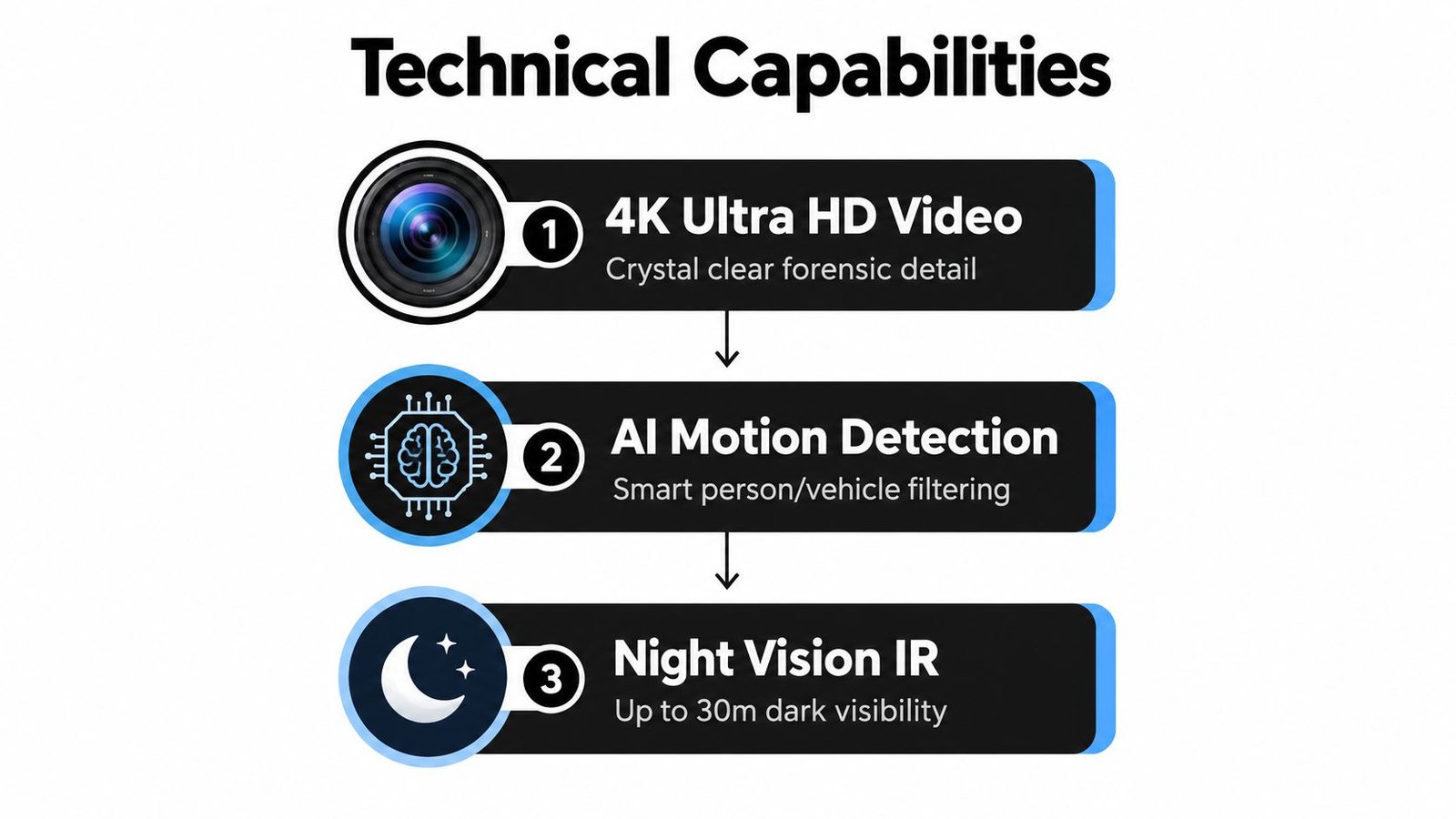
Modern CCTV should be specified around the evidence you need, the environment it must survive and the people who will use it. A high-resolution camera is useful only when its lens, angle, lighting and storage settings support the required view. A phone app is useful only when alerts are meaningful and someone can respond.
Match the specification to the task
Resolution and lens choice come first. Higher-definition footage can preserve more detail, but a wide-angle camera may spread that detail too thinly across a large yard. Entrances, payment areas and vehicle access points often need a more deliberate field of view than a general overview camera.
Infrared night vision extends coverage after dark, but it shouldn't be treated as a substitute for sensible lighting. Reflective surfaces, rain and nearby walls can create glare or wash out detail. A survey should test the camera at night, not just during a bright afternoon visit.
Smart analytics can help separate people and vehicles from less relevant movement. This can reduce nuisance notifications from trees, shadows or passing animals, but the configuration still needs checking. AI features should support a human response process, not encourage automatic assumptions about a person's behaviour.
The Bidwell resource on closed-circuit television cameras by sector is useful when comparing how different property types approach surveillance. A retailer, care setting, industrial site and private home won't have the same camera placement or access requirements.
Storage and remote access
Local network video recorders keep footage on the premises and can offer direct control over the recording equipment. Cloud-connected systems make remote viewing and system management easier, but the operator still needs to understand account security, user permissions and the handling of recorded personal data. Hybrid arrangements can combine local recording with remote access for selected users.
Use a written camera schedule. Record which camera covers each area, who can view it, how alerts are handled and how footage is exported when an incident occurs. For a deeper explanation of intelligent detection, review how AI CCTV systems can improve security.
Legal Obligations Under UK Surveillance Law
CCTV in South Wales isn't merely a private gadget pointed at a gate. Once a system captures people beyond a tightly private domestic setting, privacy and data protection duties become part of the installation decision. The Information Commissioner's Office guidance on home CCTV systems explains that domestic cameras capturing outside the property boundary can trigger obligations under the UK GDPR and the Data Protection Act.
For public-place surveillance in England and Wales, the legal framework includes the Protection of Freedoms Act 2012 and the Surveillance Camera Code of Practice, which was updated and brought into effect on 12 January 2022. The official Surveillance Camera Code guidance requires a defined legitimate purpose, transparent operation and annual review. It applies whether the system is used for live viewing, recording or both.
Proportionality is the practical test
The code's 12 principles include keeping only the images strictly required, securing access and ensuring that surveillance is effective in supporting law enforcement. For a South Wales landlord or business manager, that translates into straightforward decisions:
- Define the purpose: State whether the cameras protect people, property, access points or investigate incidents.
- Limit the view: Avoid recording a neighbour's garden, an entire pavement or rooms where people reasonably expect privacy.
- Use clear signage: Tell visitors that CCTV operates, identify the system operator and explain where fuller privacy information is available.
- Control access: Give footage access only to authorised people who have a genuine reason to use it.
- Review the system: Check that each camera remains necessary, proportionate and effective.
A camera that captures a small unavoidable section of a pavement while covering a front gate may be justifiable. A camera deliberately aimed into neighbouring windows is not. Privacy masking, narrower lenses and repositioning can reduce unnecessary capture without abandoning security.
Businesses should also document how footage is stored, accessed, exported and deleted. If an incident occurs, preserve the relevant clip securely and record who handled it. Don't let a useful recording become unreliable evidence because multiple people share an unsecured login or because the system clock is wrong. Further practical guidance is available in this explanation of CCTV and GDPR requirements for UK businesses.
Monitoring Options for Every Budget and Need
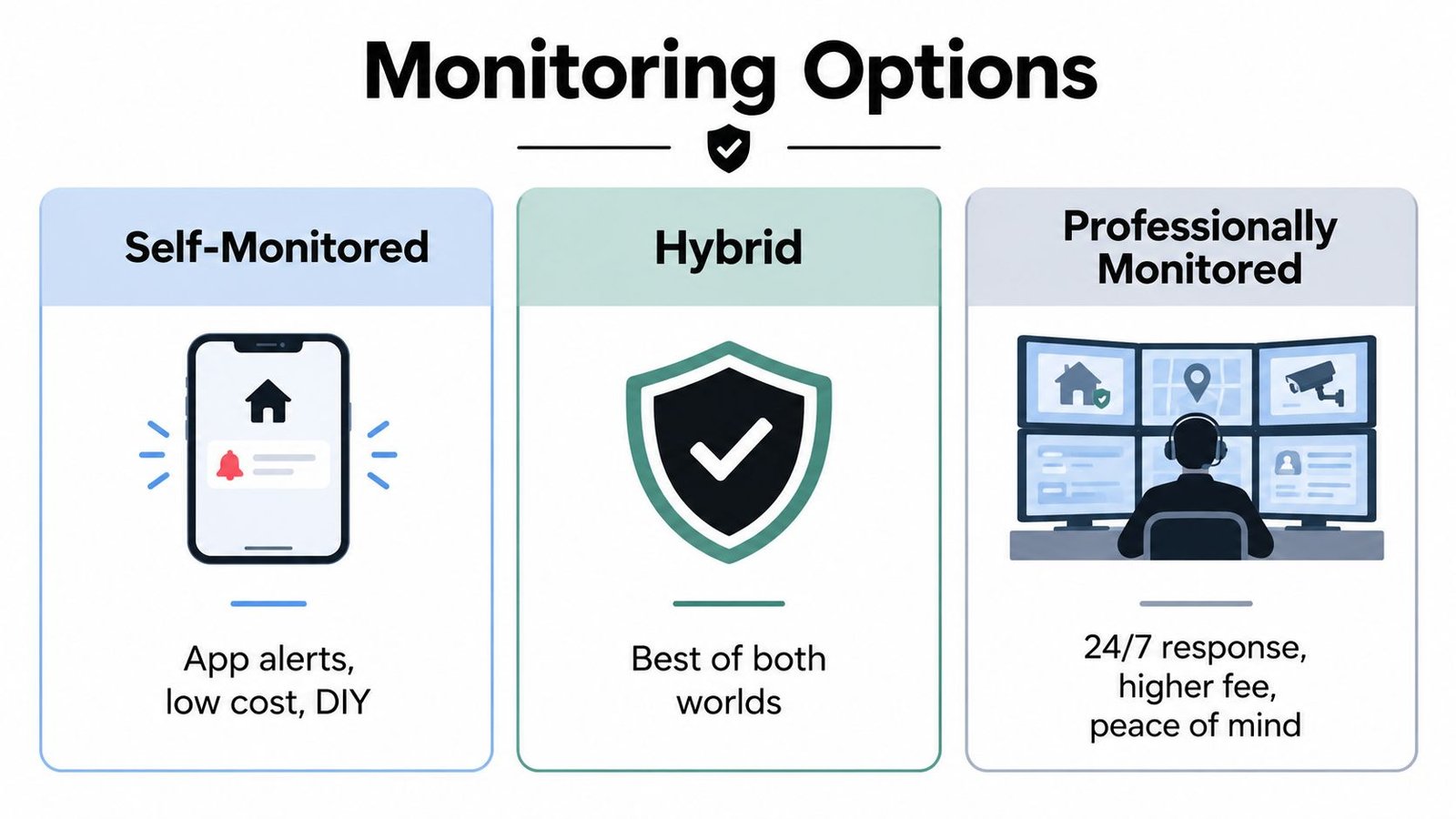
A camera system is only as useful as the response behind it. A self-monitored setup may suit a homeowner who can check alerts quickly and contact the appropriate person. It may be a poor fit for a warehouse that needs an overnight response while managers are asleep or travelling.
Choose the response before the features
Self-monitored systems send alerts to an app or nominated users. They keep the response in the owner's hands and can work well where the owner is available, the site is straightforward and the likely incidents are easy to assess remotely. The weakness is obvious. If nobody checks the alert, the system has detected a problem without creating a response.
Professional monitoring places alert handling with a monitoring service that follows an agreed escalation process. This can suit commercial premises, vulnerable properties and sites where a rapid response decision matters. It also creates an ongoing service cost, so the operator should understand exactly what events are monitored and what happens after verification.
Hybrid monitoring combines local recording and owner access with selected professional response services. It can be a practical compromise for a small business that wants direct visibility but doesn't want every notification handled in-house.
For multi-tenant buildings, agree responsibilities before installation. Decide whether the landlord, managing agent or a nominated security contact handles alerts. Set rules for footage access, tenant requests, police disclosures and maintenance visits. A system with unclear ownership creates friction precisely when a quick decision is needed.
A simple decision test
Choose self-monitoring when someone can reliably respond and the property has manageable risk. Choose professional monitoring when the premises are vacant for long periods, contain valuable stock, or require an organised escalation process. Choose a hybrid design when managers need direct access but also want support outside working hours.
Don't pay for features that nobody will use. Spend first on camera placement, dependable recording, secure accounts, useful alerts and a written response plan.
Installation Best Practices for Welsh Properties
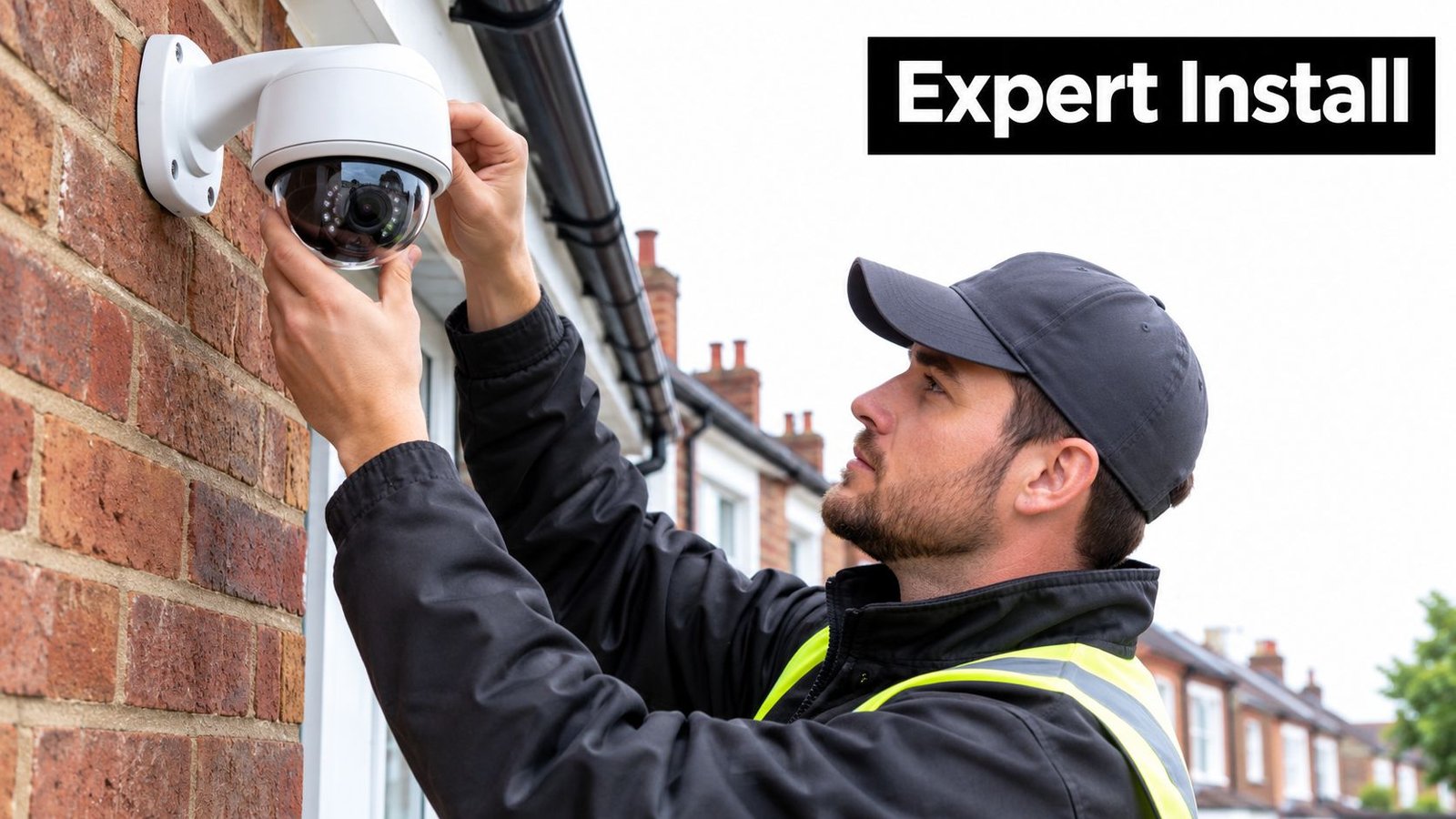
Good installation starts with a site survey, not a catalogue. Walk the property at different times of day and identify entrances, blind spots, glare, vehicle routes, neighbouring windows and areas where lighting changes sharply. On older South Wales buildings, the installer may also need to work around uneven masonry, conservation requirements or restrictions on visible cabling.
Build for the site, not the sales specification
Use weather-resistant housings and corrosion-resistant fixings where cameras face driving rain. Keep lenses clear of downpipes, roof run-off and nearby foliage. Mount cameras securely enough to resist vibration and tampering, while keeping them accessible for maintenance.
Cabling should be protected, neatly routed and documented. An installer should label equipment, explain the network video recorder, show users how to export footage and confirm that the system clock is accurate. Privacy masks should be configured before handover where the camera view includes unavoidable neighbouring or public areas.
Ask prospective installers specific questions:
- Who will survey the site: Confirm that the person designing the system understands the property rather than just selling a standard package.
- Who will install it: Ask whether engineers are DBS-checked, insured and properly trained for the equipment proposed.
- What happens after handover: Get clear terms for servicing, firmware updates, camera cleaning, storage checks and fault response.
- How will the system integrate: Check compatibility with intruder alarms, access control, intercoms and gate automation where those systems are already present.
- What documentation will you receive: Require camera locations, user permissions, operating instructions and privacy information.
A reliable maintenance routine includes checking image quality, cleaning lenses, testing recording, reviewing storage, updating firmware and confirming that alerts still reach the correct users. Businesses should also revisit their purpose when the site changes. New fencing, lighting, entrances or tenant arrangements can make an old camera plan ineffective or disproportionate.
South Wales property owners should judge installers on workmanship, governance and support, not just the number of cameras in the quotation. A smaller system with clean images and a clear response process is more useful than a larger system full of blind spots.
The video below shows the practical nature of professional camera installation and positioning.
If you're reviewing CCTV for a home, shop, warehouse, car park or managed building, Wisenet Security Ltd can design, install and maintain customized systems across South Wales and the South West, including remote viewing, night vision and integrated security options. Arrange a consultation to assess your risks, protect privacy and specify a system that will perform reliably after installation.