CCTV Camera Types: A Complete UK Guide for 2026
You're probably in one of two situations right now. You either want your first CCTV system and every supplier page looks like a wall of camera shapes, resolutions, and acronyms, or you've already got cameras in place and you're starting to realise they don't give you the footage or alerts you need when something happens.
That's a common problem in South Wales. People often start by asking which camera looks right, when the better question is which camera solves the actual risk on the property. A front door, a shared apartment entrance, a warehouse loading bay, and a retail till area all need different coverage. The right answer usually isn't one camera type. It's a sensible mix.
That matters more than ever because CCTV is no longer niche. According to a 2022 BSIA report cited in industry analysis, the UK has around 21 million operational CCTV cameras, up from 7.5 million in 2013, a near threefold increase, as noted in Clearway's summary of UK CCTV usage. With that much surveillance in use, the gap between a basic recording setup and a properly specified system becomes very obvious.
Table of Contents
- Choosing Your First CCTV System
- The Foundational Choice Analog vs IP Cameras
- An Illustrated Guide to CCTV Camera Types
- Decoding Key Technical Features and Specs
- Choosing the Right Camera for Your Property
- UK Compliance Installation and Maintenance
- Frequently Asked Questions About CCTV
Choosing Your First CCTV System
The mistake most buyers make is choosing from a product list instead of a site plan. They compare bullet, dome, and PTZ cameras before deciding what they need to see, how far away the subject will be, what happens at night, and whether they need evidence or just a general overview.
For a house, that usually means asking simple questions first. Do you need to identify a face at the front door, watch a driveway, cover the back garden, or monitor a side gate? For a business, the questions shift. Do you need to deter, verify deliveries, watch stock movement, monitor staff access, or review incidents quickly without searching through hours of footage?
A camera that captures “something happened” is very different from a camera that shows who did it.
Many generic guides fall short. They list the common CCTV camera types, but they don't explain that the same camera can be excellent in one spot and poor in another. A dome over a shop floor can work well. The same camera in the wrong low-light entrance can become frustrating if glare affects the night image. A bullet on a long driveway can be useful. The same unit indoors can look clumsy and cover too narrow an area.
A practical buying approach looks like this:
- Start with the risk: Entry points, cash handling, blind spots, shared access, and external boundaries usually come first.
- Decide the outcome: General monitoring, clear identification, vehicle capture, or active alerts all need different setup choices.
- Match the camera to the environment: Indoor, outdoor, low light, exposed weather, and long distance all change what works.
- Think beyond recording: Modern systems can do more than store footage. They can help flag relevant events so you aren't reviewing everything manually.
If you choose in that order, the camera type starts to make sense quickly.
The Foundational Choice Analog vs IP Cameras
Why this decision comes first
Before talking about bullet cameras, domes, or turrets, you need to know what kind of system they'll run on. In practice, most buyers are choosing between analogue HD and IP cameras.
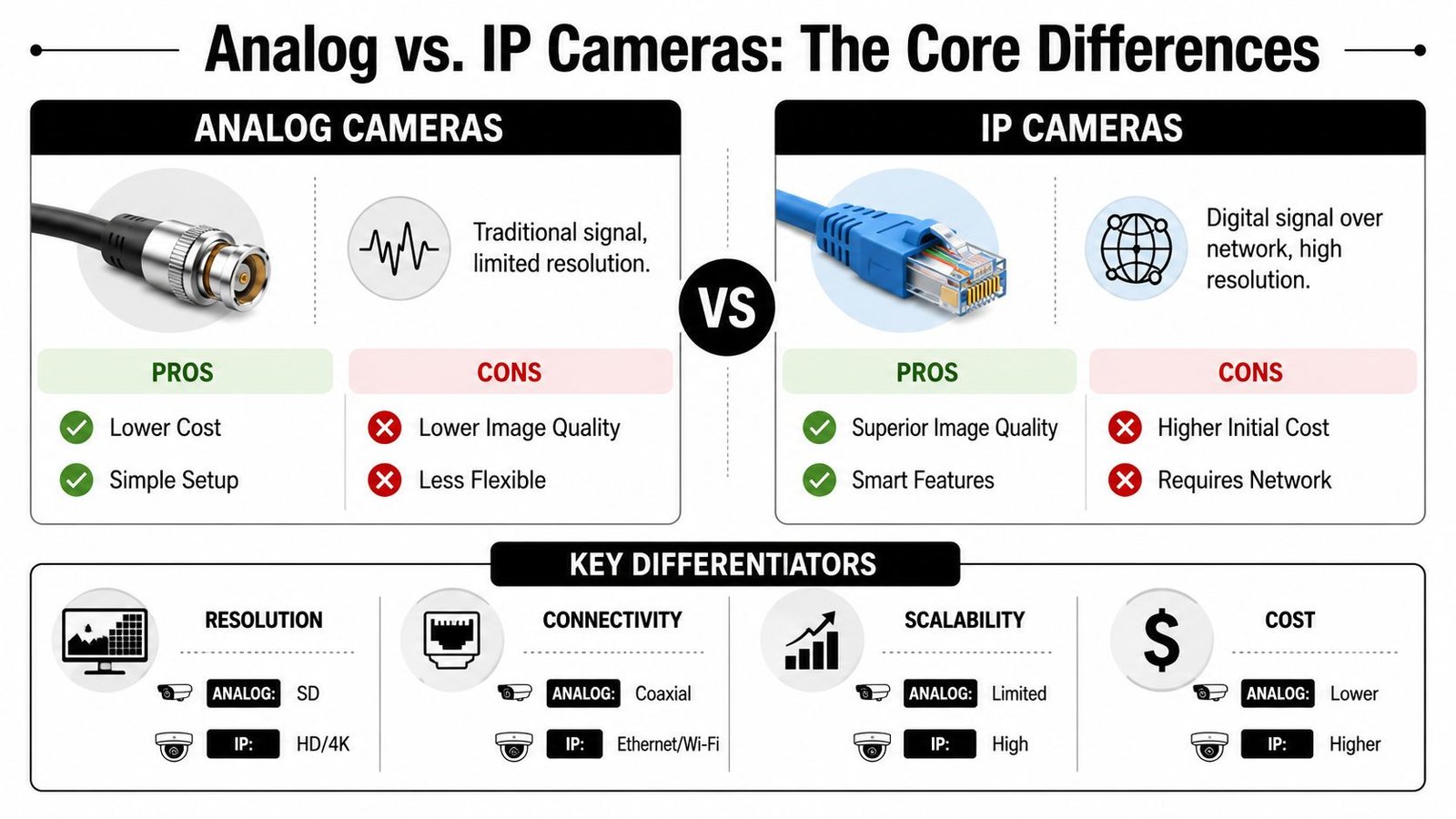
The easiest comparison is television. Analogue is closer to an older HD picture. IP is the step into sharper digital video with more flexibility. That difference matters when you need to zoom in on a face, read a number plate, or hand footage over after an incident.
Technical specifications cited in industry material note that IP cameras support resolutions from 720p up to 5 Megapixels (2592 x 1944 pixels), while analogue HD typically caps at 1080p (1920 x 1080 pixels), which is why IP systems are better suited to facial identification and number plate recognition in modern use cases, according to the referenced technical PDF on IP and analogue camera capability.
If you want a deeper side by side explanation, this guide on the difference between IP cameras and HD analogue CCTV is useful before you commit to hardware.
What changes in day to day use
Analogue still has a place in some upgrades. If a property already has usable coax cabling and the goal is a lower-cost refresh, HD analogue can be a practical stepping stone. It's often simpler where the existing infrastructure is fixed and the expectations are basic.
IP is usually the better route for new installs.
Here's the practical trade-off:
| System type | Where it fits | Main limitation | Main strength |
|---|---|---|---|
| Analogue HD | Basic upgrades using older cabling | Lower ceiling on image quality and smart features | Straightforward replacement path |
| IP | New systems, larger properties, evidence-led setups | Higher upfront planning requirement | Better image detail, remote flexibility, and modern analytics |
Three things push most homes and businesses toward IP:
- Image quality: Better clarity gives you a better chance of getting usable evidence rather than vague footage.
- Scalability: It's easier to add cameras, adjust layouts, and integrate remote access.
- Smarter features: If you want alerts, search tools, or AI analytics, IP is usually where that starts.
Practical rule: If you're installing a brand-new system and you care about identification, not just observation, IP is normally the right starting point.
That doesn't mean every IP system is good. Poor camera placement, weak lenses, and cheap sensors can still ruin footage. But if you're choosing the foundation of the system, IP gives you the stronger platform.
An Illustrated Guide to CCTV Camera Types
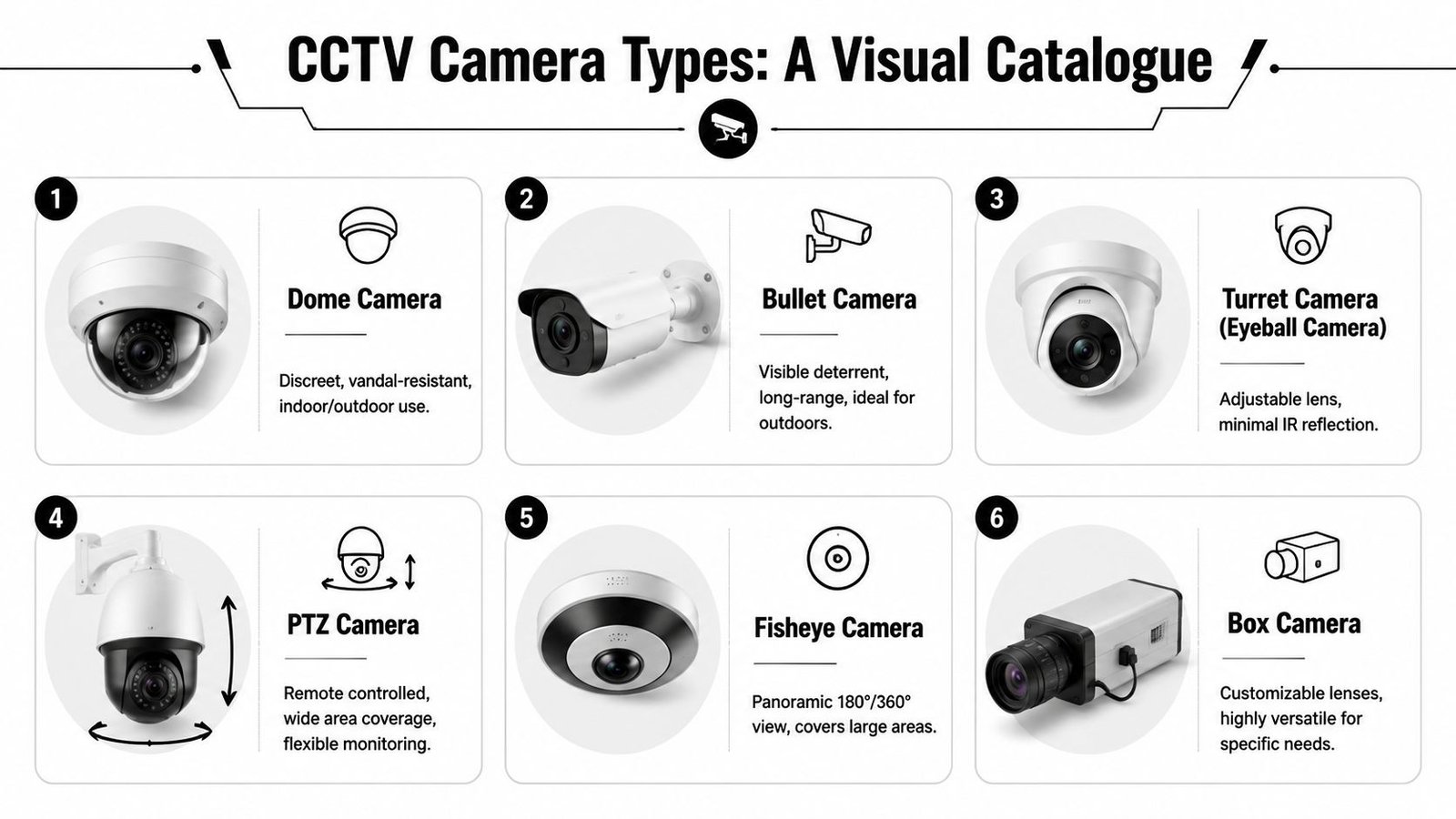
A lot of confusion comes from mixing up camera technology with camera housing. IP and analogue describe how the camera works. Bullet, dome, turret, and PTZ describe the physical style and the job it's meant to do.
This visual guide helps frame the main options.
The main camera housings you'll see most often
The UK market generally centres around several core CCTV camera types. Industry market analysis notes that bullet cameras offer long-range visibility for outdoor perimeters, dome cameras use wide-angle lenses for large indoor spaces, PTZ cameras provide motorised remote control for tracking, and multisensor 360-degree cameras can replace two or three traditional cameras. That summary appears in IMARC's overview of the UK CCTV camera market.
Here's how that plays out on real sites.
Bullet cameras
These are the classic visible cameras readily recognisable. They suit external walls, driveways, yard entrances, fences, and long approach routes. Their shape naturally points attention in a direction, which can help as a deterrent. They're less subtle, and indoors they can look out of place unless the space is industrial.Dome cameras
Domes work well on ceilings inside shops, receptions, apartment corridors, and warehouse interiors. They're tidy, harder to tamper with than some exposed styles, and they blend into commercial interiors better than bullets. They're often chosen where appearance matters.Turret cameras
Turrets are one of the most practical all-round choices. They're compact like domes but easier to aim and often better at night. For entrances, side paths, back doors, and external corners, they're frequently the safer option when you want a clean look without the drawbacks of a dome cover.
Before choosing one for a dark area, it's worth understanding how night vision CCTV cameras behave in real conditions, because the camera shape and lens design both affect what you get after sunset.
A short demonstration can help if you want to see these formats in context.
Specialist options for awkward sites
Not every property suits a fixed camera in a standard housing.
PTZ cameras
PTZ stands for pan, tilt, and zoom. These are useful in larger open spaces such as car parks, yards, school grounds, and distribution areas. They can track across a wide area, but there's a catch. If nobody is actively using the movement or the system isn't configured intelligently, a PTZ can spend most of its time looking in one direction. They're powerful, but they need a clear purpose.Multisensor or panoramic cameras
These are useful where one mounting point needs to cover a wide open area such as a lobby, large retail floor, or transport-style open hall. They can reduce the number of separate cameras needed in the same zone.Fisheye cameras
A fisheye gives a broad panoramic view from one point, often suited to open indoor areas. They're good for overview coverage, but they're not always the right choice if your main goal is clear facial identification at distance.Box cameras
Less common in standard home installs, but still relevant for specialist applications where lens choice needs to be more customized.Covert cameras
These are used selectively, usually where an overt deterrent would defeat the purpose. They're not the starting point for most homes or SMEs and should be handled carefully with privacy and legal considerations in mind.
The simplest way to think about camera types is this. Bullet for reach and visibility. Dome for neat indoor coverage. Turret for flexible day and night performance. PTZ for big open spaces. Panoramic options for broad overview coverage from one position.
Decoding Key Technical Features and Specs
A good camera in the wrong specification is still the wrong camera. Buyers often focus on the housing because it's visible, but the footage you live with every day depends on the sensor, lens, night performance, recording setup, and how the camera is configured.
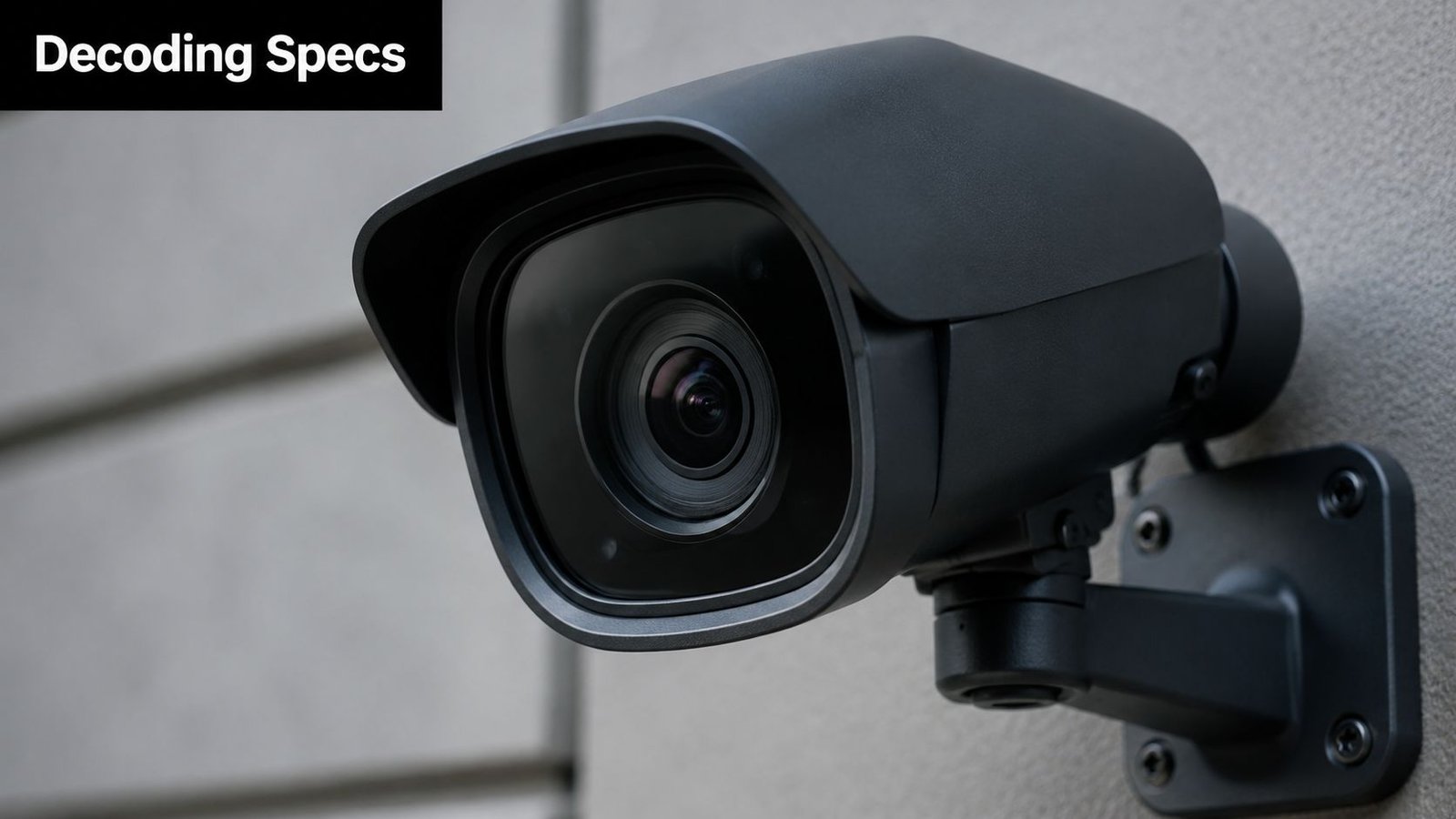
Resolution lens choice and usable detail
Resolution matters, but only when it matches the job. More pixels don't automatically fix a badly positioned camera. What resolution really changes is how much detail you can recover from the area being covered.
The same technical reference cited earlier notes that 4MP (2592 x 1520) is an effective benchmark for general monitoring of entryways, while 4K is required for definitive facial identification in demanding scenarios. In practical terms, that means you shouldn't expect a low-spec overview camera high on a wall to give you courtroom-friendly face detail just because it recorded the event.
The lens matters just as much.
- Fixed lens cameras suit predictable areas where the field of view is known.
- Varifocal lenses give flexibility during setup, which helps on awkward driveways, deeper forecourts, loading bays, or shared entrances.
- Wide-angle views cover more area, but they spread detail more thinly.
- Narrower views show more detail at distance, but they cover less.
If the goal is identification, don't ask how many pixels the camera has first. Ask how much detail reaches the part of the image where the person or vehicle will actually be.
Night performance storage and everyday practicality
Night vision separates decent systems from disappointing ones. Many customers only discover the weakness after the first dark, wet evening when faces wash out, number plates bloom, or reflective surfaces create a mess.
One of the most useful practical distinctions is between domes and turrets in low light. Trade guidance notes that turret cameras avoid the infrared reflection problem seen in traditional domes because there's no glass dome over the lens, which leads to clearer night images. The same source also explains that thermal cameras detect heat signatures rather than visible light, allowing identification in complete darkness, fog, or smoke, as described in Clearway's guide to different CCTV camera types.
That affects buying decisions in very practical ways:
- For normal home exteriors and business entrances: A well-specified turret often makes more sense than a dome.
- For difficult weather or zero-light detection tasks: Thermal has a role, usually as a specialist tool rather than a general camera.
- For low-light areas where visible detail matters: Sensor quality and lens setup matter just as much as IR range.
Other everyday specifications also matter:
| Feature | Why it matters in practice |
|---|---|
| PoE | One cable can carry power and data on IP systems, which simplifies many installations |
| Remote viewing | Lets you check live or recorded footage from your phone or workstation |
| On-board storage | Useful as backup or for standalone applications |
| Recorder choice | Central recording is easier to manage on larger systems |
A spec sheet can look impressive while still missing the point. The useful question isn't whether a camera has a long feature list. It's whether the footage will be clear, searchable, and dependable in the moments that matter.
Choosing the Right Camera for Your Property
You don't buy CCTV camera types in isolation. You buy a working setup for a specific building, with specific blind spots, access routes, and behaviours you want to capture. The right answer for a detached house in Newport isn't the same as the right answer for a warehouse near Cardiff or a convenience shop in Bristol.
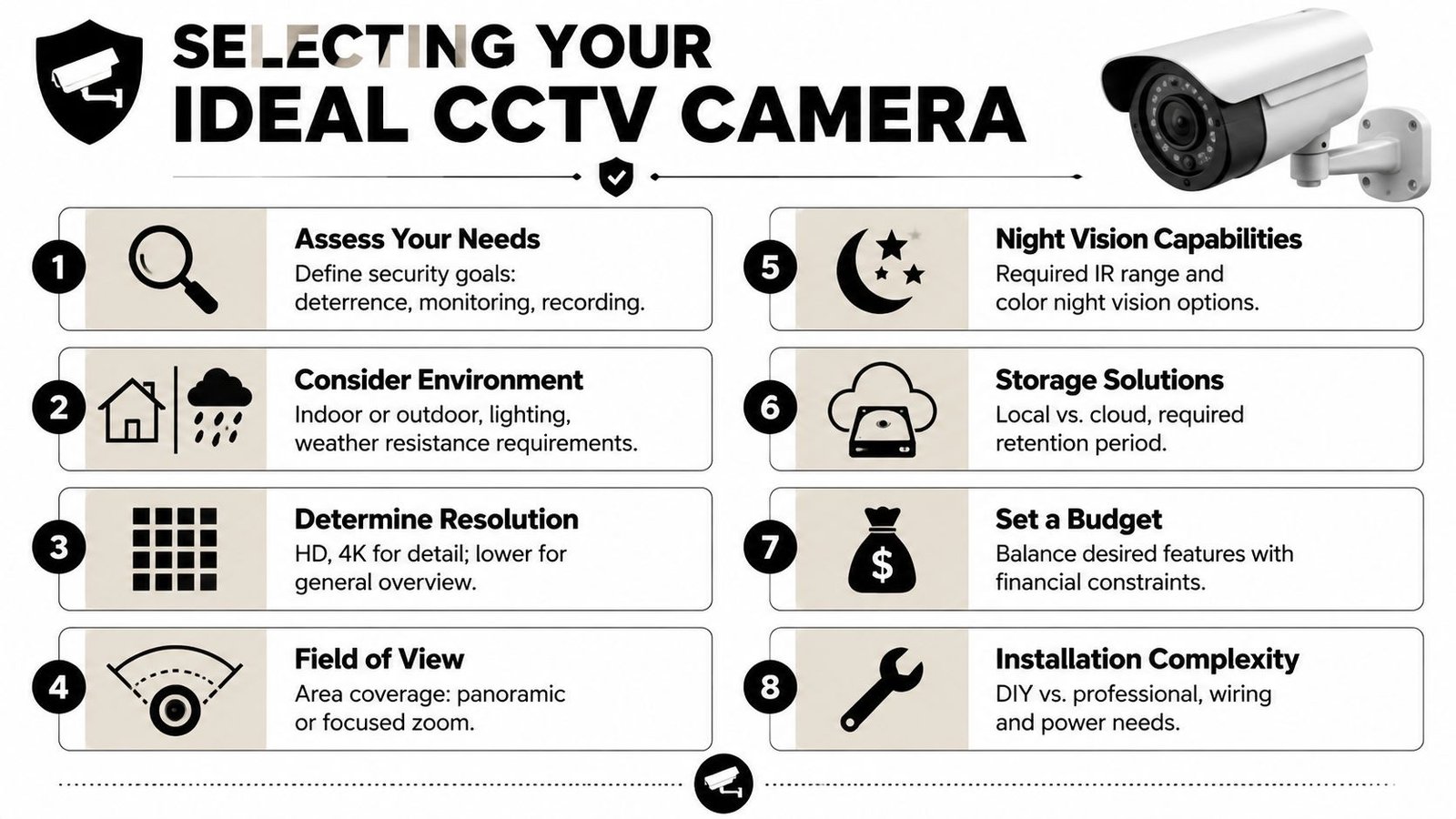
What works for homes shops and warehouses
For homes, the strongest setups are usually simple. A front-door camera, a driveway view, and rear or side access coverage solve most domestic risks better than filling the house with unnecessary devices. Turret or compact bullet cameras often work well outside. Indoors, if coverage is needed at all, it should be limited and purposeful.
For small retail, the layout needs to do two jobs at once. It should deter at the entrance and capture usable evidence at tills, aisles, and stock areas. Dome or turret cameras usually suit indoor customer areas. A focused camera on the till or main access point is often more valuable than broad but vague ceiling coverage.
Warehouses and industrial units need a different mix. You usually need:
- Wide internal overview: To cover aisles, picking areas, or loading zones
- Focused external coverage: On gates, shutter doors, and yard access
- Reliable night performance: Because many incidents happen outside business hours
- Fast event review: So staff aren't trawling through footage after every stock query
Multi-tenant buildings sit somewhere between commercial and residential. Shared entrances, bin stores, delivery bays, and car parks need overt, well-positioned coverage. Internally, privacy and proportionality matter. You want security in common areas without crossing into private living spaces.
Why AI analytics now affect camera choice
This is the part most buying guides miss. It's no longer enough to ask whether you want a dome or a bullet. You also need to ask what the camera can do with the video once it captures it.
Industry commentary on the UK market points out that most content on CCTV camera types fails to address how AI-driven video analytics such as object detection, facial recognition, and anomaly detection now change camera selection for UK SMEs and warehouses, leaving owners unable to match specs to operational needs. That point is discussed in Pelco's article on UK CCTV and crime prevention.
In practical terms, AI changes the selection process in these ways:
- A camera at a rear gate might be chosen not just for image quality, but because it can distinguish relevant movement from general background activity.
- A retail camera might be selected because it supports queue monitoring or targeted alerts around restricted areas.
- A warehouse camera might be specified for object or person detection in a defined zone rather than general motion recording.
The old model was “record everything and review it later”. The better model is “record clearly, flag what matters, and find it quickly”.
That's where system design matters. A Wisenet Security Ltd installation, like other professionally designed IP systems, can be configured around the site's actual risks rather than just camera count, with remote access, night coverage, and analytics selected to fit the property. That's a better way to choose than buying by shape alone.
UK Compliance Installation and Maintenance
Buying the right camera is only half the job. The installation has to be legal, reliable, and maintainable. A well-made camera placed too high, aimed into backlight, or left with dirty optics will disappoint you no matter what the brochure promised.
Installing the system properly
Professional installation matters because placement decides whether a camera captures a useful angle or a vague overview. Height, lighting direction, lens choice, and recorder setup all affect the final result. For homes, that might mean getting the front entrance at the right distance for face capture rather than mounting too far back. For businesses, it often means separating overview cameras from evidence cameras instead of expecting one device to do everything.
There's also the practical side of cable routes, power, network stability, and secure recorder placement. These are the parts many DIY installs underestimate. The system may switch on, but that doesn't mean it's well designed.
A sensible maintenance plan matters just as much after installation. This includes regular cleaning, checking views haven't drifted, confirming recording is working, and applying firmware updates where appropriate. If you're comparing service options, this overview of CCTV system maintenance covers the practical upkeep side well.
Privacy signage and ongoing upkeep
If your cameras capture areas beyond your private household boundary, or you're running CCTV for a business, landlord-managed property, or shared site, UK data protection obligations become relevant. That usually means having a clear reason for recording, keeping footage secure, controlling access, using signage where required, and avoiding excessive coverage of neighbouring or public areas where possible.
For landlords and business owners, the basic rule is straightforward. Record what you need, not everything you technically can.
Use this as a working checklist:
- Position carefully: Avoid unnecessary views into neighbouring homes, gardens, or private rooms.
- Keep signage clear: People should know CCTV is in operation where required.
- Control footage access: Only authorised people should review or export recordings.
- Maintain the system: Dirty lenses, failed drives, or wrong timestamps can undermine useful footage.
- Review settings periodically: A site changes over time. Shelving moves, doors change use, lighting gets altered.
A neglected CCTV system usually fails unnoticed. You only discover the issue when you need the footage most.
Frequently Asked Questions About CCTV
Can CCTV record audio
It can, but audio creates extra privacy considerations in the UK and should be approached carefully. For most homes and many businesses, video alone is the cleaner and more proportionate choice unless there's a clear reason for sound capture.
How much storage do I need
That depends on the number of cameras, the resolution, the frame rate, how long footage needs to be retained, and whether recording is continuous or event-based. This is one area where rough guesses often go wrong. Storage should be sized against the actual system design rather than chosen as an afterthought.
What's the difference between a DVR and an NVR
A DVR is generally associated with analogue camera systems. An NVR is generally used with IP cameras. In simple terms, if you're moving toward a modern network-based system with higher flexibility and smarter features, you're usually looking at an NVR setup.
Can I mix new cameras with an older system
Sometimes, yes. It depends on the recorder, cabling, and what type of cameras are already installed. Some upgrades can reuse parts of an older system. Others become false economy because the old recorder or cabling limits what the new cameras can do.
Here's the practical answer to most CCTV questions. Don't buy based on the camera body alone, and don't buy based on the highest resolution number on the box. Buy based on what you need to see, when you need to see it, and how quickly you need to find it afterwards.
If you want a practical recommendation for your home, shop, warehouse, or shared property, Wisenet Security Ltd can assess the site, explain the trade-offs clearly, and specify a CCTV system that fits the way the property is used.