2026 Security System Costs in the UK
You're probably here because you've had one of two experiences. Either you've asked for a security quote and got a figure that felt higher than expected, or you've looked online and found wildly different prices for what sounds like the same thing. That confusion is normal. In security, the gap between a cheap-looking price and the actual lifetime cost can be huge.
In South Wales and the South West, I see the same pattern again and again. A homeowner asks, “How much for an alarm?” A business owner asks, “What's the cost of CCTV?” Both are fair questions, but they're not the first questions that lead to a sensible buying decision. The useful starting point is this: what are you protecting, what would disruption cost you, and what level of system will do the job properly?
Table of Contents
- Why 'How Much' Is the Wrong First Question
- The Four Pillars of Security System Pricing
- Typical Costs for Different Security Systems
- Major Factors That Adjust Your Final Quote
- Decoding Recurring Costs: Monitoring and Maintenance Plans
- Sample Security Budgets for Local Properties
- Getting an Accurate and Fair Security Quote
Why 'How Much' Is the Wrong First Question
If all you want is the lowest upfront number, security quotes will mislead you. A basic setup can look affordable on paper and still leave blind spots, poor evidence quality, awkward app control, no monitoring resilience, and no plan for faults or servicing.
That matters because the risk is real. The ONS recorded 191,490 burglary offences in England and Wales in the year ending March 2025, while the latest Commercial Victimisation Survey found 11% of business premises experienced burglary or attempted burglary in the 12 months to March 2023, as noted in this discussion of the true cost of neglecting security. For a homeowner, that changes the question from “What's the cheapest alarm?” to “What level of protection is sensible for my street, my access points, and my routine?” For a business owner, it becomes “What loss am I trying to prevent. Stock, tools, cash, downtime, staff risk, or all of them?”
A sound budget starts with exposure, not gadgets. A detached house with side access, a retail unit with rear delivery doors, and a warehouse with yard gates all need different designs. The same spend can be good value on one site and wasted on another.
Practical rule: The right budget is the one that matches the consequence of failure, not the one that gives you the shortest quote.
That thinking also applies beyond security. If you already review overheads carefully, this guide on business expense management for London SMEs is useful because it shows the wider discipline involved in separating upfront cost from long-term operating cost. Security should be handled the same way.
The Four Pillars of Security System Pricing
When clients compare quotes properly, they usually stop looking at a security system as one purchase and start looking at it as four separate cost areas. That's the only way to judge whether one proposal is better value than another.
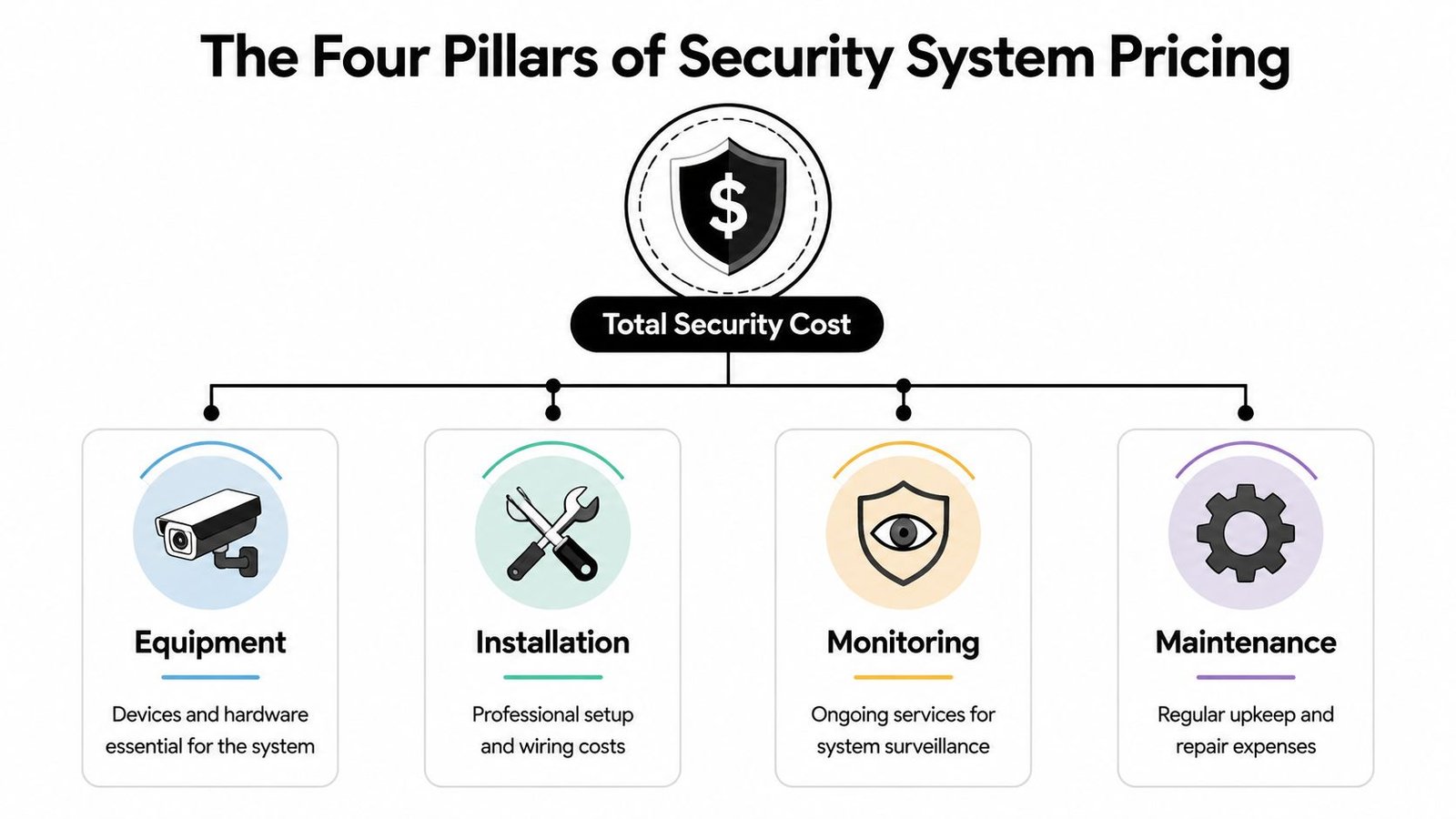
Equipment is only one part
This is the hardware you can physically point at. Cameras, recorders, detectors, control panels, sounders, readers, locks, intercom handsets, power supplies, batteries, and networking components all sit here.
It's the easiest part to focus on because it feels tangible. You can compare a Hikvision camera against another camera, or a Pyronix alarm panel against another panel. But hardware alone doesn't tell you whether the system is easy to use, compliant where needed, or reliable under daily use.
Installation reflects labour and site conditions
Installation is where online price guides usually fall apart. A neat new-build with available routes and accessible plant areas is one thing. A retrofit in an occupied building with solid walls, decorated interiors, awkward outbuildings, and limited cable paths is another.
In the UK, installed cost is also influenced by wider construction pricing. The NerdWallet overview of security system cost planning notes that installed security costs are tied to broader construction inflation, often tracked through RICS-linked thinking. In plain English, the same specification can cost materially more in one period than another because labour and project conditions shift.
Monitoring changes the whole cost profile
A bell-only alarm and a monitored alarm are not priced the same way because they are not the same proposition. Monitoring introduces signalling paths, response arrangements, backup considerations, and service expectations. The system is no longer just making noise onsite. It is now part of an ongoing service model.
For some homes, that may be an optional extra. For some businesses, especially those with insurance conditions, lone workers, or vacant periods, it's often where the core value sits.
Maintenance is what keeps the system useful
Every security system drifts if nobody maintains it. Cameras get knocked off position. Batteries age. Detectors need testing. Firmware and configuration need checking. Access credentials change. Fire devices need planned servicing.
A quote that ignores maintenance isn't showing you the full cost. It's showing you the cost of day one only.
Security system costs make sense when you separate purchase, fitting, monitoring, and upkeep. If a quote bundles everything vaguely, ask for a breakdown.
Typical Costs for Different Security Systems
There isn't one standard price for “a security system”. The cost depends on what type of system you're buying, how large the property is, what level of resilience is needed, and whether the system has to meet a specific operational or compliance requirement.
A practical comparison table
The best way to start is with broad budgeting bands rather than fake precision. For local properties in South Wales and the South West, these are sensible planning ranges for equipment and installation.
| System Type | Typical Residential Range | Typical Small Business Range |
|---|---|---|
| CCTV | Entry-level to mid-range depending on camera count, recorder, storage, viewing requirements, and cabling complexity | Mid-range upward depending on site layout, recording needs, evidence handling, and coverage areas |
| Intruder Alarm | Basic to mid-range depending on detector count, panel type, external sounders, app control, and signalling options | Mid-range upward depending on grade, user access needs, partitioning, and monitored signalling |
| Access Control | Usually limited to specific doors, gates, or flats, with cost driven by locks, readers, and door condition | Often broader systems covering staff doors, stock areas, shared entrances, audit trails, and integrations |
| Fire Alarm | Can range from straightforward domestic-style arrangements to more involved multi-zone systems | Varies significantly depending on category, layout, call points, detectors, panels, and maintenance obligations |
| Intercoms and Gate Automation | Cost depends on gate type, power, safety edges, intercom handsets, and remote access | Cost rises with traffic volume, multiple users, access rules, and integration with gates or barriers |
That table won't replace a survey, but it gives you a realistic way to think. Complexity, compliance, and labour usually move the number more than any headline product label.
CCTV systems
People often ask for camera prices. In practice, CCTV cost is driven more by system architecture than by camera price alone. The eufy article discussing CCTV cost factors points to a UK reality many buyers miss. Once CCTV has to operate lawfully, especially on business sites, cost can increase through signage, retention controls, access logging, and privacy-by-design measures.
That's why a cheap multi-camera quote can become expensive once someone specifies it properly. Recording duration, image quality, remote access permissions, user logs, out-of-hours viewing, and export procedures all affect the finished system.
For a home, CCTV pricing often turns on:
- Coverage area: Front door only is very different from full perimeter and garden coverage.
- Night performance: If you need useful footage after dark, lens choice, positioning, and lighting matter.
- Recorder and storage: A bargain camera paired with weak recording hardware is a false saving.
For a business, add these extra variables:
- Operational need: General observation is cheaper to design than evidential coverage of tills, entrances, stock cages, or loading bays.
- Data handling: Managers often need controlled playback and evidence export, not just live viewing.
- Site condition: High ceilings, external runs, shared access, and public-facing areas all increase labour and setup detail.
If you want a more focused breakdown for local projects, Wisenet Security Ltd has a practical guide to CCTV installation costs.
A useful comparison outside security is estimating parking lot paving expenses. It's a different trade, but the pricing logic is similar. Surface area, preparation, access, and finishing standards matter more than a single unit price.
Intruder alarms
Alarm pricing is usually shaped by three things. Detection coverage, signalling method, and user experience.
A modest house alarm may only need door protection, key movement areas, and app alerts. A commercial system may need multiple areas set independently, separate user permissions, monitored signalling, and stronger fault reporting. That's where cost rises, not because the panel suddenly became magical, but because the system has more jobs to do and more rules to follow.
If someone gives you one flat alarm figure without asking about pets, outbuildings, staff access, opening hours, or police response expectations, they're not designing properly.
Access control
Access control is rarely expensive because of the reader on the wall. It gets expensive when the door itself needs work. Lock type, escape requirements, existing frame condition, cable route, and whether the door already has suitable closers and ironmongery all change the labour and parts list.
A single office door with a keypad is one level of project. A shared building with fobs, audit trails, staff permissions, timed schedules, and linked entry doors is another. If the client wants biometric readers, intercom verification, or remote door release from an app or reception point, that also changes the scope.
Fire alarms
Fire alarm costs need especially careful handling because the wrong conversation often starts and ends with device count. Key issues are category, coverage intent, cause-and-effect, building use, false alarm management, and maintenance responsibility.
In domestic settings, the design is usually more straightforward. In commercial premises, a compliant fire system often needs more planning, more documentation, and a maintenance arrangement that the responsible person can effectively manage. For landlords, HMOs, mixed-use buildings, and workplaces, this is not an area to under-specify.
Intercoms and gate automation
These systems are often underestimated because they look simple from the outside. A gate motor or door entry panel may be visible, but the cost often sits in safe automation, cabling, access devices, exit controls, and making the whole thing dependable in poor weather and daily use.
For homes, the main drivers are convenience, gate structure, and whether video entry is needed. For businesses and multi-tenant properties, traffic flow, delivery access, time schedules, and safe operation become central design issues.
Major Factors That Adjust Your Final Quote
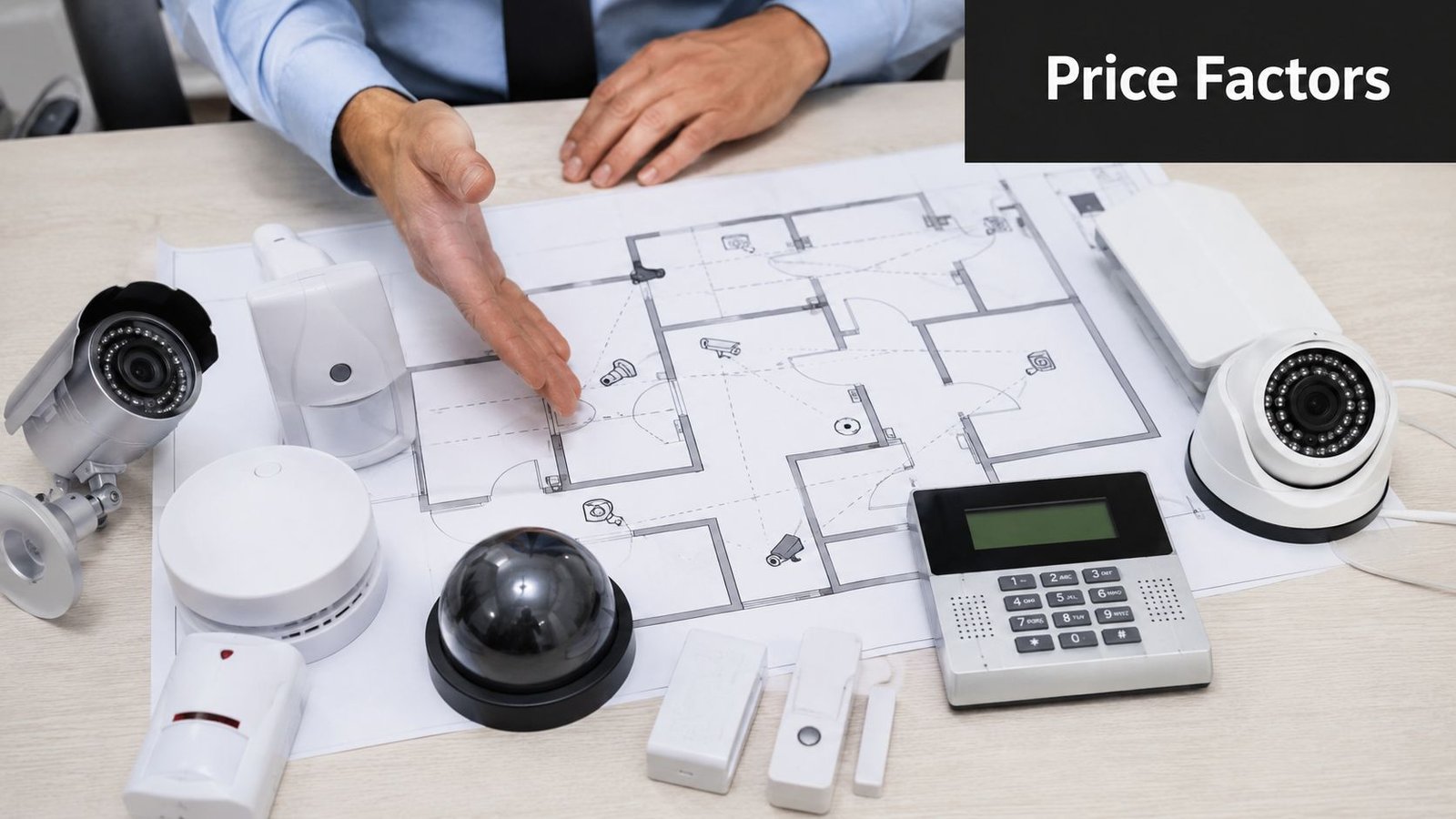
Two systems with similar hardware lists can still land at very different prices. That usually comes down to the building, the intended use, and whether the design has been done with future problems in mind.
Property layout and cabling difficulty
Labour changes fast when an installer has to work around finished décor, listed features, solid walls, awkward loft access, asbestos controls, or live business operations. A detached home with a simple loft route can be straightforward. A three-storey mixed-use building with no spare containment is not.
Key quote drivers include:
- Access to cable routes: Easy loft, riser, or ceiling void access usually keeps labour sensible.
- Working environment: Occupied offices, trading shops, and clinical areas often require slower, staged work.
- External conditions: Long armoured runs, high-level brackets, poles, and weatherproof containment all add time and materials.
Integration and future expansion
A standalone system is usually cheaper at the start. An integrated system often delivers better day-to-day value. Linking CCTV to intruder events, tying access control to entry records, or combining intercom and gate release can reduce friction for the user and make incidents easier to review.
The mistake is doing it badly. Integration only helps if the user can operate it easily and the support burden stays reasonable. I'd rather fit a simpler system that staff will use than a bloated spec full of features nobody understands.
If you expect to add doors, cameras, or buildings later, say so before the first quote is written. Expansion planned early is cheaper than retrofitting around a dead-end design.
Compliance changes the specification
When evaluating system specifics, many cheap quotes stop looking cheap. An intruder alarm built around BS EN 50131 principles needs suitable detection, signalling, tamper protection, power resilience, and commissioning discipline. A fire system in a commercial setting has to be maintained as part of an ongoing legal responsibility, not treated as a fit-and-forget purchase.
Compliance affects:
- Product choice: Not every low-cost device is suitable for a standards-based installation.
- Documentation: Logbooks, records, user guidance, and test evidence all take time.
- Service expectation: A compliant system isn't just installed. It needs a support plan.
If one contractor is pricing to a proper standard and another is pricing a bare-minimum setup, the quotes are not comparable.
Decoding Recurring Costs: Monitoring and Maintenance Plans
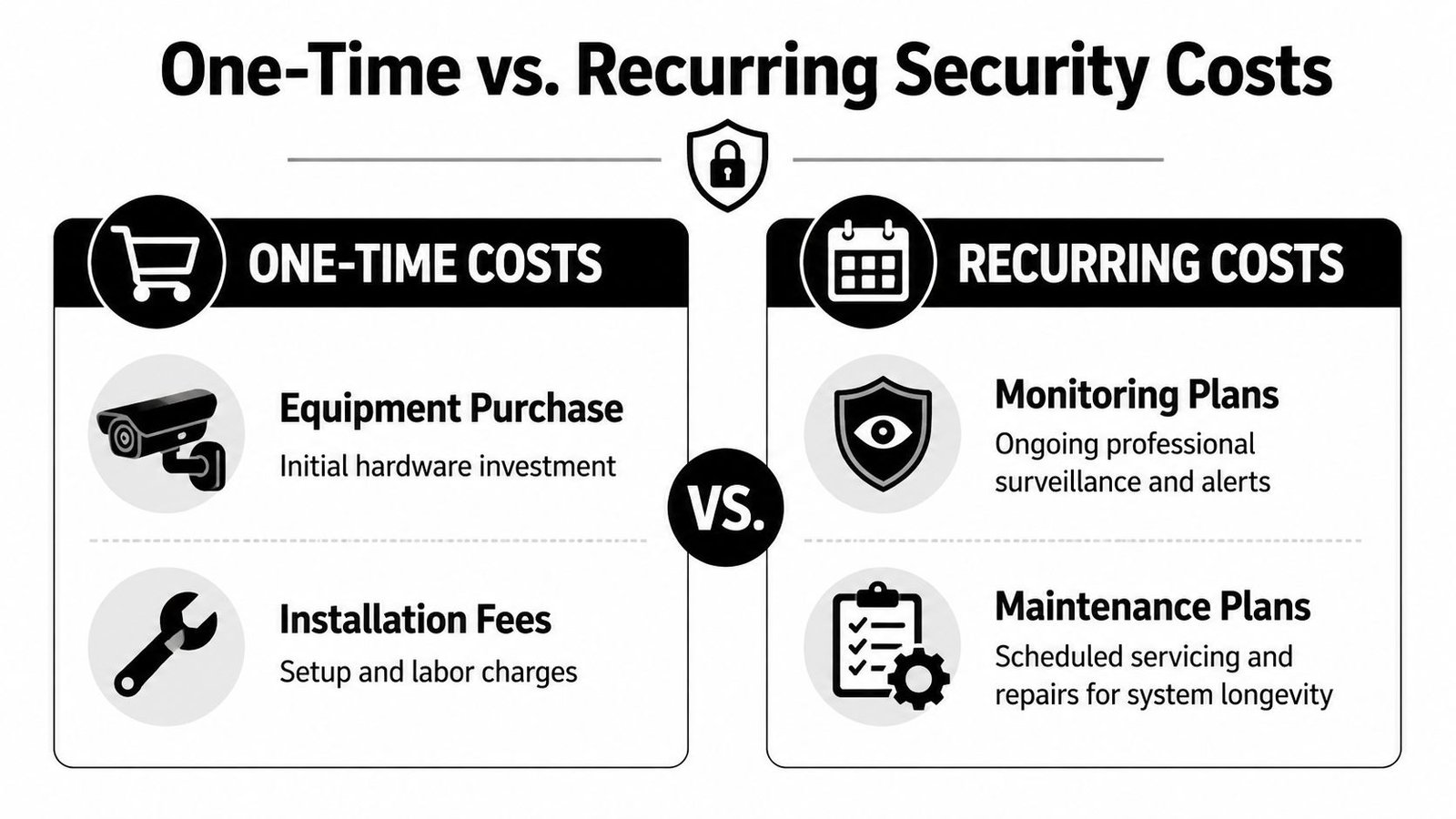
The part most buyers underrate is the monthly or annual running cost. Yet in many UK installations, the largest recurring cost is often monitoring and maintenance, because dependable systems need signalling, backup power, and routine servicing, as outlined in this review of professional security installation and lifecycle costs.
What recurring cost actually pays for
A proper recurring plan is not just a direct debit with a vague promise attached. It usually covers some mix of routine inspections, testing, battery checks, detector cleaning, signalling checks, software or firmware review where appropriate, service records, and access to call-out support.
For monitored intruder systems, you're also paying for the infrastructure that keeps alarm transmission dependable. That may include communication hardware and backup arrangements. For fire systems, servicing is tied to keeping the system effective in practice, not for a one-time proof of function on install day.
Many businesses save money in the wrong place. They buy a capable system, skip planned maintenance, then discover faults during an incident, a false alarm problem, or an inspection.
For a clearer idea of what ongoing servicing usually includes, this page on alarm system maintenance is a useful local reference.
A short video can also help if you're comparing one-off and ongoing cost thinking:
When a plan is optional and when it is not
For some homeowners, a maintenance plan is a judgement call. If the system is modest and self-managed, they may prefer ad hoc servicing. Even then, they should expect wear, battery issues, and occasional reconfiguration needs.
For commercial fire and security, the picture is stricter. The American Alarm overview of average security system cost highlights a key UK point. Under the Regulatory Reform (Fire Safety) Order 2005 in England and Wales, fire precautions must be maintained so they remain effective, and commercial servicing practice is commonly tied to regular planned inspection and maintenance. That means the full cost includes service visits, testing, call-outs, and records. Not just the install.
A one-off install price tells you what it costs to put equipment on the wall. A maintenance plan tells you what it costs to keep that equipment trustworthy.
Sample Security Budgets for Local Properties
Security budgets make more sense when attached to real buildings and ordinary problems. The examples below are illustrative, not fixed tariffs. The point is to show how scope changes the blend of upfront and ongoing cost.
Cardiff homeowner
A family in a Cardiff suburb wants to protect front and rear access, keep an eye on the driveway, and get alerts while away. A sensible budget usually combines a modest intruder alarm with app control and a small CCTV setup covering approach routes rather than trying to film every inch of boundary.
If the house has easy cable access and no major outbuildings, the installation tends to stay cleaner and simpler. If the owners also want monitored signalling, that shifts more of the spend into recurring cost rather than hardware alone.
A balanced budget here usually prioritises:
- Usable detection: Front door, rear door, key internal areas, and pet-aware sensing where needed.
- Practical CCTV: Entry points, vehicles, and night-time image quality.
- Simple control: An app that the household will use.
Bristol retailer
A shop in central Bristol has a different problem. Stock, staff safety, opening and closing routines, rear delivery access, and customer-facing space all affect the design. In most cases, CCTV and intruder detection need to work together, with cameras covering tills, entrance routes, and stock areas while the alarm handles set and unset periods.
This type of site often benefits from access control at the staff entrance or stockroom, especially if turnover is high and keys have become a nuisance. The budget rises if the shop is in a difficult fit-out environment, such as older premises with limited cable routes or landlord restrictions on visible containment.
Retail systems usually fail at the edges. Rear exits, delivery doors, and staff-only spaces cause more trouble than the main entrance.
Newport warehouse
A warehouse on a Newport industrial estate often needs a wider brief. Internal intrusion, external coverage, shutters, personnel doors, yard gates, and evidence retention all come into play. The cheap option here is nearly always the wrong option because blind spots and weak perimeter thinking leave obvious gaps.
The budget usually shifts towards tougher infrastructure. Better coverage planning, longer cable runs, more substantial lighting considerations, and stronger management of users and response all add cost. The client may also need phased deployment, protecting the highest-risk zones first and extending the system later.
For industrial sites, spend tends to follow three priorities:
- Perimeter awareness so intrusions are detected early.
- Operational resilience so power, communications, and recording don't become weak points.
- Controlled access so not every door or gate relies on the same old key.
Getting an Accurate and Fair Security Quote
A fair quote is specific. It should tell you what's being installed, where, how it will be used, what standard it is being designed to meet where relevant, and what ongoing servicing is assumed. If a quote is vague, you can't compare it properly.
Ask for a site survey. Ask what has been excluded. Ask whether the system can expand later. Ask who will maintain it. If you're used to pricing home services carefully, the logic is similar to using Service That Boiler's cost calculator as a starting point for understanding what affects a bill before an engineer attends. It helps frame the variables, but it doesn't replace a proper inspection.
For alarms and related standards-based work, it's also sensible to check whether the company works within recognised industry frameworks such as the Security Systems and Alarms Inspection Board context. That doesn't make every quote identical, but it does help you separate serious providers from box-shifters.
The cheapest quote can still be the most expensive one you accept if it leaves you with weak coverage, poor compliance, and avoidable service problems.
If you want an accurate figure for your property, the sensible next step is a site survey with Wisenet Security Ltd. They work across South Wales and the South West on CCTV, intruder alarms, access control, fire alarms, intercoms, and gate automation, and they offer free, no-obligation consultations based on the actual building, risk, and day-to-day use.