SSAIB Approved Companies: Your 2026 Security Guide
You're probably in the same position many people reach when security suddenly moves from “something to sort later” to “I need to choose someone now”. Maybe you've had a quote for CCTV, a monitored alarm, or access control. Maybe you've searched online and found a long list of installers, all using similar language about quality, reliability, and professionalism.
That's where most of the confusion starts. The equipment can sound complicated, but the bigger risk is choosing the wrong installer. A good camera fitted badly won't do its job. An alarm that isn't installed to the right standard can create problems later, especially if you expected monitoring or a police response.
A practical way to cut through the noise is to look for independent certification. In the UK, one of the main signals people look for is SSAIB approval. If you're trying to compare security firms without getting lost in jargon, understanding how SSAIB approved companies work gives you a much stronger starting point.
Table of Contents
- Choosing a Security Installer You Can Trust
- What SSAIB Approval Really Means
- The Key Benefits of Choosing an SSAIB Company
- How to Verify an SSAIB Approved Company in 5 Minutes
- Your Essential Checklist Beyond the Badge
- Finding Local Expertise in South Wales and the South West
Choosing a Security Installer You Can Trust
Consumers don't buy a security system very often. That's why the process can feel awkward. One company talks about detection zones, another talks about grades, another talks about app control and monitoring packages, and before long you're trying to make a decision on something you were never trained to assess.
The easiest mistake is to focus only on the hardware. You compare cameras, alarm panels, or door entry devices and assume the kit is the whole decision. In practice, the installer matters just as much because they design the layout, choose where equipment goes, set the system up, and maintain it afterwards.
For a homeowner, that might mean the difference between a tidy, easy-to-use system and one that constantly annoys you. For a business owner, it can affect daily operations, staff access, opening routines, and how incidents are handled.
A useful first filter is to ask whether the company has independent approval rather than relying on its own marketing. That doesn't tell you everything, but it does help narrow the field to firms that have been assessed against recognised standards.
If you're comparing local firms, it also helps to look at providers with a clear regional presence, such as security companies in Cardiff, because local support can matter just as much as the initial installation.
Practical rule: Treat certification as your first screening step, not your final decision.
That mindset keeps things simple. First, confirm whether the installer is independently approved. Then ask whether they're the right fit for your property, your budget, and the way you want the system to work day to day.
What SSAIB Approval Really Means
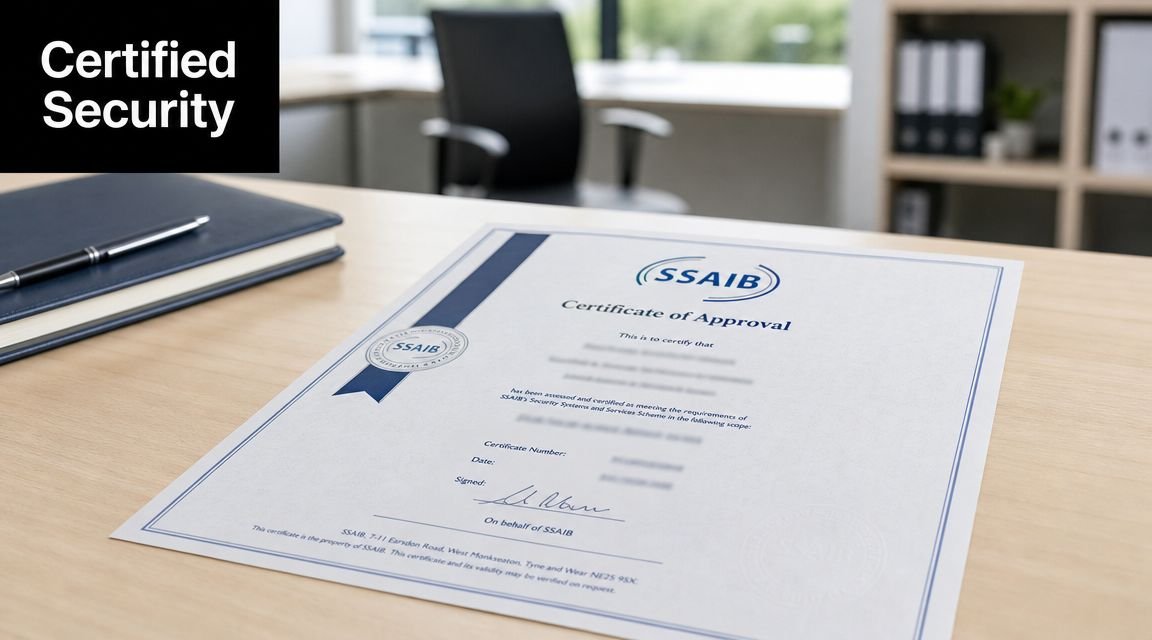
SSAIB stands for the Security Systems and Alarms Inspection Board. It was founded in 1994 and is an independent certification body for the UK private security industry. Approved companies are monitored regularly, and management system certifications must be renewed every 3 years, which means approval is tied to ongoing compliance rather than a one-off application, as described in this SSAIB accreditation overview.
That matters because many people assume approval is just a logo on a website. It isn't. A better way to think about it is like an MOT for a vehicle. Passing once doesn't mean the car is good forever. It means someone independent checks that it meets the required standard, and those checks continue over time.
Why third-party approval matters
If a security installer says, “trust us, we do good work”, that's only their own claim. With SSAIB approval, there's an outside body involved. That body checks whether the company meets defined requirements for the work it carries out.
For you, the practical benefit is straightforward. You're not starting from zero. You're choosing from firms that have already cleared an independent benchmark.
That doesn't mean every SSAIB approved company is identical. Service levels, communication, design quality, and aftercare still vary. But it does mean you're not relying only on branding, sales language, or a polished brochure.
Approval is best understood as a baseline of verified competence, not a promise that every approved firm will be the best choice for every site.
If you want a plain-English explanation of the term itself, this guide to what SSAIB alarm approval means is a useful companion read.
Approval applies to defined areas of work
Another point that often gets missed is scope. People hear “SSAIB approved” and assume it covers everything a company offers. That's too broad. In practice, you should always check that the approval matches the service you want.
For example, your needs might include:
- Intruder alarms for a house, shop, or office
- CCTV for evidence, oversight, or remote viewing
- Access control for staff doors, gates, or shared buildings
- Fire detection for life safety and compliance needs
Some firms are strong in one area and limited in another. Others can handle integrated systems across several categories. The approval matters most when it lines up with the exact service being proposed.
Here's the simplest way to understand it:
| What you need | What to confirm |
|---|---|
| A single alarm system | The firm is approved for that type of alarm work |
| CCTV plus access control | The firm's approved scope matches both services |
| A larger combined project | The company can support design, installation, maintenance, and ongoing service in the approved areas |
That's why people searching for SSAIB approved companies shouldn't stop at the badge itself. The main question is, “Approved for what, exactly?”
The Key Benefits of Choosing an SSAIB Company
An SSAIB-approved installer gives you more than reassurance. The benefit is practical. You're buying a service that should be delivered to recognised standards from start to finish, not just a box of equipment fitted to the wall.
SSAIB-certified companies are regularly audited against British and European standards for system design, installation, maintenance, and monitoring, which supports documented competence across the project lifecycle, as outlined in this summary of SSAIB-accredited security systems work.
What you gain as the customer
The first benefit is consistency. A proper installer shouldn't just turn up, fit devices, and leave. They should assess the site, design a sensible system, install it correctly, explain how to use it, and support it afterwards.
That's why the lifecycle matters. A strong system isn't only about what happens on installation day. It's also about maintenance, fault handling, monitoring arrangements where relevant, and whether the setup still works for you months later.
In plain terms, choosing from SSAIB approved companies can help you expect:
- Recognised installation standards so the system is designed and fitted with discipline
- A maintenance pathway rather than being left on your own after commissioning
- A more dependable handover with clearer documentation and user guidance
For many buyers, that reduces uncertainty more than any single product feature.
Why monitored systems raise the stakes
This matters even more if you want a monitored intruder alarm rather than a bell-only system. With monitoring, there's a chain of responsibility that has to be right. The installation standard, the monitoring arrangement, and the provider's recognised status all matter more than they do with a simple external sounder.
According to UK intruder alarm guidance, remote signalling for intruder alarms must be to an Alarm Receiving Centre inspected and certified by NSI or SSAIB, and the installing company must also be recognised as an intruder alarm installer by NSI or SSAIB and as a compliant company by the relevant police force, as set out in this alarm specification guidance document.
That's a long sentence, but the meaning is simple. For monitored alarm setups, approval isn't just a nice extra. It plays a direct role in whether the system sits within the recognised chain for monitoring and response.
If you only remember one thing from this section, remember this. The more critical the system outcome, the more the installer's verified status matters.
How to Verify an SSAIB Approved Company in 5 Minutes
This is the part many articles skip. They tell you SSAIB matters, but they don't show you how to check whether a company is approved right now.
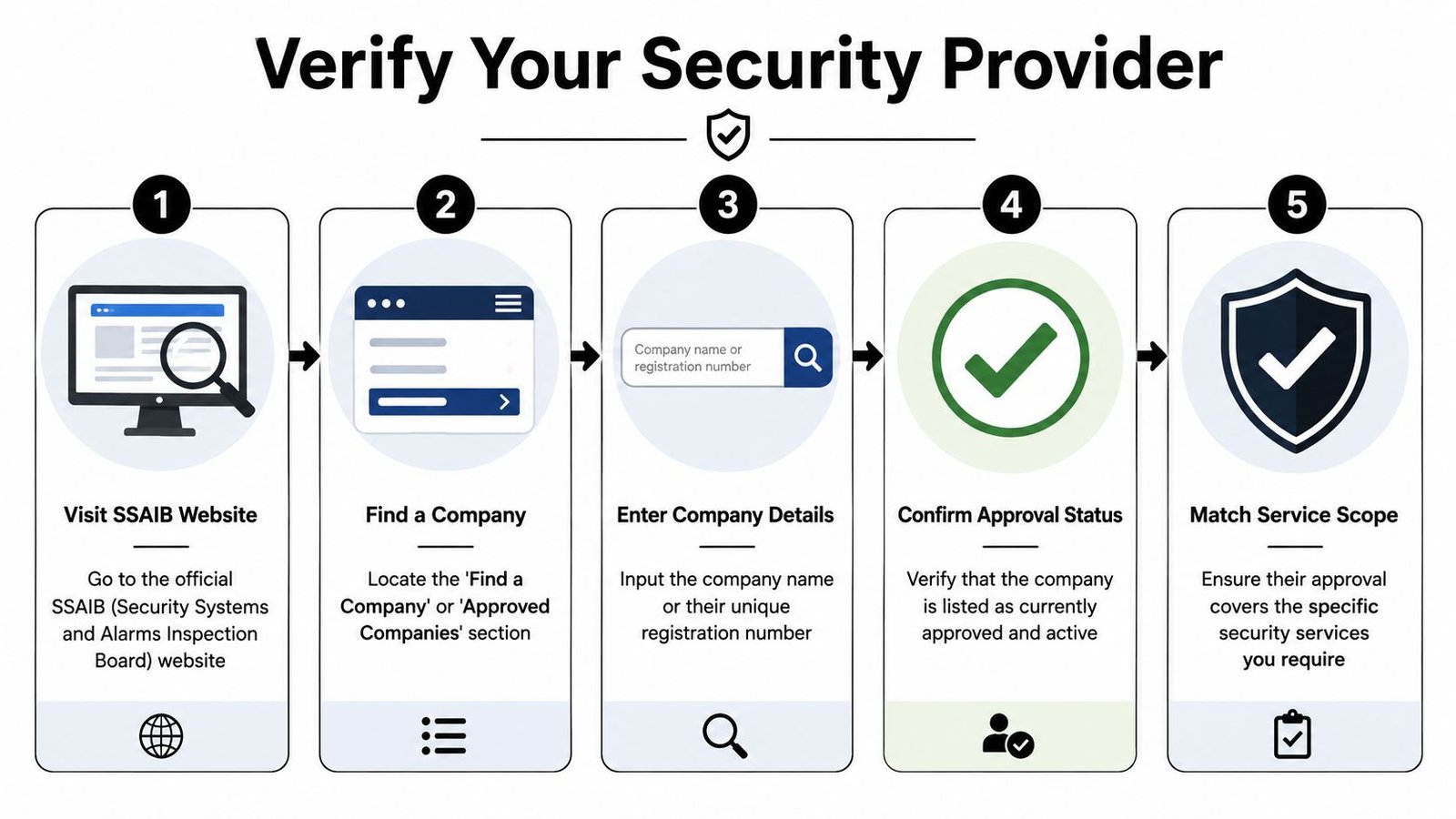
The quickest route is the official SSAIB supplier search. SSAIB states that the only way to be certain of a company's status is to check the official directory, which lets you search certificated companies by product, service sector, and region in the official SSAIB supplier search.
The fastest way to check
You don't need technical knowledge to do this. You just need the company name and a couple of minutes.
Follow these steps:
Go to the official SSAIB directory
Don't rely on a logo shown on the installer's own website. Go to the official search tool.Search by company name or location
If the company name is distinctive, use that first. If not, search by region and narrow it down.Open the company record carefully
Don't stop when you see a familiar name. Make sure the listing matches the business you're dealing with.Check the approved services
This is the step people often miss. Confirm that the firm is approved for the type of system you want.Use the listing as a verification tool, not a sales tool
The purpose is to confirm status and scope, not to assume the company is automatically the right choice.
What to look for in the listing
The most important question isn't just “are they listed?” It's “does the listing match the job I'm about to give them?”
Look for these points:
Company identity
Make sure the name and trading details align with the business that quoted you.Relevant service area
If you need CCTV, check for CCTV-related approval. If you need an intruder alarm, check that specific area.Regional relevance
The directory is organised to help people find approved firms by region, which is useful if you want realistic local support.No vague substitutions
If a salesperson says, “we're approved in general”, that's not specific enough. Ask what scheme or service area applies to your job.
A simple example helps. Suppose a landlord needs communal-door access control and a small CCTV upgrade. A company may appear in the directory, but the listing still needs to support those specific services. If it only aligns with a different category, the badge alone doesn't answer the right question.
Don't verify the company in general. Verify the company for the exact work you're buying.
If you do that, you'll avoid one of the most common misunderstandings around SSAIB approved companies.
Your Essential Checklist Beyond the Badge
Approval is a good starting point. It isn't the finish line.
That's especially important for larger homes, mixed-use properties, landlords, and multi-site businesses. A company can be compliant and still be the wrong fit if it doesn't design around how the building is used, who needs access, where blind spots sit, or how maintenance will be handled across multiple locations.
Operational gaps often sit outside the badge itself. As noted in this discussion of overlooked security blind spots in multi-site businesses, approval confirms compliance but doesn't solve practical risks such as poor surveillance coverage or inconsistent access control.
Questions worth asking before you sign
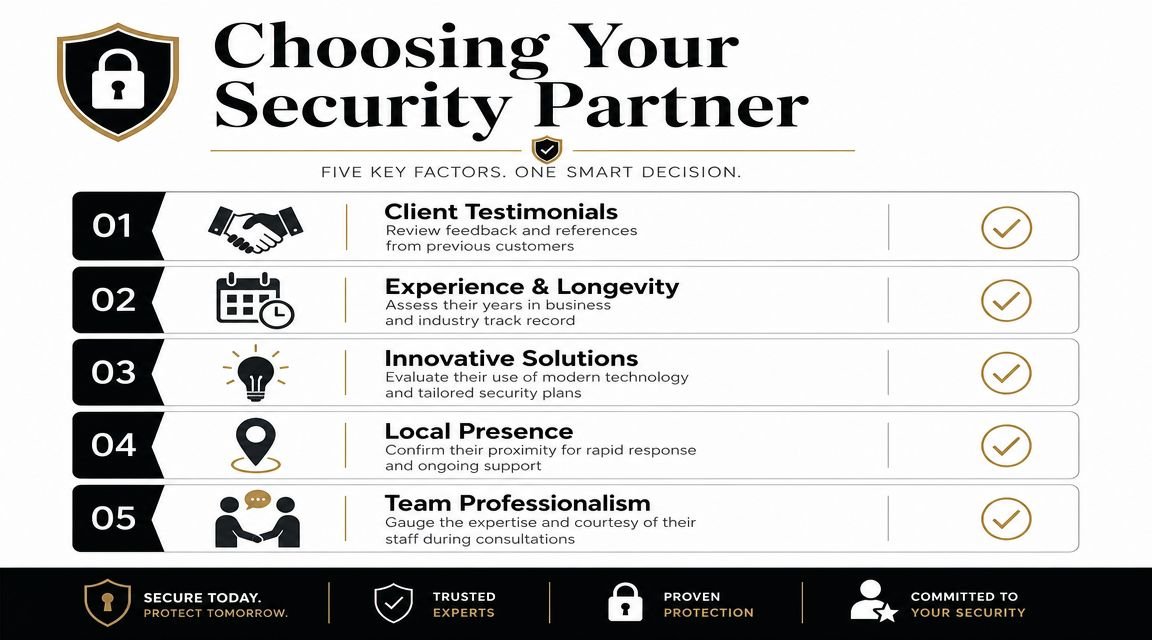
Once you've confirmed approval, ask the installer questions that reveal how they work in practice.
How will you design this system for my property?
A useful answer should mention entrances, vulnerable areas, user routines, lighting conditions, and how people move through the space.Can you integrate the systems I need?
If you want CCTV, alarms, intercoms, and access control to work sensibly together, ask how that will be handled.What happens after installation?
Ask about servicing, fault support, user training, and who to contact if the system needs attention.Have you worked on similar sites?
A terraced house, a warehouse, a retail unit, and a block of flats all create different design problems.Who will use this every day, and how easy will it be?
A system that frustrates staff or household members often gets bypassed or underused.
A simple way to compare two approved firms
If two companies are both approved, compare them on outcomes rather than logos.
Use this shortlist table when reviewing quotes:
| Question | Strong answer | Weak answer |
|---|---|---|
| Does the proposal match the site? | Mentions layout, user behaviour, and risks | Feels generic and copied |
| Is integration discussed? | Explains how systems work together | Talks only about individual products |
| Is ongoing support clear? | Maintenance and support are easy to understand | Aftercare is vague |
| Is the system practical to live or work with? | Focus on usability and routine | Focus only on hardware specs |
This approach helps you choose a partner rather than a supplier.
For homeowners, that could mean asking whether mobile alerts are easy to manage, whether pet-friendly sensors are suitable, or whether external cameras will be placed sensibly rather than just prominently. For a business, it might mean asking how staff access rights are managed, how deliveries are monitored, or how separate areas are secured without disrupting day-to-day work.
A badge tells you a company has met an important baseline. Your questions decide whether the solution will work for your life or your operation.
Finding Local Expertise in South Wales and the South West
Once you've checked approval and asked the right follow-up questions, location starts to matter. Security systems aren't just bought. They're serviced, adjusted, expanded, and occasionally repaired. A provider with local knowledge can often understand the property types, business environments, and support expectations in your area more quickly.
SSAIB's directory organises certified providers by product, service sector, and region, which helps property owners find local specialists for integrated systems such as intruder alarms, CCTV, access control, and fire detection through the SSAIB website directory structure.

For buyers in South Wales and the South West, that local angle is more than convenience. It can shape how quickly surveys happen, how well an installer understands local property layouts, and how practical ongoing support feels after the system is live.
If you're narrowing down suppliers in the region, it helps to look at firms that handle integrated protection rather than only one product line. A provider offering CCTV and security systems in South Wales and the South West may be better placed to support a joined-up solution when your needs extend beyond a single alarm or camera.
The best result usually comes from combining both filters. First, verify that the company is properly approved for the work you need. Then choose the one that understands your property, communicates clearly, and can support the system locally over time.
If you'd like practical advice from a regional specialist, Wisenet Security Ltd offers specific security solutions across South Wales and the South West, including CCTV, intruder alarms, access control, fire systems, and integrated protection for homes and businesses. You can contact the team for a free, no-obligation consultation to talk through what you need and whether the setup is the right fit for your property.