Burglar Alarm System Cost in South Wales and the South West
The average UK burglar alarm base cost is £562, split between £269 for equipment and £293 for installation. Fully equipped smart systems with professional installation can reach £1,139, so the cheapest advertised price rarely represents the complete solution.
What does a burglar alarm cost once the installer has left, the monitoring contract has run for a year, and the system needs servicing? That question matters particularly in South Wales and the South West, where a compact Cardiff flat, a terraced home in Swansea, and a warehouse outside Newport can require very different equipment and response arrangements.
The practical answer is that burglar alarm system cost has two parts. The first is the purchase and installation price. The second is the lifecycle cost, including monitoring, servicing, batteries, signalling, and any response arrangement. A bell-only system may be the right choice for a straightforward home, while monitored protection can make more sense for an empty property, a business, or a building with higher exposure.
Table of Contents
- Understanding Burglar Alarm System Cost in the UK
- Monitored vs Bell-Only Alarm Systems
- Burglar Alarm Cost by Property Type in South Wales
- Ongoing Fees and Maintenance Costs
- How to Get an Accurate Alarm System Quote
- Making the Right Security Investment Decision
Understanding Burglar Alarm System Cost in the UK
A UK alarm quote should separate equipment, labour, and optional services. Treating those elements as one unexplained package makes it difficult to compare installers or understand why two apparently similar systems have different prices.
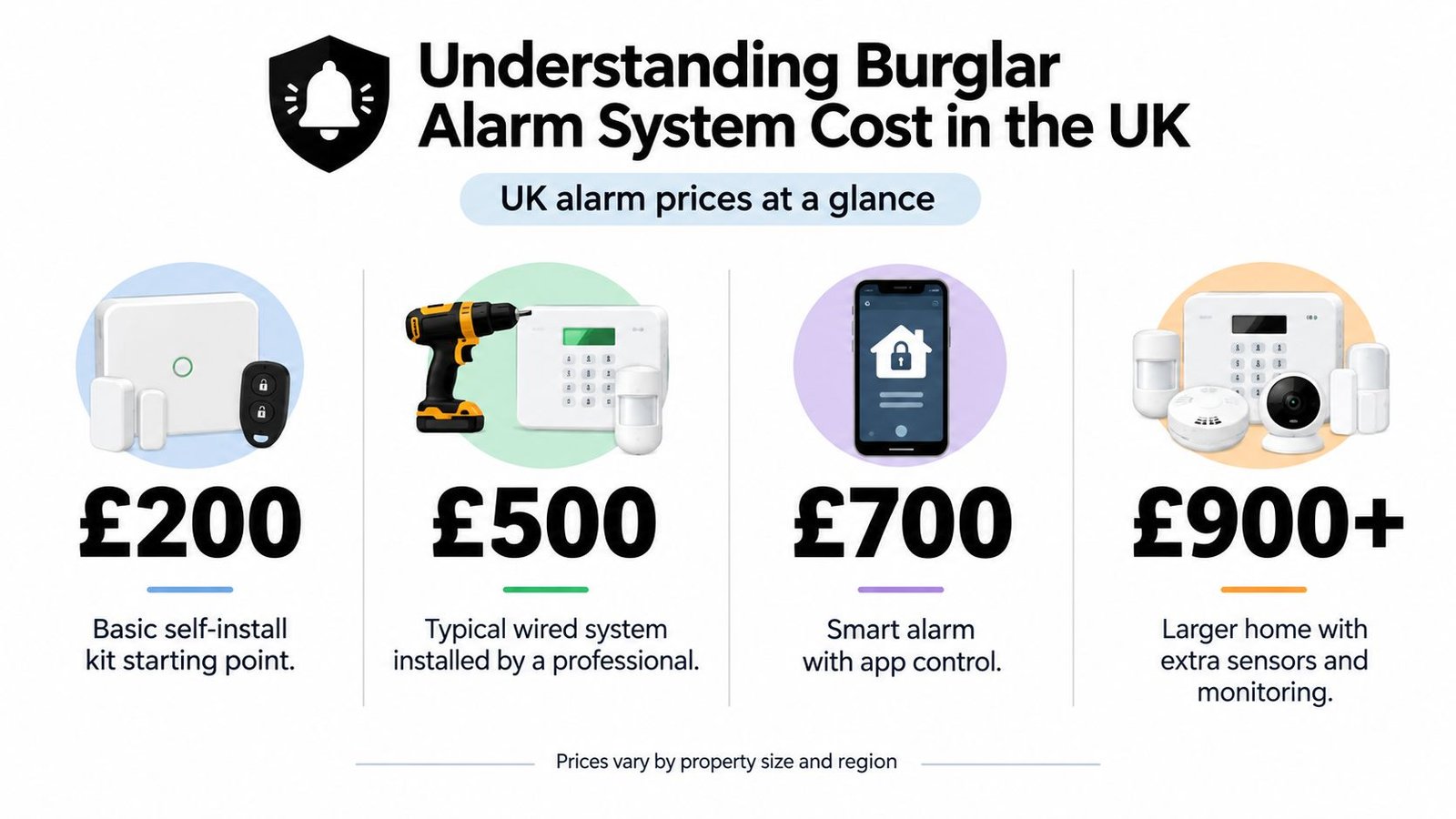
A 2024 UK market survey placed the average base cost at £562, made up of £269 for equipment and £293 for installation. The same pricing data showed a broad range, from £120 for a DIY bell-only home alarm to £1,139 for a fully equipped smart system with professional installation. These figures are documented in the UK burglar alarm cost breakdown from MyJobQuote.
What the starting price includes
A simple self-install kit normally covers a control unit, keypad, external sounder, and a selection of door, window, or movement sensors. It may be suitable for a smaller property with a clear layout, but the owner remains responsible for positioning, programming, testing, and responding to alerts.
A professionally installed system adds labour and design judgement. The installer assesses entry points, sensor coverage, user access, cable routes, pets, telephone or data connectivity, and the location of the external sounder. That work is particularly important in older terraced properties, converted flats, and buildings with extensions, outbuildings, or multiple access routes.
An off-the-shelf dialler system illustrates the split clearly. The market data estimates £205 for equipment paired with approximately £280 of technician labour, producing a total of £485. The point isn't that every home should cost this amount. It shows why a quote that only lists hardware doesn't describe the actual investment.
Practical rule: Compare the number and type of protected entry points, not just the alarm panel or app shown in the brochure.
Smart features can also alter the price. App control, connected signalling, extra sensors, pet-friendly detection, and integration with other security equipment all add design and configuration requirements. For general consumer guidance alongside installer advice, Simply Tech Today's security advice provides useful context on the features buyers commonly compare.
Monitored vs Bell-Only Alarm Systems
The most important cost decision is whether the alarm should sound locally or send an event to people who can act on it. A bell-only system activates an external sounder and may send an alert to the owner, while a monitored system passes alarm signals to an alarm receiving centre, often abbreviated to ARC.
Bell-only protection has a clear advantage. It keeps the initial specification and ongoing commitment simpler, especially where a homeowner is usually nearby and has reliable neighbours or keyholders. It can also suit a small property where the main objective is to create an audible deterrent and alert people in the immediate area.
Its limitation is equally clear. If nobody hears the sounder, sees a notification, or checks the building, the alarm doesn't create a verified response by itself. A phone alert isn't the same as a response service, particularly when the owner is travelling, asleep, at work, or managing several properties.
What professional monitoring adds
Professional monitoring introduces a recurring service charge. UK guide pricing commonly places professional monitoring at £15 to £45 per month, adding £180 to £540 per year above the installation cost. The same UK pricing guidance places monitored systems at about £500 before installation in one market view, while another range is £750 to £1,300 supplied and installed. These figures are set out in Hamuch's UK burglar alarm installation pricing guide.
The service level still needs checking. Some providers only pass signals to an ARC. Others include keyholder notification, app alerts, enhanced signalling, or a defined response arrangement. Police response isn't automatic just because an alarm is monitored. Eligibility, installation quality, verification, false alarm history, and local requirements can all affect the arrangement.
A useful way to assess the decision is to ask what happens at 2am when the property is empty. If the answer is that a family member or neighbour will investigate, bell-only protection may fit the risk and budget. If the property contains stock, equipment, confidential records, or is vacant for long periods, the cost of professional response may be easier to justify. Resources such as this overview of commercial alarm monitoring ROI can help business owners assess monitoring as an operational expense rather than just a technical upgrade.
For households comparing technical options, a monitored intruder alarm system should be assessed by its signalling method, contract terms, response process, and maintenance obligations, not by the word “monitored” alone.
Burglar Alarm Cost by Property Type in South Wales
An alarm quote for a Cardiff flat shouldn't be judged against a warehouse in Newport. The property type changes the number of zones, the likely sensor layout, the cabling, the access permissions, and the consequences of a missed alarm.
A compact apartment may have one main entrance, a small number of accessible windows, and limited internal circulation. The installer still needs to consider communal access, the position of the control equipment, and whether the building's construction makes wireless or wired devices more practical. A landlord may also want a system that can be handed to a tenant without exposing wider building access.

Homes with more access points
A South Wales terraced house often has a front door, rear door, accessible ground-floor windows, a through lounge or hallway, and possibly a side passage. Extensions and converted lofts can add further movement zones. A system designed from a quick room count may miss the actual weak points, particularly at the rear of the property.
A detached home on the edge of Bristol or in the South West may have more external doors, garages, conservatories, and outbuildings. It may also need careful sensor selection where pets move between rooms. The cost increases when the installer needs more devices, longer cable runs, separate buildings, or a more considered approach to arming occupied and unoccupied areas.
Small business and industrial premises
A retail unit has different priorities again. The front entrance, staff access, stockroom, shutters, tills, and delivery doors may need separate protection and user permissions. The business may need a record of who armed or disarmed the system, plus a response plan that works outside trading hours.
A warehouse or logistics hub around Newport, Swansea, or the M4 corridor can require perimeter doors, roller shutters, offices, plant areas, loading bays, and yard access to be considered together. The alarm may also need to work alongside CCTV and access control, rather than operate as an isolated box on the wall.
The relevant local question isn't “What does an alarm cost per property?” It is “How many risks must the system identify, and what should happen after each signal?” Burglar alarms in Cardiff provide a useful reference point for homeowners and businesses comparing local installation considerations.
A low initial price is only good value if the system covers the areas an intruder can realistically use.
Ongoing Fees and Maintenance Costs
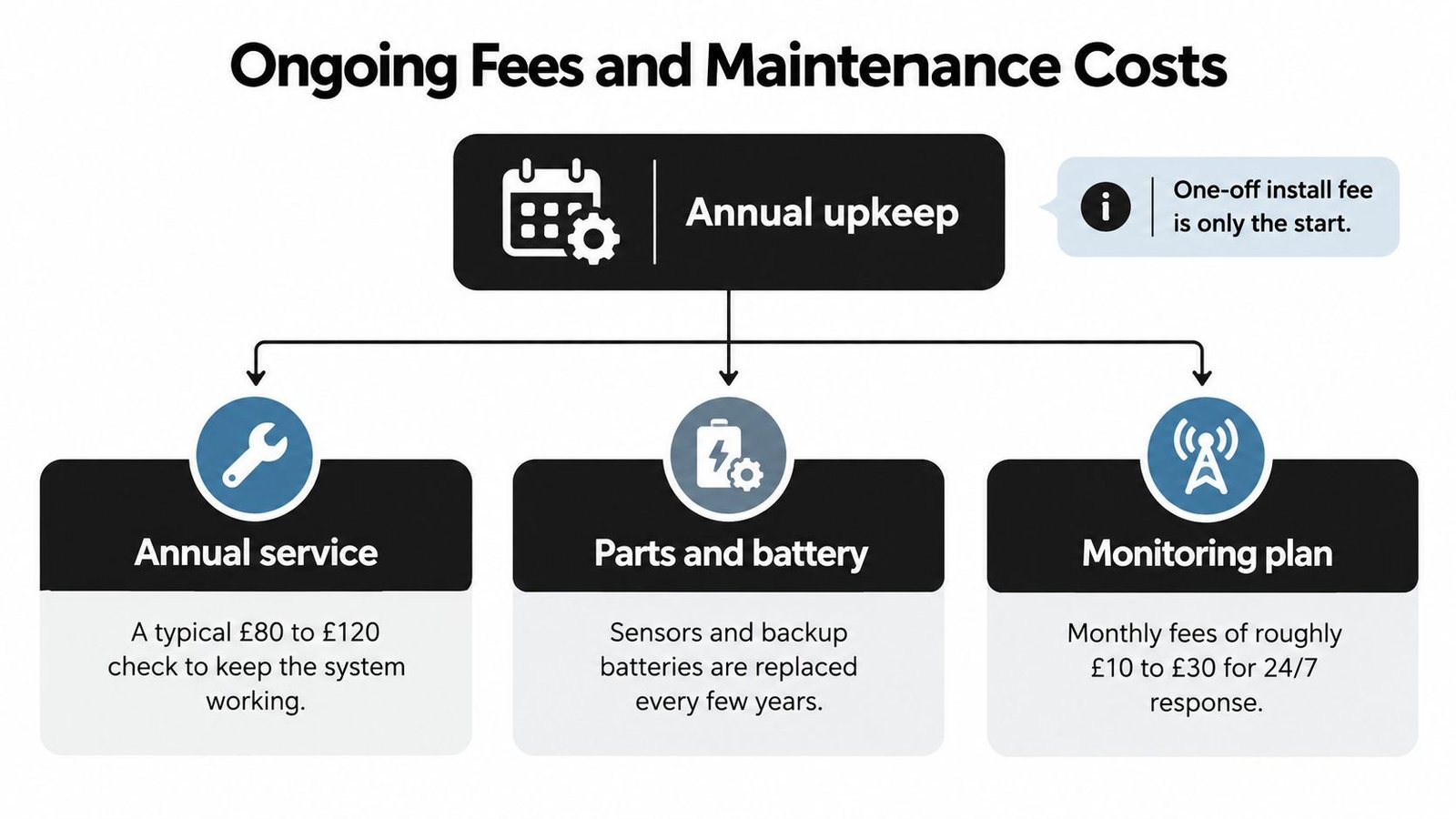
The installation invoice is only the beginning of ownership for many connected systems. Monitoring, servicing, replacement parts, backup batteries, signalling, and call-out terms can all affect the amount paid over time.
ARC-connected monitoring is commonly charged separately at about £15 to £50 per month. Some UK guides place connected response at £20 to £40 per month, or £300 to £900 per year, depending on the response level. Servicing is commonly cited at about £90, while some commercial guidance places annual maintenance at 8% to 15% of installation value. These figures come from Bellfire and Security's explanation of alarm monitoring services.
A three-year ownership view
A three-year comparison exposes the difference between a one-off bell-only purchase and a monitored service. For a bell-only system, the main cost is the equipment and installation, followed by servicing and occasional parts. There may be no monitoring subscription, but the owner still carries responsibility for testing the system and acting on any alert.
For monitored protection, the installation cost is followed by 36 months of recurring charges. Using the documented range of £15 to £50 per month, monitoring alone produces a three-year range of £540 to £1,800, calculated from the monthly fees in the cited UK guide. That amount sits alongside the initial installation, servicing, and any signalling or response charges.
The comparison is not an argument that bell-only systems are poor value. It shows that the cheaper option depends on the property's circumstances. A homeowner who is available to respond and wants a local deterrent may reasonably prefer bell-only protection. A landlord with an empty house, or a business that closes overnight, may value an ARC response enough to accept the higher ownership cost.
What servicing should achieve
A proper service visit should test detection devices, the control panel, alarm transmission, external sounder, backup power, user functions, and any monitoring path included in the contract. It should also identify environmental changes, such as a new pet, moved furniture, building work, or a replacement router affecting connected functions.
Ask whether the service price includes labour, parts, batteries, attendance for faults, and paperwork. A low annual fee can become less attractive if every remedial visit or replacement component is excluded. For practical planning, review the provider's alarm system maintenance service before signing an installation contract.
How to Get an Accurate Alarm System Quote
An accurate quote starts with accurate information. An installer who only knows the property's postcode and rough size can't reliably design protection for every door, window, outbuilding, or operational requirement.
Prepare the property details
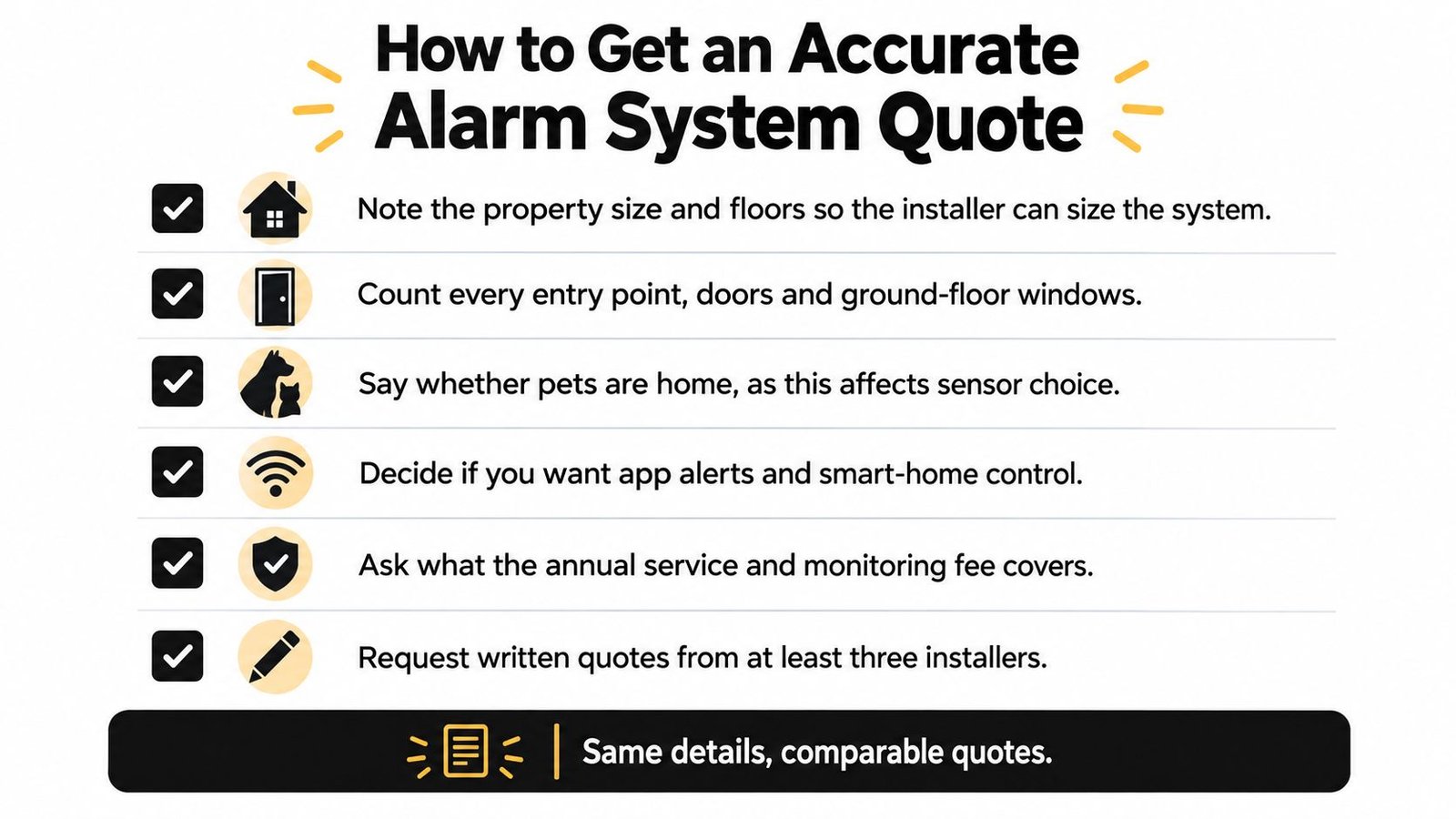
Before requesting a visit, make a short access and usage list:
- Describe the building: Note the number of floors, extensions, garages, sheds, communal areas, and separate entrances.
- Mark entry points: Include front and rear doors, side doors, accessible windows, roof access, shutters, and loading doors.
- Explain occupancy: Tell the installer who uses the premises, when it is empty, and whether pets remain inside.
- List existing equipment: Identify CCTV, intercoms, access control, fire systems, broadband equipment, and any older alarm already installed.
- Set the response expectation: Decide whether you want a local sounder, app notifications, keyholder contact, ARC monitoring, or a more formal response arrangement.
- Separate essentials from upgrades: Ask for the core system first, then price cameras, smart locks, extra sensors, and other additions separately.
These details let different installers quote against the same brief. Without them, one company may include a garage and rear extension while another prices only the main dwelling.
Ask for the cost in clear components
Request a written breakdown covering equipment, installation, commissioning, user training, VAT where applicable, warranty, maintenance, monitoring, signalling, and cancellation terms. Ask whether the quoted monitoring fee is fixed, how long the contract lasts, and what happens if you move property or stop the service.
Compliance also needs a direct question. Ask which standard or certification applies to the proposed system, whether the equipment and installation meet the required specification, and whether the installer can provide the relevant documentation. If police response or insurance requirements matter, ask the provider to explain the exact conditions rather than assuming a monitored alarm automatically qualifies.
Use the same brief with several local installers. The lowest quote may exclude a service plan, omit a vulnerable access point, or use a cheaper signalling route. The highest quote may include features you don't need. A good comparison focuses on coverage, resilience, response, maintenance, and the total contract cost.
This video offers a visual introduction to the points worth discussing during an alarm survey:
A site survey should end with a clear explanation of sensor locations and operating modes. If the installer can't explain why each device is included, the quote isn't ready for approval.
Making the Right Security Investment Decision
The sensible choice depends on the property, not on the lowest headline price. A small occupied home may need a straightforward bell-only alarm with reliable detection and clear user controls. A vacant rental, retail unit, warehouse, or multi-tenant building may need monitored signalling because nobody responsible is consistently present to respond.
Look at the three-year ownership cost before comparing systems. Include the installation, monitoring, service visits, batteries, signalling, response arrangements, and any contract obligations. UK guides place monitored systems at approximately £750 to £1,300 upfront, with monitoring commonly around £15 to £40 per month, while maintenance and signalling charges may sit outside those figures. The pricing context is covered in BestBuilders' UK burglar alarm installation guide.
A quote is more useful when it explains what happens after an activation. Who receives the signal? Who checks the property? What happens if the owner doesn't answer? How are false alarms managed? These operational details often matter more than adding another smart feature.
Choose a system that covers realistic entry routes, suits the people who use the building, and can be maintained properly. Paying for monitoring that nobody understands, or installing sensors that occupants routinely bypass, won't deliver the intended protection.
Wisenet Security Ltd designs, installs, and maintains bell-only and monitored intruder alarm systems for homes, businesses, landlords, and industrial premises across South Wales and the South West. Visit Wisenet Security Ltd to arrange a free consultation and request a custom quote based on your property's actual access points, response needs, and long-term budget.