
Expert Security in Cardiff: Home & Business Protection 2026
Cardiff recorded 118 crimes per 1,000 residents between September 2024 and August 2025, with violence and sexual offences, anti-social behaviour, and shoplifting among the most common recorded categories, according to Cardiff crime analysis based on 2024 to 2025 statistics. For anyone thinking about security in Cardiff, that changes the conversation straight away. This isn't only about dramatic break-ins or high-risk premises. It's also about the steady, everyday pressure of nuisance incidents, opportunistic theft, poor access control, and weak perimeter protection.
In practice, most security failures in Cardiff don't happen because a property had no hardware at all. They happen because the setup was piecemeal. A camera with a blind spot. An alarm nobody arms properly. A back door with no user control. A retail unit with good frontage coverage but no stockroom view. The fix is usually integration, not just adding more devices.
Table of Contents
- Why Security in Cardiff Is a Local Concern
- Understanding Your Core Security Options
- Securing Your Cardiff Home A Proactive Approach
- Protecting Your Cardiff Business From Retail to Industrial
- How to Choose a Trusted Cardiff Security Installer
- Your Next Step Towards a Safer Cardiff Property
Why Security in Cardiff Is a Local Concern
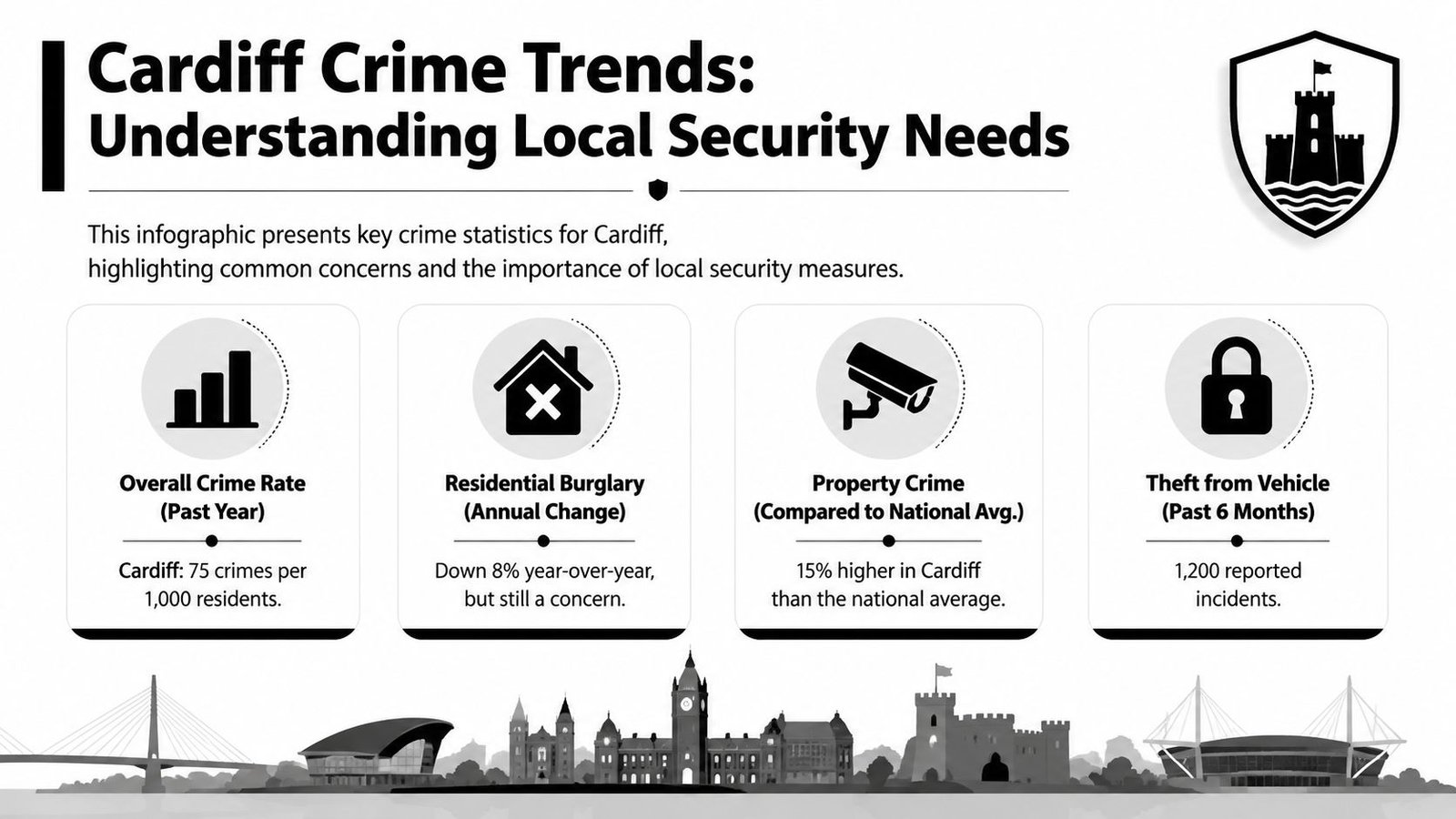
Cardiff's recorded crime profile is not concentrated in one problem area. The city's reported rate stands at 118 crimes per 1,000 residents, with violence and sexual offences at 36.9 per 1,000 people, anti-social behaviour at 16.1 per 1,000, and shoplifting at 14.4 per 1,000, based on Cardiff-specific crime analysis. This points to two separate pressures at once. Some properties need stronger protection against forced entry. Many others need tighter day-to-day control over access, nuisance behaviour, theft opportunity, and usable evidence when something does happen.
On the ground, Cardiff rarely presents a single-issue security problem. A terraced home in Roath, a student property in Cathays, a convenience shop on a busy road, and a warehouse near an arterial route all have different weak points, different traffic patterns, and different response needs. The common mistake is also the same across all of them. One device goes in, usually a camera or a bell-only alarm, and the wider risk is left untouched.
Cardiff risk is shaped by everyday incidents
Lower-level problems are often the first warning sign. Repeated anti-social behaviour around an entrance, casual rear access by non-staff, petty theft, or poor control of shared doors usually show where a site is easiest to exploit. In practice, I see the same faults come up again and again across Cardiff properties. Poor lighting at side access. No defined visitor route. Rear doors used informally. Cameras mounted for coverage but not identification. Alarm zones set up without much thought for how people move through the building.
Practical rule: Security in Cardiff works best when it matches how the property is used every day, not just how it appears on a floor plan.
That is why a proper plan starts with routes, habits, handover points, and blind spots. For a useful local reference point, Cardiff security system coverage across homes and commercial sites shows the types of installations commonly specified for the city.
Integrated systems solve more than one problem
The strongest setups do three jobs. They deter, control, and document.
A camera system on its own often becomes a playback tool after the event. An alarm on its own can create noise without giving the owner or keyholder enough context to act quickly. Access control on its own may solve the key issue but still leave blind spots around deliveries, shared entrances, and out-of-hours movement. Once those systems are planned together, the result is usually better day-to-day control and fewer weak handoffs between them.
That joined-up approach suits Cardiff particularly well because the risk profile is mixed. Homes, shops, offices, student lets, and industrial units face different versions of the same underlying problem. Security works best when the system is built around the property's actual exposure, not a generic package.
Understanding Your Core Security Options
Individuals seeking security solutions in Cardiff don't need every system available. They need the right combination. The difference matters because overspending on the wrong equipment is common, and so is under-specifying critical areas like entrances, stock zones, staff access points, and external approaches.
What each system actually does
CCTV is the backbone for most properties because it gives you visibility, deterrence, and evidence. For a retail premises on a busy route, high-definition or 4K cameras help with recognition at entrances, tills, and external frontage. For homes, key benefits typically include front approach, rear access, driveway coverage, and app-based remote viewing. Good CCTV placement beats a larger number of badly positioned cameras every time.
Intruder alarms are there to detect unauthorised entry fast and force a response. In homes, that often means perimeter protection on vulnerable doors and ground-floor openings, with internal detection covering circulation areas. In commercial sites, alarm zoning matters just as much as the devices themselves. A business often needs separate arming for office space, stock areas, and delivery access, otherwise staff either bypass the system or stop using it properly.
Access control replaces informal key management with permissions. That matters in shared offices, student accommodation, managed buildings, workshops, and warehouses. Keypads, cards, fobs, and biometric readers all have a place. The right choice depends less on fashion and more on staff turnover, audit needs, and how often access rights change.
Cardiff Security System Comparison
| System Type | Best For | Key Feature | Local Cardiff Application |
|---|---|---|---|
| CCTV | Homes, shops, offices, warehouses | Visual verification and recorded evidence | Frontage monitoring, rear lane coverage, stockroom and entrance visibility |
| Intruder alarm | Houses, flats, retail units, offices | Immediate detection of unauthorised entry | Night setting for homes, zoned protection for mixed-use business sites |
| Access control | Offices, student accommodation, shared buildings | Controlled entry with user permissions | Managing staff, tenants, contractors, and delivery access |
| Fire alarm | Commercial premises, HMOs, managed properties | Life safety alerting and compliance support | Protecting occupants and supporting required maintenance regimes |
| Intercom | Flats, gated homes, offices | Visitor verification before entry | Screening callers at shared entrances or remote gates |
| Gate automation | Driveways, depots, yards, industrial sites | Controlled vehicle and perimeter access | Securing service yards, private parking, and restricted compounds |
A lot of clients start by asking only for cameras. After a site walk, the bigger issue often turns out to be entry control or poor alarm logic. That's why integrated CCTV and security systems in Cardiff are usually more effective than buying one product category in isolation.
The trade-offs people often miss
The best camera image in the world won't stop unauthorised access if the side gate is always left open. A strong alarm won't help much if staff can't arm only the areas they've finished using. A biometric reader might sound appealing, but on some sites a card or fob system is faster, easier to manage, and more reliable in daily use.
Good security design is mostly about friction. Add it to the intruder, not to the user.
For Cardiff homes, the usual priority order is perimeter awareness, clear detection, and reliable remote alerts. For businesses, it's often entry management, evidence quality, and maintainable compliance. Different property types need different emphasis, but the same principle applies. Systems should work together and fit the site's routine.
Securing Your Cardiff Home A Proactive Approach
Police burglary figures consistently show that homes are still a regular target across England and Wales, and in Cardiff the pattern is familiar on site visits. Intruders usually choose the easiest route, not the front elevation with the best camera. A home security plan should deal with how access happens here. Rear lanes, side passages, patio doors, and poorly lit approaches cause more problems than a single weak lock at the front.
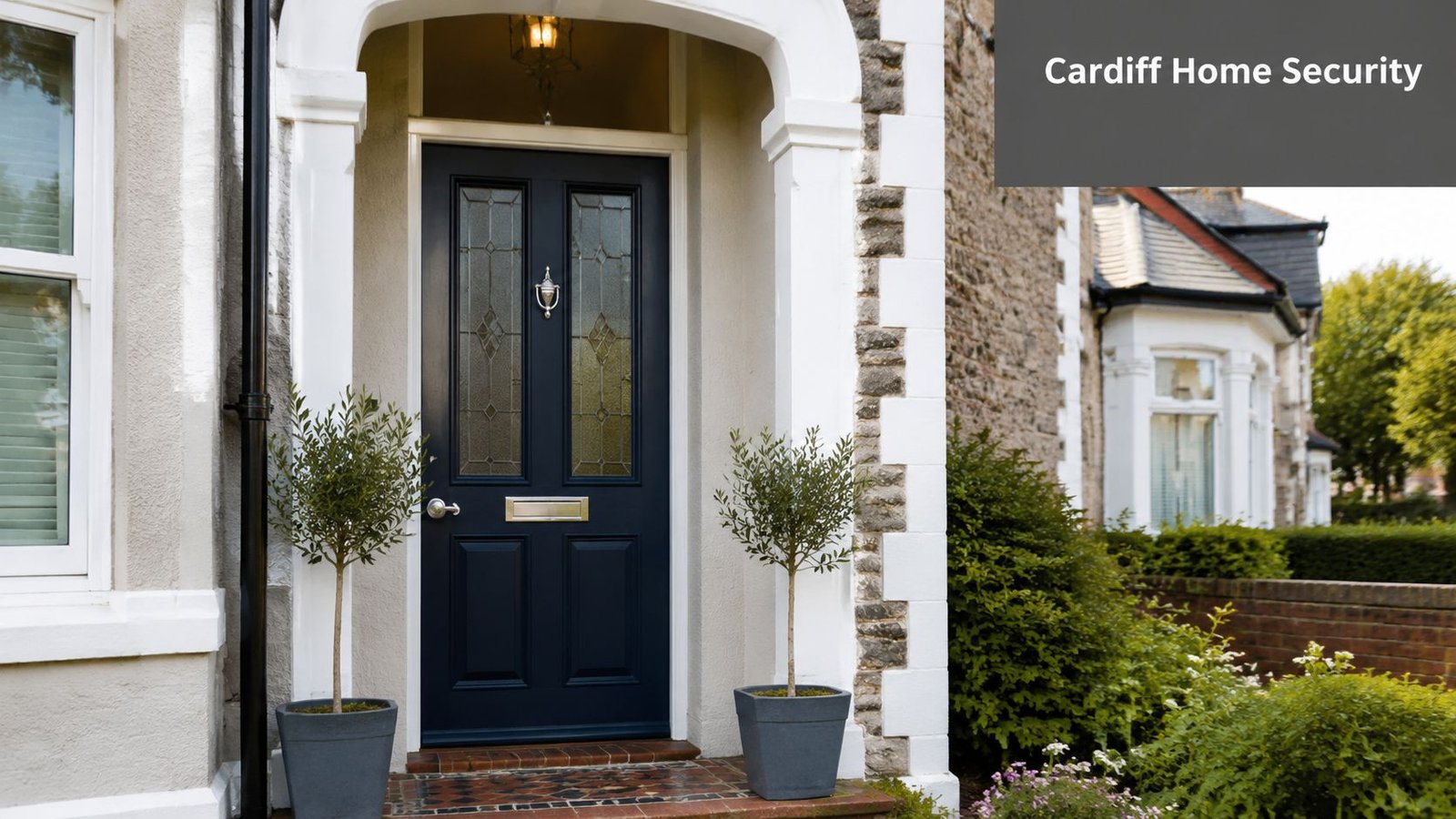
In practice, Cardiff homes need layered protection that matches the property type and the street layout. A terraced house backing onto an alley has different risks from a detached property in a quieter cul-de-sac. Flats bring another issue again. Shared entrances, parcel deliveries, and limited control over common areas. Generic advice misses that. The better approach is to build a joined-up plan around the weak points of the address, the household routine, and how quickly you can verify an alert.
A connected setup improves decision-making because it links the event to the evidence. If a detector activates on a side path, the occupier should be able to check the camera view at once, confirm whether it is a real approach, and decide whether to ignore it, speak through audio, or escalate. That matters more than adding extra devices for the sake of it.
Wisenet Security Ltd installs residential systems that combine 24/7 4K CCTV, smartphone remote viewing, and BS EN 50131 intruder alarms with monitored options and pet-friendly sensors. For homeowners comparing specifications and installer standards, it helps to review established security companies in Cardiff rather than choosing on price alone.
The weak points I see most often in Cardiff homes are usually practical rather than technical:
- Rear access routes: Lanes, fences, and garden approaches often give cover and are less likely to be challenged by passers-by.
- Side passages: These are commonly hidden from the road and can lead directly to a rear door or ground-floor window.
- Poor lighting at the point of approach: Cameras need usable light and a clear angle. A good recorder cannot fix a badly lit scene.
- Inconsistent arming routines: If night setting or part-setting is awkward, people stop using it properly.
Priority should start with the likely route in, not the device catalogue. Cover the doors and windows that can be reached without being seen. Make sure the alarm can be set in a way the household will use. Then check whether alerts arrive with enough context to make a quick decision. A camera showing a clear face at the gate is more useful than three wide shots of an empty drive.
Homes with pets, children, carers, regular deliveries, or frequent travel need different programming and detector choices. That is where the trade-offs become real. Pet-tolerant sensors reduce false activations but still need correct positioning. App control is convenient, but only if users understand permissions and notifications. Monitored response adds another layer, but some households are better served by strong local signalling and verified remote access if they are usually nearby.
A short walkthrough of residential system thinking helps here:
A home system should feel easy to use on a normal Tuesday. If it only works when everyone remembers a perfect routine, it won't stay effective.
For most Cardiff households, better security comes from closing the obvious gaps, linking the system properly, and keeping daily use simple.
Protecting Your Cardiff Business From Retail to Industrial
Business security in Cardiff succeeds or fails on fit. A city-centre retailer trading six days a week, a serviced office in Cathays, and an industrial unit near Wentloog do not face the same risks, use the same entrances, or need the same response plan. The common mistake is buying cameras, alarms, or door entry as separate products instead of setting them up as one working system.
Budget pressure is real for smaller firms, but an undersized system usually costs more later in false alarms, blind spots, lost stock, and poor evidence after an incident. Large organisations treat security as part of operations for the same reason. Reporting by The Tab on Cardiff University security spending said the university spent about £7.684 million on security over three years, including around £2.2 million in 2021 to 2022. That does not mean every Cardiff business should spend heavily. It shows that once sites carry enough people, assets, and liability, security becomes a management issue, not a box-ticking purchase.
The right design starts with how the premises run.
A retail unit usually needs clean facial images at the entrance, reliable coverage at tills, protection for stockrooms, and a locking and alarm routine staff can follow at the end of a busy shift. An office often gets more value from controlled access and an audit trail than from adding extra cameras in corridors. On industrial sites, priorities usually shift toward the perimeter, yard gates, shutters, delivery areas, and out-of-hours detection that can tell the difference between expected movement and a real problem.
Cardiff businesses also have location-specific trade-offs to think about. A shop in the city centre may need better incident capture and safer staff closing procedures. A business on a quieter trading estate may need earlier warning outside the building envelope because there are fewer natural witnesses after hours. Mixed-use buildings create another layer. Shared entrances, tenant turnover, cleaners, and contractors all increase the value of managed permissions over physical keys.
A limited budget should shape the order of work, not force random compromises. In practice, I would usually start with the points that affect loss, safety, and daily control fastest: the main access-controlled door, CCTV covering the highest-risk internal and external areas, and an intruder system programmed around actual opening times and staff movement. After that, the next phase might be secondary doors, better lighting, intercoms, ANPR, or remote management, depending on what the site is dealing with.
Cardiff Council's digital strategy talks about strong infrastructure and reliable systems through secure, scalable platforms. The same principle applies on the security side. If CCTV, alarms, access control, and remote access are added one by one without a plan, day-to-day management gets harder, not easier. Staff end up using workarounds. Permissions drift. Faults take longer to trace. Evidence becomes harder to retrieve when an incident needs a quick answer.
Storage decisions matter here as well. If stock is moved off the main floor, if high-value items are held in overflow space, or if collections happen outside normal trading hours, the security plan needs to change with it. For businesses reviewing those practical layout questions, MG Self Storage business solutions can be useful alongside a site survey because storage and security affect the same access routes, handling points, and after-hours risks.
A workable commercial plan usually comes back to four checks:
- Protect people first: Cover reception, staff entrances, lone-working areas, and any point where cash handling or conflict is likely.
- Control who goes where: Set permissions by role, time, and area. Remove access quickly when staff or contractors change.
- Keep the system serviceable: Equipment needs maintenance, battery checks, firmware updates, and clear fault reporting.
- Make sure footage is usable: Good positioning, lighting, and retention matter more than a high camera count.
The best business systems in Cardiff are proportionate to the site, clear for staff to use, and built to handle the kinds of incidents that happen there.
How to Choose a Trusted Cardiff Security Installer
Choosing the installer matters as much as choosing the hardware. A poor survey produces poor results even with decent equipment. In modern security in Cardiff, that's even more important because IP CCTV, app-managed alarms, remote access, and network-connected controllers all rely on competent system design, not just tidy cabling.
Cardiff Metropolitan University's Cybersecurity and Information Networks Centre focuses on “designing secure and resilient networked systems”, as described on the CINC research centre page. That point is highly relevant to real installations. A camera system isn't only a camera system anymore. It's part of a wider networked environment, and if that environment is badly planned, the whole setup becomes harder to trust.
Questions worth asking before you sign anything
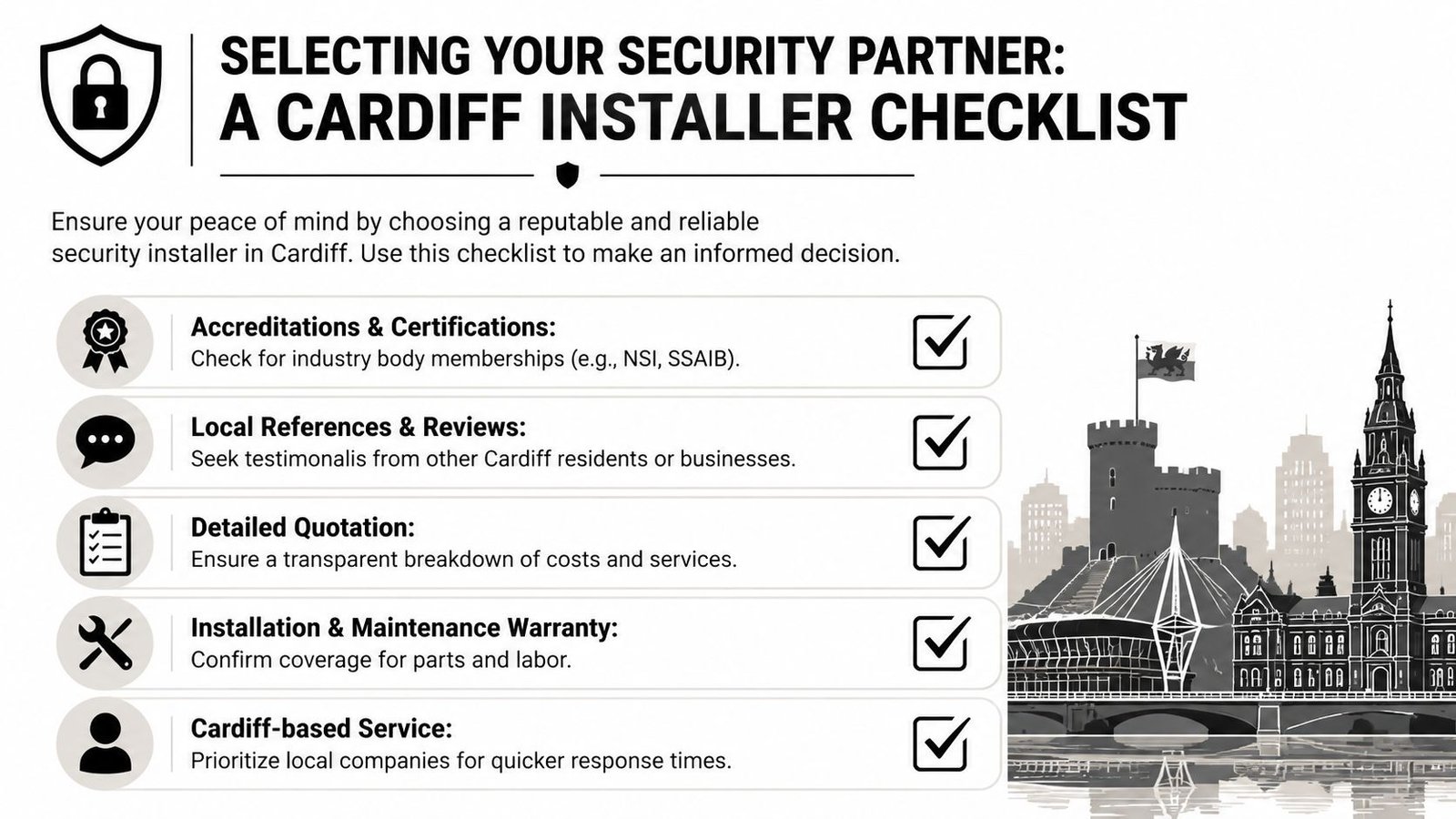
Some questions cut through sales talk very quickly:
- How will you survey the site? A proper installer should ask about routines, access points, risk areas, users, and future changes.
- What happens after installation? You want to know who maintains the system, how faults are handled, and whether support is local.
- How are permissions managed? This matters for access control, app users, and staff changes.
- How are false alarms reduced? Detector choice, zoning, and user training make a big difference.
- How is the network side handled? For IP systems, this is not a technical extra. It's core to reliability.
If you're comparing firms locally, security companies in Cardiff is a useful starting point for understanding the kinds of credentials, services, and support arrangements worth checking.
What separates a competent installer from a risky one
A reliable firm should be able to explain trade-offs clearly. They should tell you when one camera can replace three poor ones, when a keypad is better than a biometric reader, and when monitored signalling is worth the extra cost. If every answer is “add more kit”, that's a warning sign.
Look for practical trust signals:
- Accreditation and vetting: SafeContractor status, DBS-checked engineers, and full insurance all matter because people are working in your home or on your operational site.
- Recognised manufacturers: Brands such as Hikvision, Paxton, Pyronix, and Fike are familiar in the trade for a reason. Compatibility, support, and reliability matter over the life of the system.
- Written scope: You should know what's being installed, where, why, and what the maintenance obligations are.
- Realistic design: A good installer won't promise that one product solves every risk.
If an installer can't explain why each device is going in a specific position, they probably haven't designed the system properly.
Low-cost quotes often hide weak commissioning, poor user setup, or no meaningful aftercare. That's where many problems begin. The hardware may look similar on paper, but the result on site won't be.
Your Next Step Towards a Safer Cardiff Property
Effective security in Cardiff comes down to fit. The right system reflects the property, the people using it, and the risks that show up in day-to-day life. For a home, that usually means layered detection, clear camera coverage, and alerts you'll respond to. For a business, it means combining protection with usable access control, dependable maintenance, and sensible compliance.
The local picture supports that practical approach. Cardiff has a broad risk profile, and major institutions in the city treat security as infrastructure, not an afterthought. That same mindset works at every scale. A small shop doesn't need a university budget, but it does need a design that solves real operational problems rather than adding disconnected products.

If you're reviewing your options, the most useful next step is a proper site assessment. Walk the routes. Identify the blind spots. Check how people enter, leave, lock up, and respond to alerts. That process usually makes the priorities obvious very quickly.
If you want a customized plan for your home, shop, office, warehouse, or managed property, book a free, no-obligation consultation with Wisenet Security Ltd. A local assessment can help you decide what to install now, what can wait, and how to build a system that works for your Cardiff property.