Find Your Best Security Company Newport: 2026 Guide
You're probably in one of two positions right now. Either you've had a near miss at home, a dodgy knock at the door, a side gate left open, a van parked where it shouldn't be. Or you run a shop, office, yard, or warehouse in Newport and you're tired of relying on luck, old locks, and a camera system that's more decorative than useful.
That's the point where a search begins for a security company in Newport. Fair enough. The problem is that the market looks crowded, and most websites say the same things. They mention guards, alarms, CCTV, and “peace of mind” without helping you decide what best fits your property.
A good security setup today isn't just about putting a person on a gate or bolting a siren to the wall. It's about building a system that sees clearly, alerts quickly, records properly, and lets you act fast from your phone. If your concern also includes digital exposure around staff accounts or leaked credentials, it's worth taking a look at how to explore dark web monitoring solutions alongside physical protection, because break-ins and cyber issues often meet in the same business headaches.
Table of Contents
- Why Newport Homes and Businesses Need Reliable Security
- What to Expect from a Newport Security Company
- Verifying Quality The Essential Security Standards
- Tailoring Security for Your Home Shop or Warehouse
- Questions to Ask Before You Hire a Security Company
- Why We Recommend Wisenet Security Ltd
Why Newport Homes and Businesses Need Reliable Security
Security gets ignored when everything feels normal. Then one incident changes the conversation. A delivery goes missing. Someone tries a back door. Staff leave up and shut down incorrectly. A neighbour's garage gets hit. Suddenly, “we should sort the security” becomes urgent.
That urgency is reasonable. The UK private security services industry includes 6,572 registered businesses and recorded 1.2% CAGR between 2021 and 2026, showing steady expansion in a market where buyers have plenty of choice, but not always enough clarity about quality (IBISWorld UK private security services industry). More choice doesn't make the decision easier. It makes filtering more important.
Why local buyers get stuck
Individuals often don't struggle because they lack options. They struggle because security firms often sell categories, not outcomes.
You'll see broad promises like CCTV, alarms, access control, keyholding, guarding. What you need instead is a clear answer to one question. What will reduce your real risk at your property in Newport?
For a family home, that may mean covering entry points properly and getting alerts without constant false alarms. For a small business, it may mean protecting stock, controlling staff access, and checking incidents remotely without driving back to site. For a warehouse, it usually means perimeter visibility, reliable detection, and evidence you can use.
Practical rule: Don't start by asking which company is cheapest. Start by asking which risk you need to solve first.
What reliability looks like in practice
A reliable installer should assess your site, explain blind spots plainly, and recommend a system you'll use. That means remote viewing that works, alarm zones that make sense, and equipment suited to your layout rather than a generic package.
If you want a local starting point for system coverage in the area, you can review security system services available in Newport. The point isn't to collect brochures. It's to compare how clearly a company talks about real installation standards, maintenance, and long-term support.
What to Expect from a Newport Security Company
A proper security company in Newport should do more than fit hardware. It should design a joined-up system that suits the building, the people using it, and the risks you face.
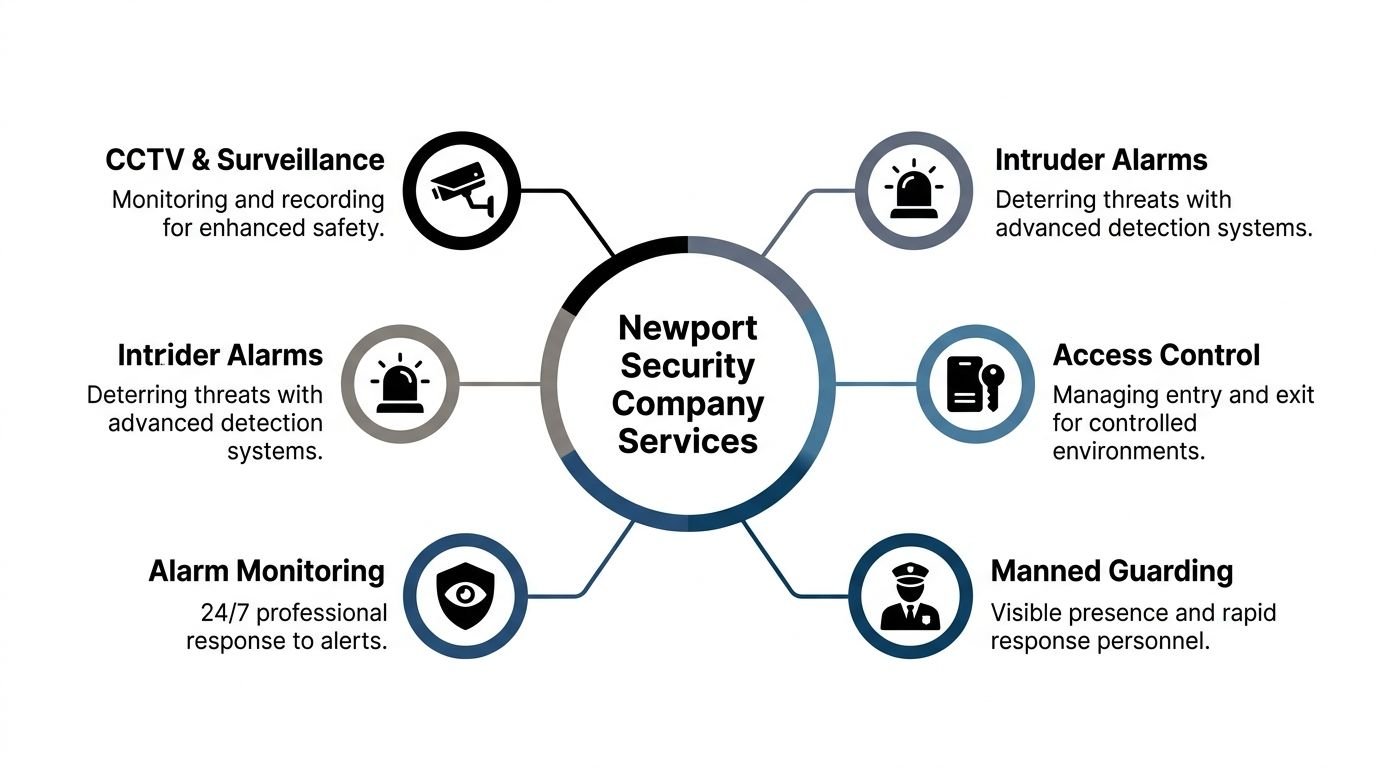
Here's the simple version. CCTV is your digital watchman. An intruder alarm is your fast warning system. Access control is your smart gatekeeper. Monitoring is the layer that makes sure alerts aren't ignored.
CCTV that does its job
Good CCTV should give you footage you can use, not grainy shapes and guesswork. Wisenet Security Ltd's business context describes systems with 4K/HD footage, advanced night vision, and smartphone remote viewing, which is the sort of practical baseline I'd expect from a modern installation rather than a premium extra (Hanwha Wisenet X Series context reference).
For homes, that usually means front door, driveway, side access, and rear approach. For businesses, it often means entrances, till areas, loading zones, stock areas, and external perimeters.
Intruder alarms that fit how you live or work
An alarm should deter, alert, and help you respond quickly. It shouldn't make you hate using it. If your system gives constant nuisance triggers, people stop setting it properly, and then it's useless.
A decent installer should offer options such as:
- Bell-only alarms for audible deterrence where that suits the site
- Monitored setups when a stronger response process is needed
- Pet-friendly sensors for homes and mixed-use spaces
- Mobile alerts so you know what's happening without being on site
Access control and smarter entry
Keys get copied. Staff leave. Contractors need temporary access. That's why access control matters far more than many Newport businesses realise.
You should expect options like keypad entry, fobs, cards, or biometric readers depending on the site. The core benefit isn't the gadget. It's control. You can decide who gets in, where they can go, and when that permission ends.
A locked door is only useful if you know who opened it and can revoke access without changing half the building.
Manned guarding isn't always the answer
There are situations where guards still make sense. But many competitors lean on that model too heavily. For a lot of properties, automated CCTV, alarms, and controlled access give more consistent coverage with less dependence on staffing and less room for human error.
That doesn't mean replacing every person with technology. It means using people where they add value, and using systems where consistency matters most.
Verifying Quality The Essential Security Standards
Cheap security usually fails in ordinary ways. A camera misses the gate. An alarm throws nuisance alerts. Nobody answers when the system needs servicing. By the time you find out, the installer already has your money.
That is why you check standards before price.
BS EN 50131 matters
For intruder alarms, BS EN 50131 is the benchmark you should ask about first. It sets out recognised requirements for intruder and hold-up alarm systems in the UK and Europe, covering grading, design, and performance expectations (BS EN 50131 standard overview from the British Standards Institution).
That matters because standards separate a properly designed system from a box-ticking install. If a company cannot explain how its alarm design aligns with BS EN 50131, treat that as a warning sign.
It also matters for the wider shift in security. Newport businesses have relied on guards for years, but staffing gaps, inconsistent cover, and rising costs have changed the equation. A well-specified alarm, paired with clear CCTV and controlled access, gives you dependable coverage every day instead of hoping the right person is in the right place at the right time.
What I would verify before hiring anyone
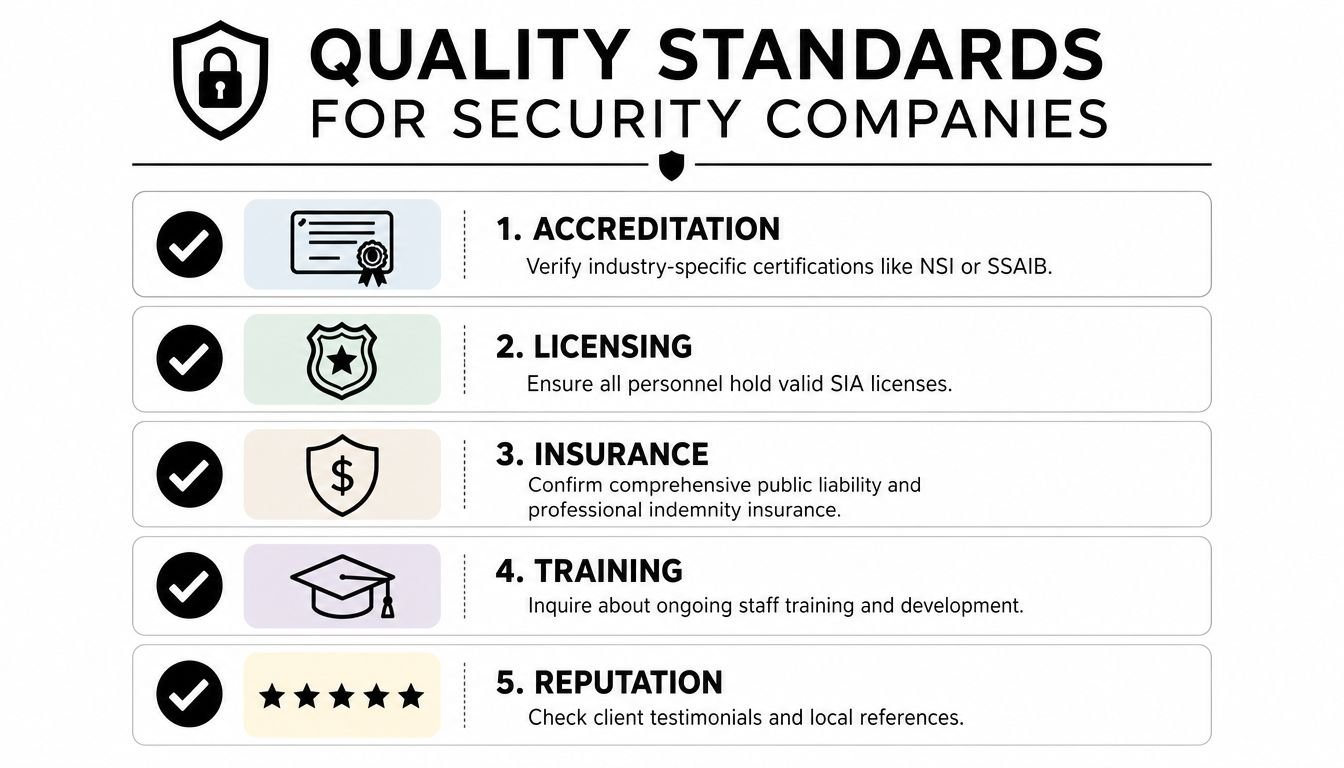
Start with the people. Ask whether engineers are DBS-checked, trained on the systems they fit, and employed or closely managed by the company you are hiring. Subcontracting is not automatically a problem, but vague answers are.
Then check the business itself:
- Accreditation: Look for recognised inspection and safety credentials. They show the firm follows audited processes instead of making up its own rules on site.
- Insurance: Ask for confirmation of public liability and relevant professional cover.
- Maintenance terms: Get the service response, testing schedule, and fault reporting process in writing.
- System commissioning: Ask who configures alerts, user permissions, recording settings, and app access before handover.
- Cyber basics for smart devices: If your cameras, alarms, or intercoms connect to the internet, poor password practice and sloppy setup create avoidable risks. This guide to IoT security best practices is useful background.
One more point. Ask how often they still push manned guarding as the default answer. A good adviser will tell you where guards add value and where automation is the better investment. For many Newport sites, 4K CCTV, verified alarms, and smart access control provide more consistent protection at a lower long-term cost.
What to check on the company website
Do not settle for slogans. Look for proof.
A credible installer should publish real detail on inspections, approvals, maintenance, and how its systems are assessed. If you are checking inspection credentials, review their security systems and alarms inspection board information and make sure the wording is specific, current, and easy to verify.
If a firm stays vague about standards, engineer vetting, or aftercare, expect problems after installation.
Tailoring Security for Your Home Shop or Warehouse
The right setup depends on the property. A three-bed home in a quiet street doesn't need the same design as a corner shop or a distribution unit. Good installers tailor the layers. Bad ones sell the same package to everyone.
Recommended Security Solutions by Property Type
| Property Type | Core CCTV | Intruder Alarm | Access Control |
|---|---|---|---|
| Home | Front door, driveway, side gate, rear garden coverage with remote viewing | Pet-friendly internal detection and perimeter protection | Video intercom or smart door entry where needed |
| Shop | Entrance, till point, shop floor, stockroom, rear delivery door | Zoned alarm with staff set and unset routines | Controlled stockroom or staff-only access |
| Warehouse | Perimeter, loading bay, yard, shutter doors, internal aisles | Multi-zone detection for entry points and vulnerable areas | Fob, keypad, or gate access with audit visibility |
For homes in Newport
Most homeowners don't need complexity. They need visibility, easy control, and fewer blind spots.
A sensible domestic setup often includes 4K cameras covering the approach to the property, one view over the rear, and a properly configured alarm with pet-friendly sensors if animals move around indoors. That gives you deterrence, evidence, and a practical day-to-day routine that won't be abandoned after a week.
If your front end is busy with deliveries, visitors, and family members coming and going, a video intercom can also cut out the guesswork before you open the door.
For shops and small businesses
Retail and service businesses need two things at once. They need customer-facing visibility and back-of-house control.
A camera over the till is useful, but it's not enough on its own. You also want clear views of entrances, stock areas, and any rear service access. Pair that with a zoned intruder alarm and restricted entry to staff-only areas. That's a cleaner, more manageable setup than relying on physical keys alone.
For small firms comparing options, this overview of security systems for small business is a practical reference point.
For warehouses and yards
Warehouses need layered protection. If you only protect the office door, you've missed the actual exposure.
Start outside. Cover gates, yard approaches, loading bays, and external walls. Then deal with shutter access, internal movement routes, and any high-value storage areas. Access control should limit who can enter sensitive zones, especially if you use agency staff, contractors, or staggered shifts.
A warehouse system should answer three questions fast. Who entered, where they went, and what the cameras saw.
The modern shift away from guard-heavy setups
I'm opinionated about this point. Many Newport businesses are better served by integrated technology than by defaulting to guard-heavy solutions.
Automated CCTV doesn't get distracted. Smart alarms don't call in sick. Access credentials can be changed immediately. For many SMEs and industrial sites, that mix is more dependable day to day and easier to manage over time. Human presence still has a place, but it shouldn't be the only plan.
Questions to Ask Before You Hire a Security Company
You don't need to be a technical expert to spot a weak installer. You just need to ask better questions and listen carefully to the answers.
The UK security sector has faced recruitment and retention pressure, which is exactly why you should ask who is carrying out the work, how experienced they are, and whether they're properly certified (Statista overview of the UK security services industry).

Ask these before you sign anything
- Who installs the system? You want to know whether the engineers are directly employed or subcontracted, whether they're DBS-checked, and whether they regularly work with the equipment being quoted.
- What standard is the alarm installed to? If they can't answer clearly on alarm compliance, that's a bad sign.
- What does maintenance include? Ask about servicing, callouts, response expectations, and what happens if remote access or notifications stop working.
- What are the ongoing costs? The cheap quote often becomes the expensive system once app fees, monitoring, servicing, and add-ons appear later.
- Can the system grow with the property? A home office may become a business unit. A single shop may become two premises. Expansion matters.
- What happens during a power cut or internet issue? You don't need a lecture. You need a clear explanation of how the system behaves when conditions are poor.
What good answers sound like
A competent company answers directly and without waffle. They'll explain the equipment choice, show how the system suits the building, and tell you what support looks like after installation.
Weak firms tend to hide behind jargon or rush back to price. That's usually because price is all they've got.
Ask one more question than feels polite. Security problems usually show up in the details people hoped you wouldn't notice.
Why We Recommend Wisenet Security Ltd
If you want a practical answer rather than a giant shortlist, this is mine. For many homes and businesses searching for a security company in Newport, a tech-led installer is the smarter choice than relying too heavily on traditional guard-based coverage.
Wisenet Security Ltd is an active local business, registered as Company No. 14345392 with SIC 80200, serving the Newport area as a security systems installer rather than a hardware manufacturer. The company listing also confirms it integrates established third-party technologies such as Hikvision and Paxton, which is what you want from an installer focused on system design and deployment rather than rebadging equipment (Wisenet Security Ltd company record).
Why this recommendation is straightforward
The strongest reason is simple. Automated systems solve a lot of the consistency problems that come with people-dependent security models. If your property needs dependable night coverage, fast alerts, controlled entry, and clear footage, integrated CCTV, alarms, and access control usually give better long-term value than patchy stopgaps.
That's especially true for small businesses, warehouses, landlords, and homeowners who need something they can manage without constant friction. You want a system that works every day, not one that sounds impressive during the quote visit.
What makes an installer worth choosing
I'd back an installer when the fundamentals are right. Local presence. Clear standards. DBS-checked engineers. Experience with integrated systems. Ongoing maintenance. Familiarity with brands like Hikvision, Paxton, Pyronix, and Fike. Those are the details that matter when the system is being specified, fitted, and supported.
If you're comparing Newport providers, judge them on those points first. Everything else is noise.
If you want a no-nonsense assessment of your home, shop, office, or warehouse, contact Wisenet Security Ltd. Ask for a site survey, ask direct questions, and get a proposal built around how your property operates. That's how you end up with security you'll trust and use.