CCTV Installation Costs: 2026 UK Price Guide
A professionally installed 4-camera home CCTV system in South Wales and the South West usually costs £650 to £1,800. If you're pricing a small business, expect £1,500 to £4,500, while larger warehouse or logistics sites often start around £5,000 and can reach £15,000.
Property owners often start looking into cctv installation costs when something has already pushed it up the priority list. A parcel goes missing in Cardiff. A retail unit in Bristol has a blind spot near the rear entrance. A landlord in Newport wants better coverage in shared areas without creating a compliance problem later.
The hard part isn't finding a cheap camera online. It's working out what the full job costs once you include proper cabling, recording, setup, privacy controls, and the labour to install it cleanly. In the UK, and especially across South Wales and the South West, those details matter because pricing is tied to real site conditions and to standards that generic online guides often skip.
Table of Contents
- How Much Should You Budget for CCTV in 2026
- CCTV Installation Costs by Property Type
- The Core Components Driving Your CCTV Quote
- Planning for Ongoing Security System Costs
- The Real Value of Professional CCTV Installation
- How to Get an Accurate Quote in South Wales
- Frequently Asked Questions About CCTV Costs
How Much Should You Budget for CCTV in 2026
A realistic budget starts with the property, not the camera brochure. A homeowner in Swansea usually wants front drive, rear garden, side access, and a door view. A shop manager in Bristol is thinking differently. Till area, stock room, entrance, and external coverage often matter more than a tidy four-camera package.
For homes, the usual starting point is a straightforward professionally installed system that covers key entry points without overcomplicating the design. For businesses, costs move faster because the job often includes longer cable routes, wider coverage, and stronger recording requirements. The mistake people make is assuming that adding "just one more camera" only changes the price by one camera. It usually affects storage, labour time, switch capacity, and setup.
That's why broad online averages can be misleading. Local labour rates, retrofit difficulty, and compliance work all influence the quote.
Practical rule: budget for the result you need, not the minimum number of cameras you can get away with.
There's also a difference between a system that records and one that helps after an incident. If a camera is mounted too high, pointed into glare, or using weak night settings, the footage may be useless even if the install looked cheap on paper. Good CCTV design puts money into the parts clients don't always see first. Positioning, lens choice, storage setup, and the tidy routing that keeps a system reliable over time.
A sensible budget conversation usually starts with three questions:
- What do you need to see clearly: Faces at a front door need a different approach from a wide car park overview.
- How awkward is the building: A newer property with easy loft access is usually simpler than a stone wall retrofit or a busy retail unit that must stay operational during installation.
- What standards or insurer requirements apply: Domestic and commercial systems don't carry the same obligations, and that affects the final figure.
CCTV Installation Costs by Property Type
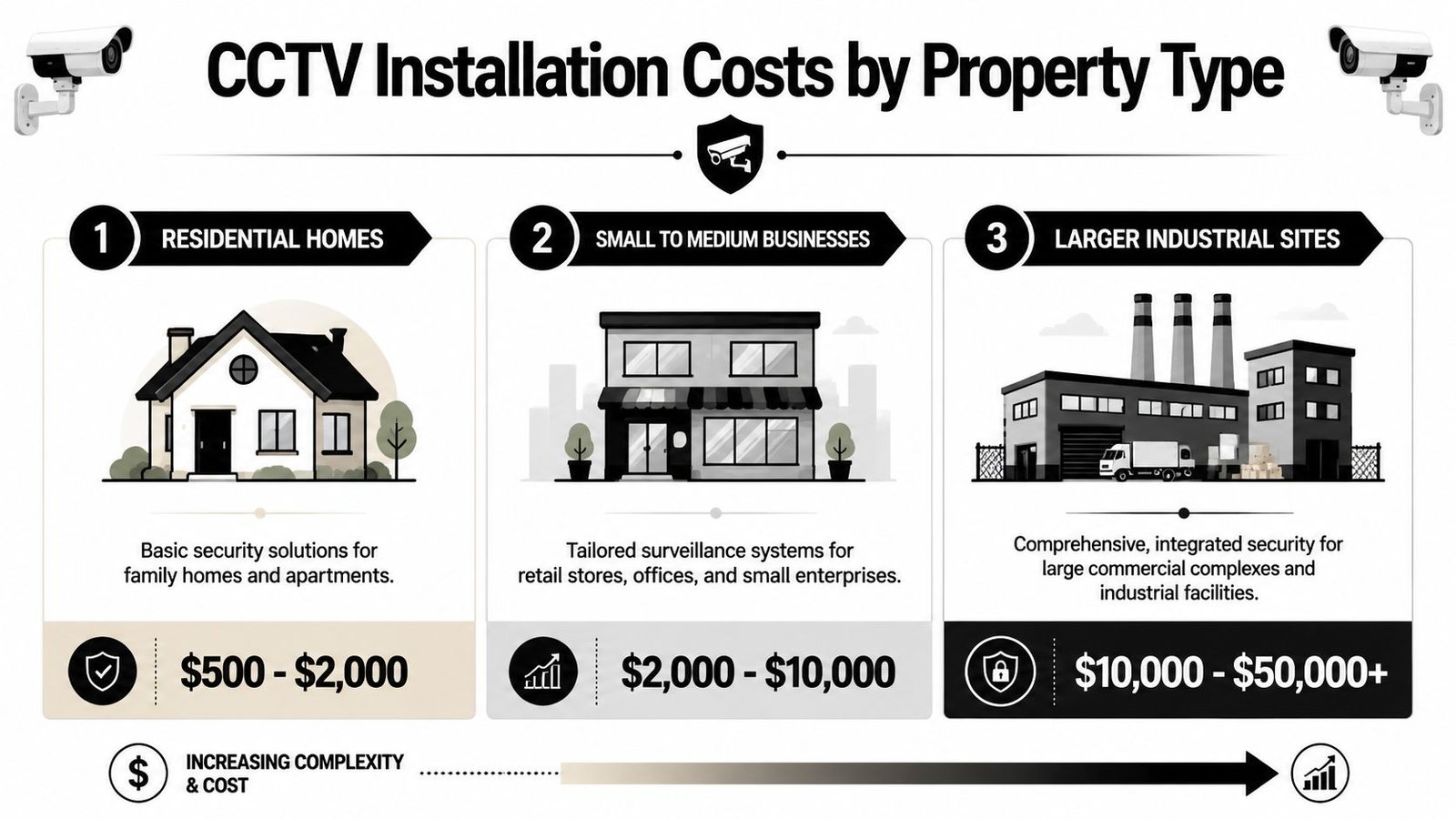
The clearest way to think about cctv installation costs is by property type. The price range for a house in Cardiff won't look anything like a warehouse near the M4, even if both sites need reliable video coverage.
According to UK CCTV installation cost benchmarks for homes, businesses, and warehouses, a standard domestic 4-camera installation in South Wales and the South West ranges from £650 to £1,800. The same benchmark puts small business and retail systems at £1,500 to £4,500 for 6 to 12 cameras, while warehouses and logistics hubs typically fall between £5,000 and £15,000.
Residential homes
Most homes don't need a complex surveillance network. They need dependable coverage of likely access points, useful night footage, remote viewing, and a recorder sized sensibly for the property.
A typical domestic quote usually sits toward the lower end when:
- Cable routes are simple: Loft runs, soffit mounting, and easy access keep labour under control.
- The camera count stays focused: Front, rear, side gate, and driveway often cover the main risk areas.
- You use a local recorder: An NVR with app access is often the cleanest way to avoid unnecessary ongoing cloud costs.
Costs move upward when the job involves listed buildings, difficult wall construction, detached garages, long garden runs, or a requirement to keep all cabling hidden.
Small businesses and retail premises
Retail and office environments usually need more planning than homes. Coverage has to work operationally, not just visually. You may need clear views of entry and exit points, customer areas, stock rooms, delivery access, and any place where disputes or losses tend to happen.
This is why the jump from a home system to a business system is more than a jump in camera count. Commercial installs often need integration with alarms, access control, or higher-spec recording. They also tend to demand better cable management, stronger retention planning, and positioning that avoids privacy issues around neighbouring premises or public space.
A simple comparison helps:
| Property type | Typical system size | Typical installed cost |
|---|---|---|
| Home | 4 cameras | £650 to £1,800 |
| Small business or retail | 6 to 12 cameras | £1,500 to £4,500 |
| Warehouse or logistics site | Enterprise-grade system | £5,000 to £15,000 |
Warehouses and industrial sites
Industrial sites are where generic pricing guides usually fall apart. The camera may be only one part of the problem. You also have high mounting points, long external runs, yard coverage, loading bays, poor lighting, and the need to record incidents in a way that's actually usable.
Warehouses don't get expensive because installers are adding margin. They get expensive because distance, access, and recording demands are real engineering problems.
On these sites, the quote often reflects infrastructure as much as surveillance. The recording system, switching, power planning, and coverage design matter just as much as the camera bodies on the wall.
The Core Components Driving Your CCTV Quote
Once you know the rough price range, the next question is why one quote is far higher than another. The answer is usually in the mix of hardware, labour, and cabling.
According to commercial CCTV cost breakdowns covering cabling and labour, cabling infrastructure accounts for 20% to 30% of total project cost in compliant UK commercial installations. The same source notes £1,200 to £3,000 on cabling alone for a typical 16-camera system, and for residential retrofit work, wired 4K labour can average £150 to £300 per camera, with a 4-camera installed system commonly landing at £1,200 to £2,500.
Hardware changes the budget quickly
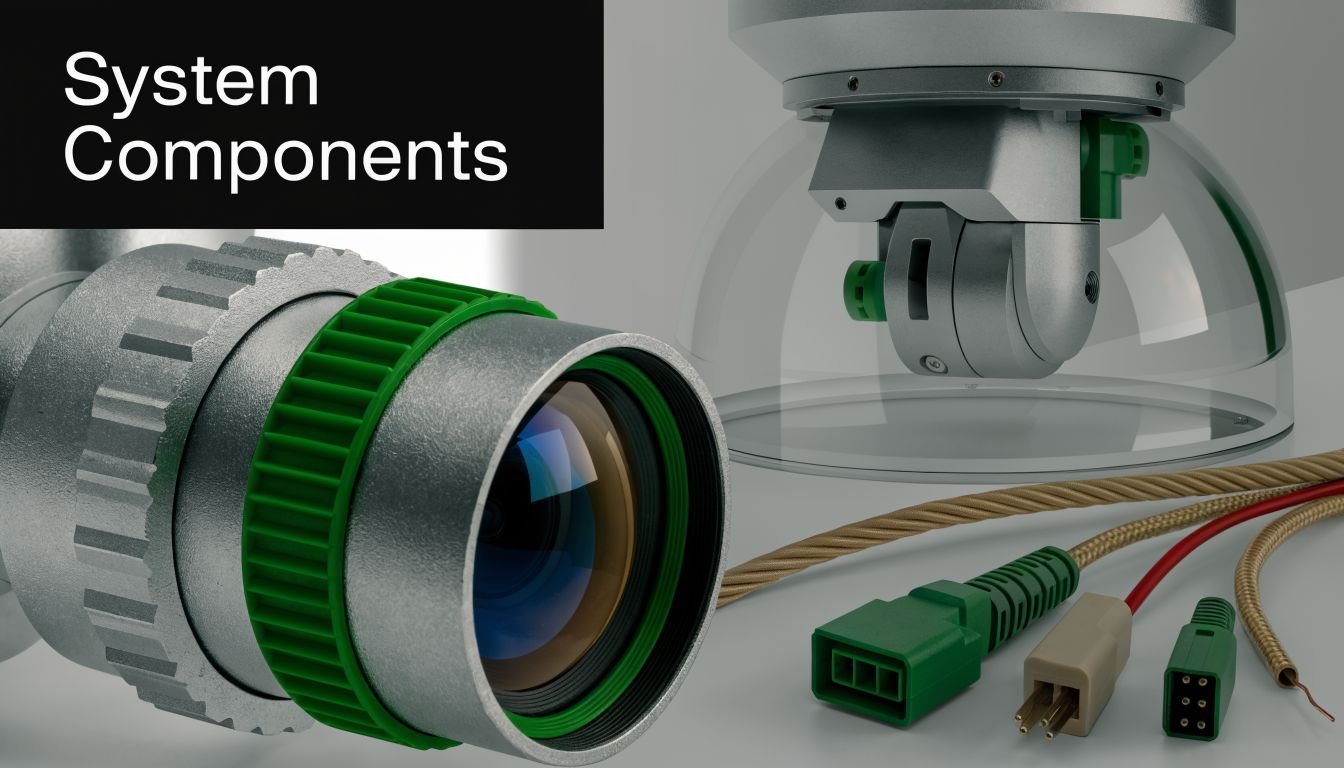
Camera choice has a direct effect on cost, but not always in the way people expect. A turret covering a doorway is one kind of job. A bullet camera watching a driveway at night is another. A PTZ for a yard or car park adds more complexity again because it changes power, mount strength, and recording expectations.
The recorder matters too. An NVR is the part that stores and manages footage from IP cameras. Think of it as the system's archive and control point. A cheap recorder can undermine a decent camera package if playback is poor, storage is undersized, or the app experience is unreliable.
If you're comparing technologies, this guide on IP cameras and HD analogue CCTV differences is useful because it shows where budget systems save money and where they compromise performance.
Labour depends on access, not just camera count
Labour isn't "fit four cameras, charge four times". Two houses with the same camera layout can produce very different labour costs.
A clean new-build with easy roof void access is usually straightforward. A retrofit in an older Bristol terrace or a property with awkward cavity routes can take much longer. The engineer has to drill, route, terminate, test, hide cables where possible, and leave the site neat. That time is what moves a job from entry-level pricing to the middle or upper end.
Common labour drivers include:
- Retrofit constraints: Existing finishes make concealed cable routes slower.
- Height and access: Soffits, outbuildings, and difficult ladders add time.
- Out-of-hours work: Shops and offices often want installation outside trading hours.
- System setup: Remote viewing, user permissions, motion zones, and playback checks take time after mounting is finished.
Cabling is where many quotes diverge
Clients often compare camera models and overlook the wiring. That's a mistake. Cabling is the hidden framework that makes the system stable.
Poor cable selection or rushed routing leads to future faults, ugly surface runs, and unreliable performance. On commercial work, structured cabling can take a major share of the job cost because the installation has to be durable, compliant, and properly protected.
Better cabling rarely makes a quote look cheap. It makes the system stay working.
A good quote should separate out the main ingredients so you can see what you're paying for:
| Cost driver | What it covers | Why it changes price |
|---|---|---|
| Cameras and recorder | Cameras, NVR, storage, viewing setup | Resolution, night vision, and feature level vary widely |
| Labour | Mounting, routing, setup, testing | Access difficulty and finish quality affect install time |
| Cabling and containment | Cable, conduit, trunking, terminations | Distance, environment, and compliance raise material and labour needs |
Planning for Ongoing Security System Costs
The install price is only part of the decision. Ongoing costs matter because CCTV isn't a one-off purchase if you want it to stay reliable, compliant, and useful.
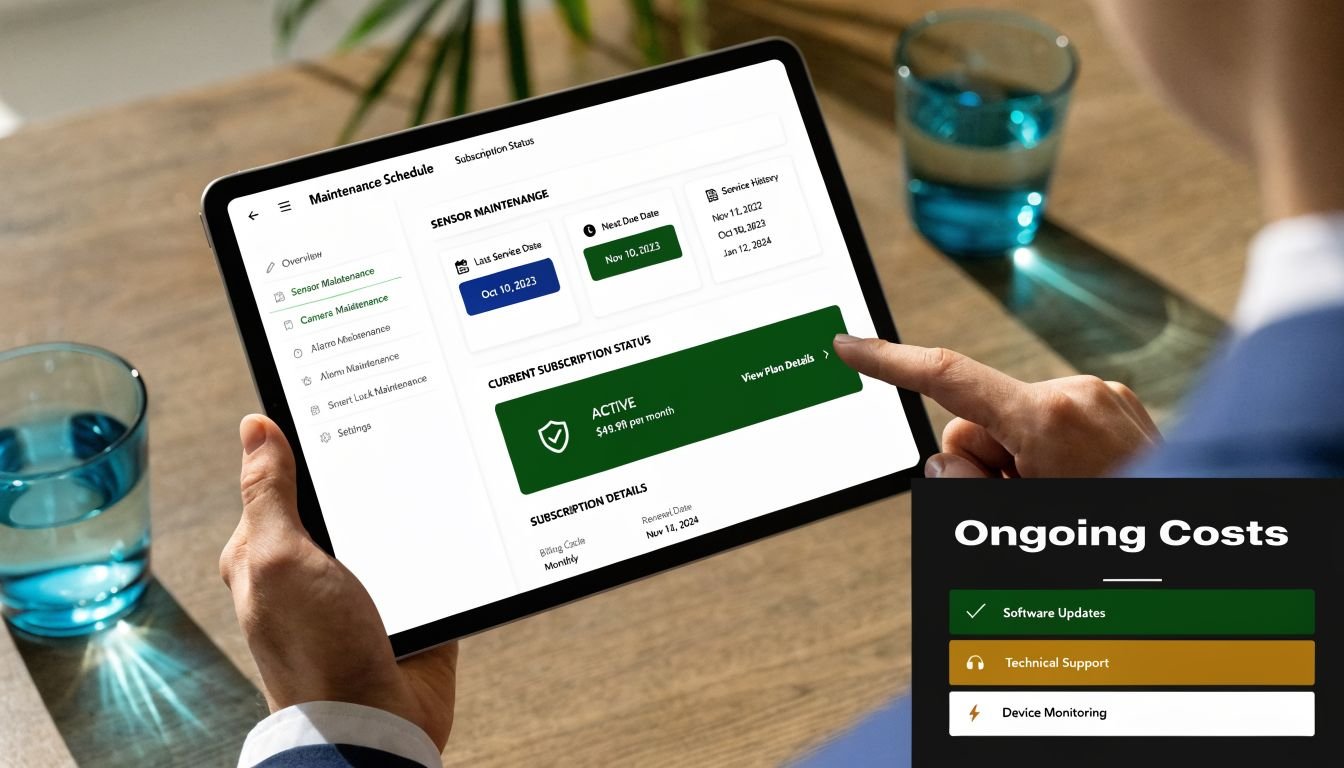
The costs that continue after installation day
Modern systems increasingly include features that create recurring spend. AI-based analytics, remote access platforms, and cloud footage storage all make systems easier to manage, but they also move part of the cost into monthly or annual fees.
Post-2025 projections indicate that cloud storage can cost £10 to £40 per month per camera, and a 2025 UK Home Office report found 71% of small-to-medium businesses choose annual maintenance contracts costing £150 to £400. Those figures were noted in the commercial cost benchmark cited earlier, even though the source link is only used once in this article for deduplication.
For businesses, that matters more than people expect. A low install quote can be offset later by cloud subscriptions, app licensing, callout charges, and neglected maintenance. A better-designed system often costs more up front but keeps the running costs predictable.
Why maintenance is usually cheaper than reactive fixes
Most faults don't start with a total failure. A camera drifts out of position. A hard drive starts showing errors. Night footage degrades because the lens cover is dirty or settings have changed. The system still seems to work, but not well enough when footage is needed.
That's why planned servicing is useful. It catches small problems before they turn into a missed recording window or an unusable clip after an incident. If you want a clear overview of what maintenance includes, this page on CCTV maintenance and system servicing lays it out well.
A practical budget for ongoing costs usually includes:
- Annual maintenance: Health checks, firmware updates, recording tests, and preventative attention.
- Cloud storage if required: Useful for some sites, but often unnecessary if a properly sized local recorder does the job.
- Repairs and replacements: Cameras, power supplies, and drives don't last forever.
- Future upgrades: Additional cameras, improved analytics, or changes to coverage as the property changes.
Here's the kind of manufacturer explainer many clients watch when they start thinking beyond installation day:
Some of the best value in CCTV isn't in buying less. It's in avoiding the system that becomes awkward and expensive to live with.
The Real Value of Professional CCTV Installation
People often compare a professional system with the cheapest online kit and assume the difference is mostly labour. It isn't. This gap is in compliance, reliability, and whether the footage stands up when something goes wrong.
Compliance is part of the install, not an extra
According to the earlier UK benchmark source, 62% of UK homeowners chose professional installation in a 2024 BSIA survey to help with GDPR-compliant data handling and to qualify for insurance discounts of up to 5% to 10%. The same source notes that the 2018 introduction of GDPR increased installation costs by 12% to 15% because of privacy-related features built into compliant systems.
That added cost isn't wasted money. It usually covers the parts many DIY setups miss, such as privacy masking, correct camera positioning, secure recording access, and retention settings that fit the site. For commercial premises, it also helps when insurers, landlords, or management teams want proof that the system has been specified properly.
Insurance and risk reduction matter
The same benchmark also reports that professionally monitored systems can reduce burglary rates by 60% in regions like South Wales. That doesn't mean every site needs monitoring, but it does show why better system design has value beyond the install invoice.
For a homeowner, one prevented break-in can justify the spend very quickly. For a retailer, useful footage after a theft, dispute, or delivery issue can matter just as much as deterrence. For a warehouse, reliable perimeter and loading bay coverage can protect stock, vehicles, and operational continuity.
Professional installation tends to deliver value in four areas:
- Coverage that matches the risk: Cameras are aimed to capture events that matter, not just broad scenery.
- Cleaner evidence: Better image quality, fewer blind spots, and more reliable playback.
- Fewer compliance mistakes: Especially around shared access, neighbouring property, and staff areas.
- Insurance credibility: Properly installed systems are easier to discuss with brokers and assessors.
A cheap camera that records the wrong angle is more expensive than a better camera installed properly.
The biggest pricing mistake is treating CCTV like a commodity. In practice, two systems with the same number of cameras can perform very differently because one was designed around the site and the other was just fitted.
How to Get an Accurate Quote in South Wales
A good quote starts before the installer visits. If you can describe the property clearly, the risks clearly, and the finish you want, you'll get a far more accurate answer.
What to have ready before you ask for a quote
Begin with the essentials. Determine if the property is a terraced house, detached home, retail unit, office, yard, shared building, or warehouse. Next, consider what you need the cameras to achieve. Deterrence, identification, staff safety, delivery monitoring, or evidence after incidents each require a distinct design brief.
It helps to note:
- The key areas to cover: Front door, driveway, side gate, till area, rear service entrance, loading bay.
- Any access issues: High walls, listed building restrictions, no loft access, trading hours, shared spaces.
- Your viewing preference: Phone app access, local screen, recorded playback, or all three.
- Any linked systems: Alarm, access control, intercom, gates, or fire system.
If you're local and want an idea of what a site-specific service page looks like, this Barry CCTV installation page shows the sort of practical local context worth discussing during a survey.
What a good quote should include
A proper quote shouldn't just list "CCTV install" with a total at the bottom. It should identify what's being supplied and why.
Look for these points:
- Camera positions with a clear description of each area covered.
- Recorder and storage details so you know how footage will be kept.
- Installation method including visible or concealed cable routing where possible.
- App and user setup rather than leaving configuration unfinished.
- Warranty and aftercare so you know what happens if something fails.
A weak quote usually has the opposite signs. Vague hardware descriptions, no mention of recording, no discussion of privacy or site limitations, and no clarity on support after installation.
Frequently Asked Questions About CCTV Costs
Is DIY CCTV cheaper
Up front, yes. According to the earlier UK benchmark source, DIY wireless kits usually cost £200 to £600, while professional installation can be 2 to 3 times the initial cost. But the same source says those DIY kits often fail UK data protection and security compliance, while professional installation helps achieve 99% uptime and alignment with standards such as BS EN 50131, which may matter for police response and insurance validation.
If you only want a casual plug-in camera, DIY can work. If you want a system that supports insurance, business use, or dependable evidence, the risks rise quickly.
Can I install just one camera
You can, but a single camera rarely solves the whole problem. One camera may cover a front door or a side passage well, but it also leaves blind spots. Most properties need at least a small, planned layout rather than one isolated view.
A single-camera setup can still be sensible for a narrow issue, such as monitoring one entrance or one delivery point.
Do I need permission to install CCTV
That depends on the property and how the cameras are used. Many domestic installations don't need formal permission, but listed buildings, flats, mixed-use sites, and cameras covering public areas or neighbouring property can create extra requirements. Commercial sites also need to think about signage, privacy, staff considerations, and data handling.
If there's any doubt, ask the installer to address that point before the system is specified.
What usually pushes the price up fastest
Three things. Difficult cable routes, higher-spec cameras, and awkward access. A tidy retrofit in a modern property is very different from drilling into older masonry, routing across outbuildings, or covering a large yard at night.
Is wireless always cheaper than wired
Not always in the long run. Wireless can reduce install labour in simple settings, but wired systems are often more stable and better suited to permanent protection. The right choice depends on the building and on how important reliability is.
If you're comparing cctv installation costs in Cardiff, Bristol, Newport, Swansea, or the wider South Wales and South West area, Wisenet Security Ltd can provide a clear, site-specific quotation with practical advice on camera placement, recording, compliance, and long-term reliability.