CCTV and Security Systems: A South Wales & SW Guide (2026)
You’re probably here because something has shifted. A neighbour in Cardiff had tools taken from a side gate. A shop owner in Bristol has had one too many arguments over missing stock, deliveries, or who opened up late. A landlord in Newport is tired of being told the communal entrance was “left on the latch again”. Or maybe nothing dramatic has happened yet, but you’ve reached the point where a basic doorbell camera no longer feels like enough.
That’s usually when people start searching for cctv and security systems and get buried under product jargon. Dome or turret. DVR or NVR. Wired or wireless. Monitored or bell-only. Then another question appears, and it matters more than most buyers realise. Are you buying a few separate devices, or are you building a security system that works together?
In South Wales and the South West, that distinction matters. We deal with exposed coastal weather, driving rain, older stone properties, converted commercial units, modern estates, warehouses, multi-tenant buildings, and busy retail frontages. A camera on its own might record an incident. An integrated system can detect it, verify it, control access around it, and help you respond properly. If you're weighing up options in Cardiff, this guide to security systems in Cardiff is a useful local starting point too.
Table of Contents
- Securing Your Home or Business in South Wales
- The Building Blocks of a Complete Security System
- Decoding CCTV Types Analogue IP and Wireless
- Key CCTV Features That Make a Real Difference
- How Integrated Systems Create Smarter Security
- Budgeting and Planning for Your Security Installation
- Real-World Security Setups for Homes and Businesses
- Taking the Next Step Towards Total Peace of Mind
Securing Your Home or Business in South Wales
A lot of people start in the same place. They think they need “a few cameras”. Then they begin describing the actual problem and it’s broader than that.
A homeowner in a Cardiff suburb might want to know who’s approaching the front door, whether parcels are safe when nobody’s in, and whether the side path is being used at night. A business owner in Bristol often has a different list. Staff entry at the rear. Stockroom control. Deliveries before opening. An alarm that doesn’t just make noise but tells the right person what’s happened.
That’s the difference between buying equipment and solving a security problem. Good systems aren’t built around a catalogue. They’re built around the way a property is used.
Local buildings need local thinking
South Wales properties vary wildly. Terraced homes can have tight frontages and awkward rear lanes. Rural homes may need coverage across detached garages or gates. Retail units often mix public-facing windows with hidden service access. Industrial buildings around Newport and Swansea bring another layer again, especially loading bays, yards, roller shutters, and low-light perimeters.
Weather matters too. Cameras that look fine on paper can struggle when they’re facing wind-driven rain, reflective surfaces, or patchy external lighting. The right security setup has to cope with ordinary local conditions, not ideal showroom ones.
Security should make life simpler. If the system creates confusion, false alerts, or blind spots, it’s not doing its job.
For most homes and businesses, peace of mind comes from four questions being answered clearly:
- Can I see what happened? CCTV handles that.
- Will I know when something’s wrong? Alarms and sensors handle that.
- Can I control who gets in? Access control handles that.
- Can it all work together without constant effort from me? Integration handles that.
That’s where modern cctv and security systems have improved most. Its primary value isn’t a single sharp image. It’s a joined-up system that helps you prevent problems, not just review them afterwards.
The Building Blocks of a Complete Security System
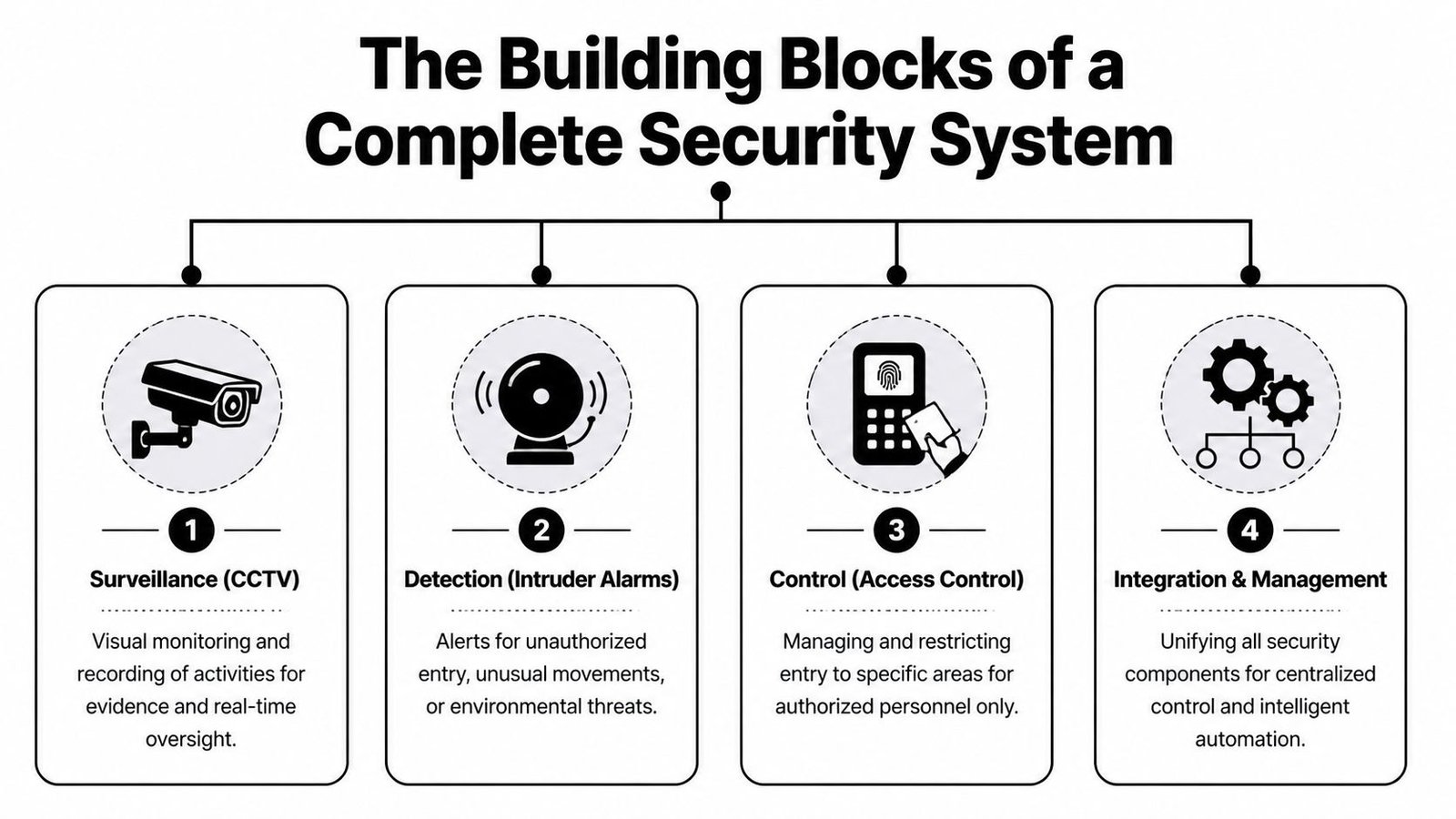
Think of a modern property like a building with senses. It needs eyes, ears, memory, and judgement. If one of those is missing, gaps appear quickly.
Security works best in layers
Surveillance is often the first aspect encountered. Cameras watch entrances, paths, car parks, service yards, reception areas, corridors, tills, and shared spaces. Their job isn’t only recording. A properly placed camera also changes behaviour. People tend to act differently when they know a site is visibly monitored.
Detection is what tells you something needs attention now. That can mean door contacts, motion detectors, glass-break sensors, shock sensors, or perimeter devices. Cameras alone don’t always create urgency. A recording is useful later. Detection creates a live event.
Control decides who should and shouldn’t get through a door, gate, or internal area. That could be a keypad on a side entrance, a fob on a communal door, or a Paxton reader on a stockroom. Access control becomes especially useful when keys have started circulating beyond the people who should have them.
Safety sits alongside security, not separate from it. Fire alarm systems, emergency release logic, and linked notifications protect people first. In commercial settings, this side of the system often affects compliance, building use, and insurer expectations as much as day-to-day operations.
Why integration changes everything
The strongest systems join those parts together so they support each other.
A simple example. A rear staff door is forced outside trading hours. If your setup is disconnected, the intruder alarm sounds, the CCTV records, and you later try to match timestamps. It works, but slowly.
If the systems are integrated, one event can trigger several actions:
- Alarm verification through live or recorded video
- Camera focus on the affected entrance
- Lighting response in darker external areas
- Access logs showing whether a valid credential was used
- Mobile alerts that give the owner or keyholder enough context to act
That’s why I often tell clients to stop asking, “Which camera should I buy?” and start asking, “What do I want the building to do when something happens?”
Practical rule: Cameras show. Alarms warn. Access control decides. Integration turns those separate actions into a proper response.
For homes, that might mean a video doorbell, perimeter cameras, a graded intruder alarm, and app-based alerts. For businesses, it usually means CCTV, monitored alarms, staff access permissions, and clear audit trails. For larger sites, it may also include intercoms, gates, fire integration, and event-based automation.
A complete system doesn’t need to be complicated. It needs to be coherent.
Decoding CCTV Types Analogue IP and Wireless
Not all CCTV works the same way, and choosing the wrong type usually causes problems later rather than on day one. The basic decision is between analogue, IP, and wireless. Each has a place. Each has limitations.
If you want a deeper technical comparison, this guide on the difference between IP cameras and HD analog CCTV is useful alongside the practical view below.
What analogue still does well
Analogue isn’t dead. It’s still a sensible option when a property already has usable coax cabling and the goal is to improve coverage without rebuilding the whole system. In some homes and smaller commercial premises, HD-over-coax can be a tidy upgrade path.
Its strengths are simplicity and familiarity. Engineers know how to fault-find it. Hardware can be straightforward. For modest sites, it can still produce perfectly usable footage when the design is right.
Its weaknesses show up when sites grow. Expanding, integrating, and managing more complex events is usually easier on network-based systems.
Why IP suits most growing sites
IP CCTV is what most new commercial systems and many better residential systems now use. Cameras connect over the network, and that opens up more flexibility in recording, remote viewing, permissions, analytics, and expansion.
For a business with a few cameras today and plans for more later, IP usually makes more sense. It’s also well suited to sites that want CCTV tied into alarms, intercoms, access control, and central management.
Where wireless fits and where it does not
Wireless gets attention because it sounds easy. In some cases, it is. For a small domestic outbuilding, a temporary observation point, or a location where cabling is particularly difficult, it can help.
But convenience isn’t the same as reliability. Wireless links can be affected by building fabric, interference, layout changes, and general site noise. In older stone buildings and steel-heavy industrial spaces, that matters. So does power. Many “wireless” cameras still need local power, which surprises buyers.
If a camera protects a critical route, cash area, main entrance, or vulnerable perimeter, I’d usually rather see a hardwired connection than a convenient one.
Comparison of CCTV System Types
| Feature | Analogue (HD-TVI) | IP (Network) | Wireless |
|---|---|---|---|
| Best use | Upgrading older coax-based systems | New systems and expanding sites | Small or difficult-to-cable areas |
| Image quality | Good for many home and small business needs | Strong choice for HD and 4K setups | Varies more depending on product and signal conditions |
| Installation | Often easier where coax already exists | More planning upfront, more flexibility later | Quick in the right setting, awkward if signal is poor |
| Scalability | More limited as systems grow | Usually the strongest option for future expansion | Can become unreliable or messy on larger sites |
| Integration | Basic to moderate | Best for joined-up security ecosystems | Often more limited |
| Reliability | Stable when cabling is sound | Very reliable when properly designed | Most dependent on local conditions |
| Typical fit | Existing homes, small shops, retrofit upgrades | Offices, warehouses, larger homes, multi-door sites | Annexes, sheds, temporary coverage |
A good installer won’t push one answer for every building. A terraced home in Swansea, a rural property outside Monmouth, and a warehouse in Bristol shouldn’t all get the same recommendation.
When clients ask what works best long term, the practical answer is usually this:
- Choose analogue when you’re making sensible use of existing cabling.
- Choose IP when you want the strongest platform for integration and growth.
- Choose wireless only where its convenience outweighs its limitations.
The mistake isn’t buying analogue or wireless. The mistake is using either where the site really needs a stronger backbone.
Key CCTV Features That Make a Real Difference
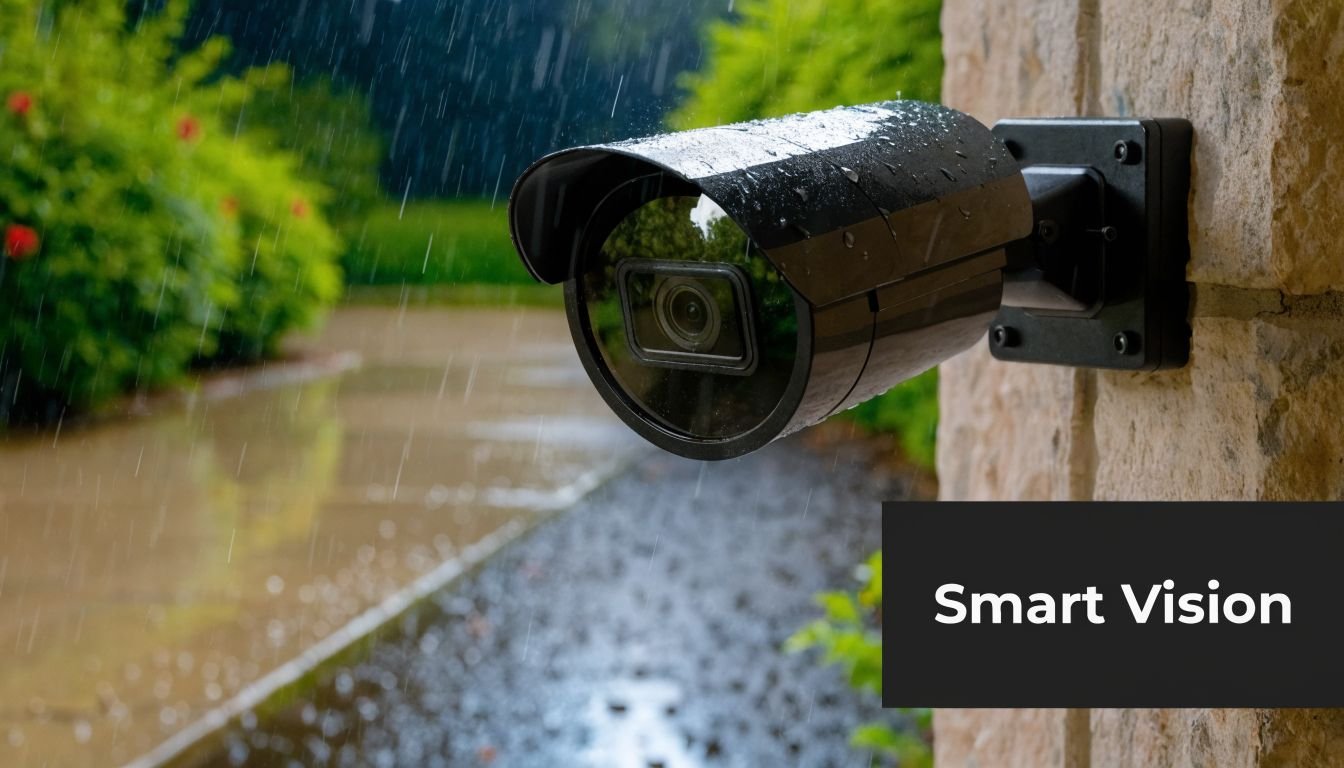
Buyers often get distracted by headline specs and miss the features that change daily use. Sharp footage matters, of course, but a security camera earns its keep in bad light, poor weather, awkward angles, and fast-moving incidents.
Features that change daily use
Without decent night performance, many systems look acceptable by day and disappointing after dark. That matters in side alleys, rear gardens, trade entrances, and car parks. The right low-light or infrared setup can be the difference between spotting movement and understanding what happened.
Remote viewing changes how owners use their system. It lets you check a delivery, confirm the cleaner arrived, see whether staff have locked up, or review an alert without driving to site. For multi-site operators, it becomes part of day-to-day management rather than an emergency-only tool.
Motion filtering and smarter event detection matter because older systems often alert for everything except what you care about. Headlights, shadows, rain, insects, and branches can fill a phone with noise. Better event handling doesn’t just make a system more intelligent. It makes people far more likely to trust the alerts they receive.
- Night visibility: A camera should still be useful when the weather turns and external lighting is poor.
- App access: Good remote access saves wasted journeys and speeds up decisions.
- Event filtering: Fewer nuisance alerts usually means better engagement with the system.
- Audio where appropriate: In some settings, recorded audio or two-way communication adds useful context, though this needs careful handling around privacy and legal use.
Why cabling still matters
One of the most practical upgrades in commercial CCTV has been Power over Ethernet, or PoE. IP cameras using PoE transmit video data and receive electrical power through a single CAT 5e/6 Ethernet cable, which removes the need for separate power infrastructure at each camera point. That reduces installation complexity and cost, especially in retrofit projects where adding new electrical circuits would be difficult or expensive, as noted in Pelco’s guide to PoE CCTV monitoring.
That one change has a practical knock-on effect. It makes multi-camera systems cleaner to install across warehouses, offices, larger homes, and industrial buildings. The same source also notes that modern PoE systems can deliver up to 90 watts per port on higher-specification switches, supporting features like motorised zoom, infrared illumination, and integrated microphones through the same cable path.
One cable for power and data sounds like a small detail. On a real installation, it often means fewer points of failure and a tidier system to maintain.
The camera itself matters, but so do the recorder, switchgear, cable routes, lighting conditions, and mounting positions. That’s why two systems with the same headline resolution can perform very differently on site.
How Integrated Systems Create Smarter Security
A joined-up system responds faster because it shares context. That’s the practical advantage. Instead of separate boxes doing separate jobs, one event can trigger a chain of useful actions.
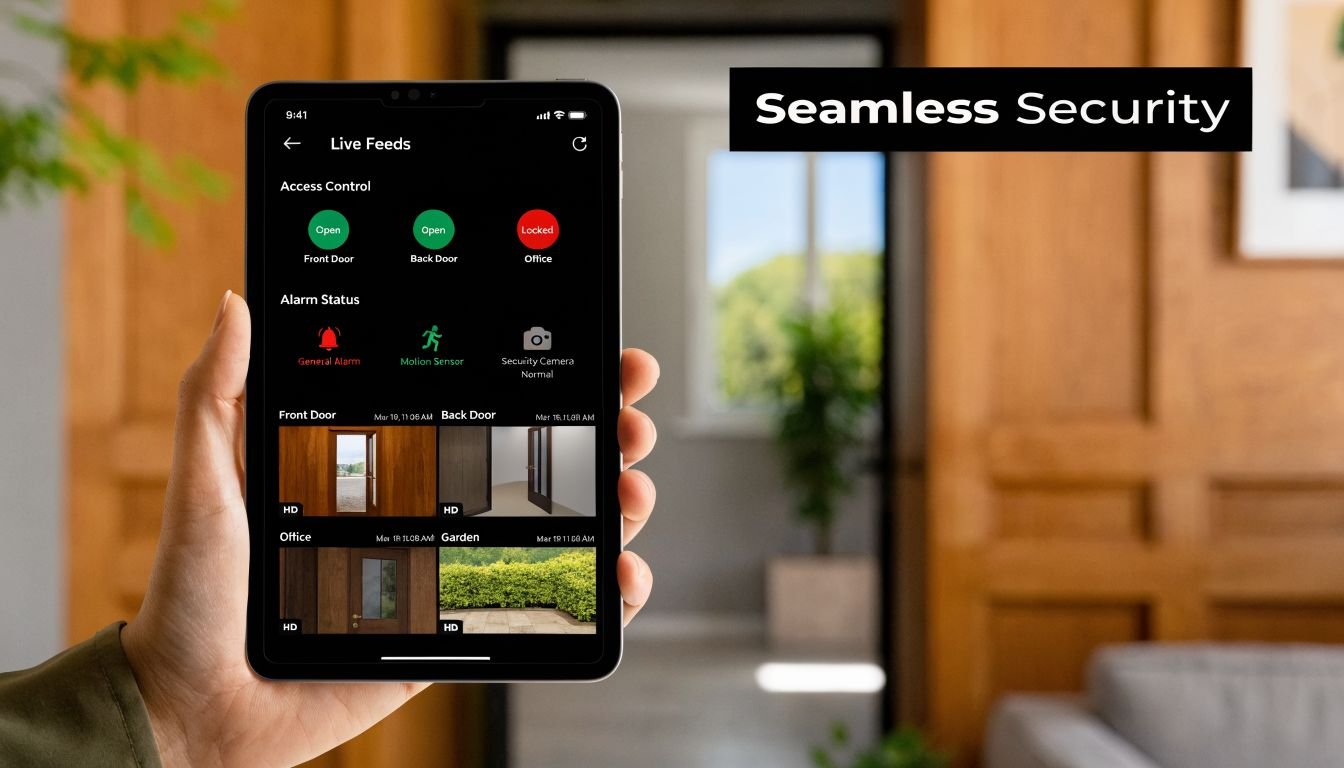
A warehouse manager near Newport is a good example. If a rear gate opens outside permitted hours, the system shouldn’t leave them guessing. It should flag the event, show the relevant camera, confirm whether a valid credential was used, and make it easy to decide whether it’s a scheduled arrival, staff error, or a genuine threat.
That’s where integrated cctv and security systems stop being passive and start becoming operational tools. A camera records the event. An intruder alarm marks it as important. Access control tells you who should be there. The app puts that information in one place. This is also where AI CCTV systems improving security becomes a practical conversation rather than a marketing one.
One event, multiple actions
A well-designed system can be set so one event drives several responses without human delay.
- Forced door event: The alarm panel registers a breach, flags the correct camera, and sends a targeted notification rather than a generic one.
- Out-of-hours access use: The system can verify whether a fob or card was legitimately used and create an audit trail.
- Video intercom request: A manager can view the entrance, speak to the visitor, and grant access remotely where policy allows.
- Fire event logic: Doors may need to release, notifications may need to escalate, and operators need immediate visibility of affected routes.
Named platforms matter. A practical commercial setup might combine Hikvision cameras, a Pyronix intruder system, and Paxton access control so events can be investigated quickly rather than pieced together later. Wisenet Security Ltd installs and maintains that kind of integrated setup across South Wales and the South West, alongside fire systems, intercoms, and gate automation.
Disconnected systems create admin. Integrated systems create decisions.
A quick demonstration of how connected monitoring can work in practice is below.
Where thermal cameras earn their place
Thermal cameras are one of the clearest examples of using the right technology for the right job. They detect heat signatures rather than visible light, which means they can work in complete darkness and in adverse weather. That’s particularly relevant for UK sites exposed to fog, rain, and poor light, according to the Investigative Academy guide to thermal CCTV use.
For larger yards, exposed loading areas, and industrial perimeters, that can be a major advantage. The same source notes that thermal cameras distinguish between living heat-emitting objects and non-heating sources, which can reduce false alarm triggers compared with standard motion-based setups. It also notes a 40-60% cost premium over standard HD cameras, plus reduced facial and fine-detail identification, which is why they’re usually strongest in a hybrid role rather than as a total replacement.
In plain terms, thermal is excellent for detecting presence. Standard HD or 4K cameras are still better for recognising faces, reading detail, and building a full evidential record. Used together, they can make a site far easier to secure, especially in harsh weather and low-light external areas.
Budgeting and Planning for Your Security Installation
Most buyers ask about price first, but the more useful question is what drives the price. Security systems vary because properties vary. The cost of a simple domestic setup and the cost of a multi-door business system are different jobs, not different versions of the same job.
What actually affects cost
The main cost factors are usually practical rather than flashy.
- Camera count and position: Four well-placed cameras can outperform six badly placed ones.
- Recorder and storage choice: The right recorder has to match the number of cameras, recording quality, and how you want to review footage.
- Access points: One controlled door is simple. Several doors with timed permissions, logs, and remote management are more involved.
- Alarm design: Basic perimeter protection is different from a fully graded system with internal zoning, monitored signalling, and app control.
- Site conditions: Stone walls, long cable runs, detached buildings, listed features, roller shutters, and poor existing infrastructure all affect labour and design.
For that reason, fixed online pricing is often misleading. A three-bedroom home may need front drive coverage, a rear garden camera, a doorbell camera, and a straightforward alarm. A high-street shop may need customer-area CCTV, stockroom protection, staff access control, and reliable opening and closing routines. A warehouse may need perimeter coverage, access logs, out-of-hours alerts, and fire system coordination.
Why professional installation pays back
DIY systems can work in limited situations, but the hidden costs usually show up later. Blind spots, poor cable routing, weak Wi-Fi links, storage mistakes, nuisance alerts, and patchy app setup all reduce confidence in the system. Once confidence goes, people stop using it properly.
Professional installation is as much about planning as fitting. The system needs correct coverage, sensible zoning, secure setup, and a handover that leaves the owner knowing what each part does. For businesses, there’s also a compliance angle. CCTV use may engage privacy and data protection responsibilities, and alarm work should align with relevant standards such as BS EN 50131 where applicable.
A cheap system that misses the key doorway or floods you with false alerts is expensive in all the ways that matter.
For homes, professional installation usually means cleaner fitting, stronger reliability, and less hassle. For businesses, it also means documented setup, maintenance support, and clearer accountability. DBS-checked engineers, proper accreditation, and product familiarity aren’t luxuries. They reduce risk.
When budgeting, it’s better to prioritise the vulnerable points first and expand in phases than to spread the budget too thinly across too much mediocre coverage.
Real-World Security Setups for Homes and Businesses
The best way to understand a system is to see how it fits a real property. Not every building in South Wales or the South West needs a large integrated setup, but most benefit from thinking in layers.
A family home in a Cardiff suburb
A typical family house often needs straightforward reassurance rather than complexity. Front drive coverage, a side access view, a rear garden camera, and a video doorbell usually cover the main concerns. Add a smart intruder alarm with sensible zones and mobile alerts, and the homeowners can check visitors, deliveries, and evening activity without overcomplicating daily life.
This sort of property benefits most from careful placement. One camera too high can miss faces. One too wide can waste image detail on sky, road, and neighbouring walls.
A retail boutique in Bristol
A small shop has different pressures. The owner wants customer-area visibility, evidence around the till, rear access protection, and tighter control over the stockroom. In that setting, discreet internal cameras and a simple access-controlled rear room can make a big difference.
The strongest setups also reduce friction for staff. Managers can review incidents quickly, confirm deliveries, and check opening or closing routines without needing to chase several systems or separate logs.
A warehouse near Newport
Industrial sites usually need a more coordinated approach. A warehouse with loading doors, staff entrances, roller shutters, yard space, and fire requirements can’t rely on a few cameras alone. It needs surveillance, alarm detection, controlled access, and event-based response.
In a practical layout, perimeter cameras watch approach routes, internal cameras cover loading and dispatch areas, access control manages who enters key spaces, and the alarm handles out-of-hours breaches. If the site is exposed, thermal perimeter coverage may also make sense as a specialist addition in the right locations.
- Homes: Focus on entry points, parcel management, side access, and simple app control.
- Retail: Prioritise customer areas, cash handling zones, rear access, and stock protection.
- Warehouses: Build around perimeter awareness, controlled movement, and linked event response.
- Shared buildings: Add communal door control, intercoms, and clear audit trails.
The common thread is fit. A good system suits the building, the people using it, and the actual risks of the site.
Taking the Next Step Towards Total Peace of Mind
The strongest security setups don’t come from chasing the latest gadget. They come from matching the system to the building and making sure each part supports the others. That’s why integrated cctv and security systems are often the right answer for both homes and businesses across South Wales and the South West.
For a homeowner, that may mean clear coverage, reliable alerts, and simple control from a phone. For a business, it usually means joining CCTV, intruder detection, access control, and fire-related requirements into one manageable setup. The more a property has to protect, the more that joined-up approach matters.
There’s also a practical reassurance in getting expert eyes on the site before money is spent. A proper survey can spot weak access points, poor lighting, cable-route issues, and operational details that online bundles never account for. It can also stop overbuying. Not every site needs every feature.
If you’re comparing options around Cardiff, Bristol, Newport, Swansea, or nearby areas, the sensible next step is a professional consultation that turns general ideas into a property-specific plan. That should include what to protect first, which technologies suit the building, how the system could expand later, and what level of maintenance or monitoring makes sense.
A good consultation shouldn’t feel like a sales pitch. It should leave you with a clearer understanding of your risks, your options, and the trade-offs worth making.
If you want a custom plan for your property, Wisenet Security Ltd offers free, no-obligation consultations across South Wales and the South West. They design, install, and maintain integrated CCTV, intruder alarms, access control, fire systems, intercoms, and gate automation, with DBS-checked engineers and more than 20 years of experience.
Powered by Outrank